
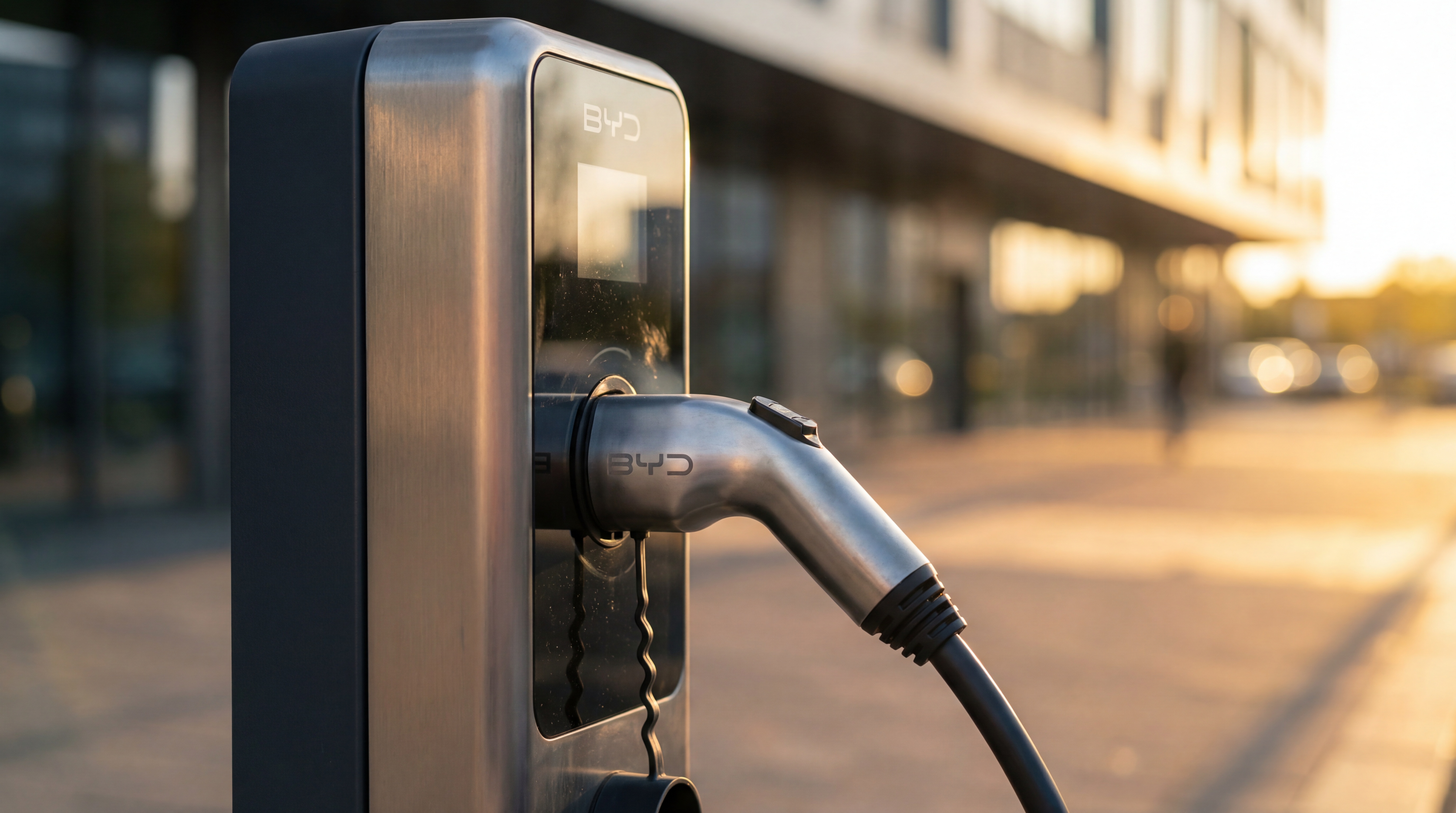

BYD, a leading Chinese electric vehicle manufacturer, has unveiled a new EV charger that approaches the speed of traditional gas pumps. Their latest innovation delivers a full charge in under 15 minutes for compatible vehicles, slashing downtime for drivers and challenging a key barrier to EV adoption.
This breakthrough isn't just about hardware—AI plays a critical role in optimizing charging efficiency and grid management. BYD's system uses machine learning to predict peak usage times and adjust power distribution dynamically.
This article was inspired by "How BYD got EV chargers to work almost as fast as gas pumps" from Hacker News.
Read the original source.Model: BYD Ultra-Fast Charger | Speed: Under 15 minutes for full charge | Available: Select markets in China, expanding globally
Charging Speed: Gas Pump Parity
BYD's charger achieves a 400 kW output, enabling an 80% charge in just 10 minutes for high-capacity EV batteries. This is a significant leap over standard fast chargers, which often take 30-40 minutes for similar results. The system is tailored for BYD's own vehicles but is compatible with other brands via adapters.
For comparison, Tesla's Supercharger V3 peaks at 250 kW, with an average 15-20 minutes for an 80% charge on a Model 3. BYD's edge lies in raw power and AI-driven thermal management to prevent battery overheating.
| Feature | BYD Ultra-Fast Charger | Tesla Supercharger V3 | Standard Fast Charger |
|---|---|---|---|
| Power Output | 400 kW | 250 kW | 50-150 kW |
| Time to 80% Charge | 10 minutes | 15-20 minutes | 30-40 minutes |
| AI Optimization | Yes | Partial | No |
Bottom line: BYD's charger sets a new benchmark for speed, closing the gap with gas refueling times.

AI's Role in Grid Efficiency
Beyond speed, BYD integrates machine learning algorithms to balance load on power grids. The system analyzes real-time data—traffic patterns, weather, and historical usage—to predict demand spikes and redistribute energy. This minimizes grid strain during peak hours, a growing concern as EV adoption rises.
Early reports suggest a 20% reduction in grid overload incidents during testing in Shenzhen. For AI practitioners, this showcases how predictive models can solve real-world infrastructure challenges.
Hacker News Weighs In
The Hacker News post garnered 66 points and 96 comments, reflecting strong community interest. Key takeaways include:
- Admiration for BYD's hardware-AI synergy as a model for other industries.
- Concerns over global rollout—will infrastructure in the West support 400 kW chargers?
- Debate on whether speed matters when daily charging habits often occur overnight.
Bottom line: Community feedback highlights both excitement for the tech and skepticism about its practical impact.
"Technical Challenges"
The Bigger Picture for AI and EVs
BYD's charger signals a broader trend: AI's integration into energy systems could redefine transportation. As electric vehicles scale, the intersection of machine learning and hardware innovation will be crucial for sustainable growth. For AI developers, this opens new frontiers in predictive analytics and real-time optimization applied to physical infrastructure.





Top comments (0)