
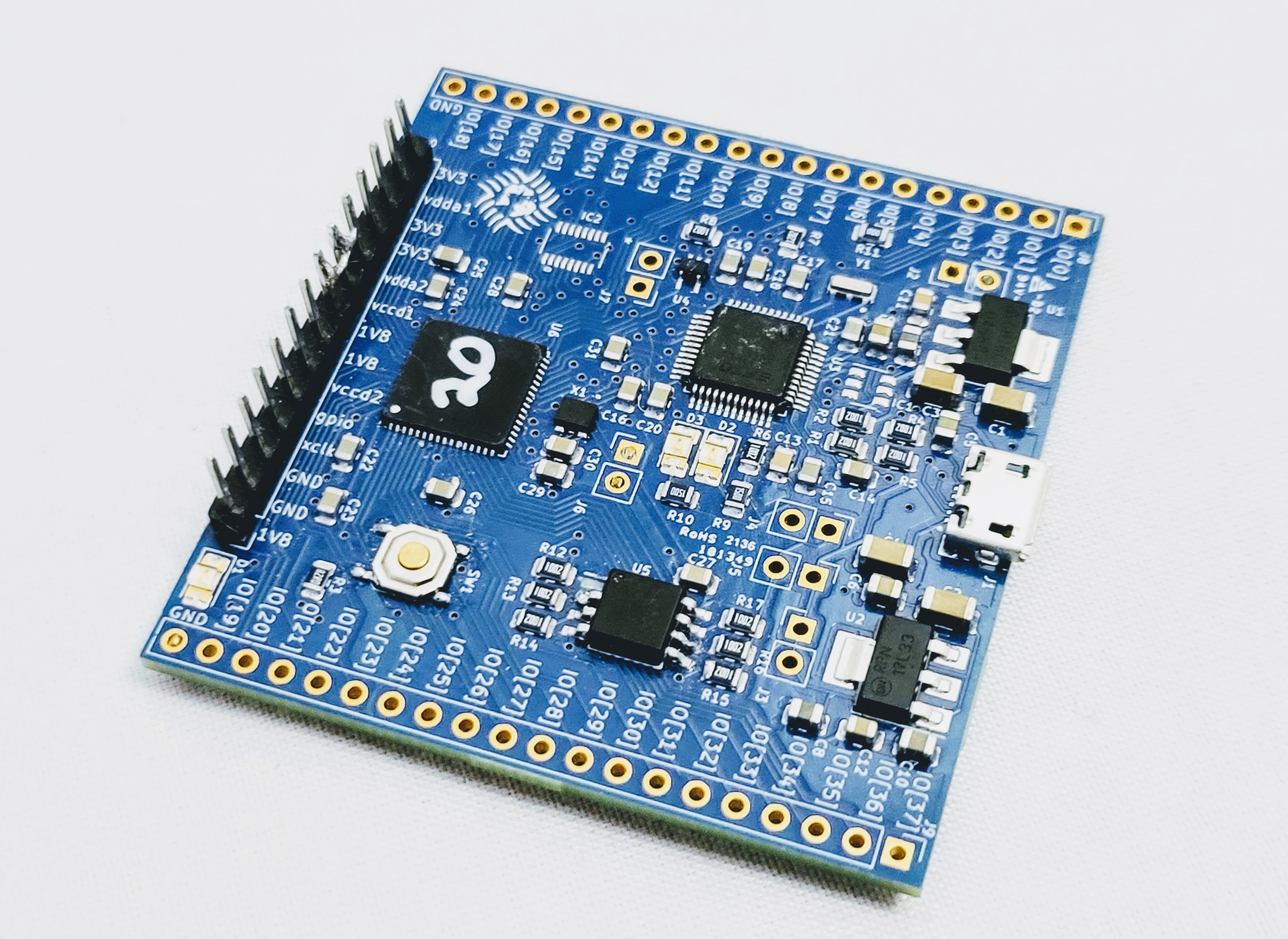

Midstall Software has released Aegis, an open-source FPGA silicon project aimed at democratizing hardware for AI acceleration. This initiative allows developers to customize field-programmable gate arrays for tasks like neural network training and inference. With FPGAs gaining traction in AI for their flexibility, Aegis addresses the need for affordable, modifiable chips in resource-constrained environments.
This article was inspired by "Aegis – open-source FPGA silicon" from Hacker News.
Read the original source.Project: Aegis | Type: Open-source FPGA silicon | License: Assumed open (check GitHub) | HN Points: 32
What Aegis Brings to AI Hardware
Aegis provides a full open-source blueprint for FPGA design, enabling users to modify and fabricate their own chips. The project includes Verilog code and documentation on GitHub, which supports rapid prototyping for AI applications. Early adopters can integrate Aegis into systems for tasks like accelerating convolutional neural networks, potentially reducing costs compared to proprietary options.
The HN discussion notes 4 comments, with users praising the potential for custom AI accelerators. For instance, one comment highlighted how Aegis could lower barriers for small teams building edge AI devices.
Bottom line: Aegis makes FPGA development accessible, potentially cutting AI hardware costs by allowing free modifications.
Community Feedback and Comparisons
On Hacker News, the post earned 32 points, indicating moderate interest from the AI community. Comments focused on Aegis's role in addressing hardware limitations, such as the high price of commercial FPGAs from vendors like Xilinx or Intel.
| Aspect | Aegis | Commercial FPGAs (e.g., Xilinx) |
|---|---|---|
| Cost | Free (open-source) | $100+ per unit |
| Customization | Full (modifiable code) | Limited (vendor-locked) |
| Community Support | 4 HN comments | Extensive forums |
| Availability | Immediate via GitHub | Requires purchase |
This table shows Aegis's edge in accessibility, though commercial options offer more mature ecosystems.
Bottom line: While commercial FPGAs dominate with established support, Aegis's open model could accelerate innovation for AI researchers on a budget.
Why This Matters for AI Practitioners
FPGAs like Aegis enable hardware acceleration that outperforms standard GPUs for specific AI workloads, such as real-time processing in computer vision. The project's open nature allows for community contributions, potentially leading to optimized designs for machine learning tasks. Compared to closed-source alternatives, Aegis could foster faster iteration in AI hardware development.
"Technical Context"
Aegis uses standard Verilog for FPGA programming, compatible with tools like Vivado or open alternatives. Developers can simulate designs on low-cost boards, making it suitable for prototyping AI accelerators without high-end equipment.
In summary, Aegis represents a step toward more inclusive AI hardware by providing an open-source FPGA option that empowers developers to build tailored solutions. This could lead to wider adoption in AI fields like edge computing, where custom efficiency is key.






Top comments (0)