


A developer’s public switch from Anthropic’s Claude to Inflection AI’s Pi, flagged in a detailed Hacker News thread with 108 points, highlights a growing user migration toward faster, more conversational AI assistants. The author cites Pi’s rapid response time and persistent, memory-like conversation style as primary reasons for the change, despite acknowledging Claude’s superior reasoning on complex tasks.
Model: Pi (Inflection-2.5) | Access: Free via web/ mobile app | Context: 128K tokens (claimed)
Key Differentiator: Voice-first, conversational UI | Limits: No file upload, web search, or API
How Pi’s Conversational Engine Works
Pi is built by Inflection AI, a company co-founded by Mustafa Suleyman, and is powered by the Inflection-2.5 model. Its core design principle is empathetic, real-time dialogue, prioritizing low-latency turn-taking that mimics human conversation. Unlike most chatbots that present a static text box, Pi uses a dynamic interface where messages appear word-by-word during generation, encouraging interruption and follow-up.
The model maintains long-term memory within a session, referencing earlier parts of the conversation without explicit user prompting. This is a software-layer feature, not a fundamental architectural shift, but it creates a distinct user experience focused on sustained, casual dialogue rather than transactional Q&A.
Benchmarks and Practical Performance
While Inflection claims its 2.5 model is competitive with leading models, the practical user experience defines its value. The migrating developer’s key metric was perceived speed in everyday use.
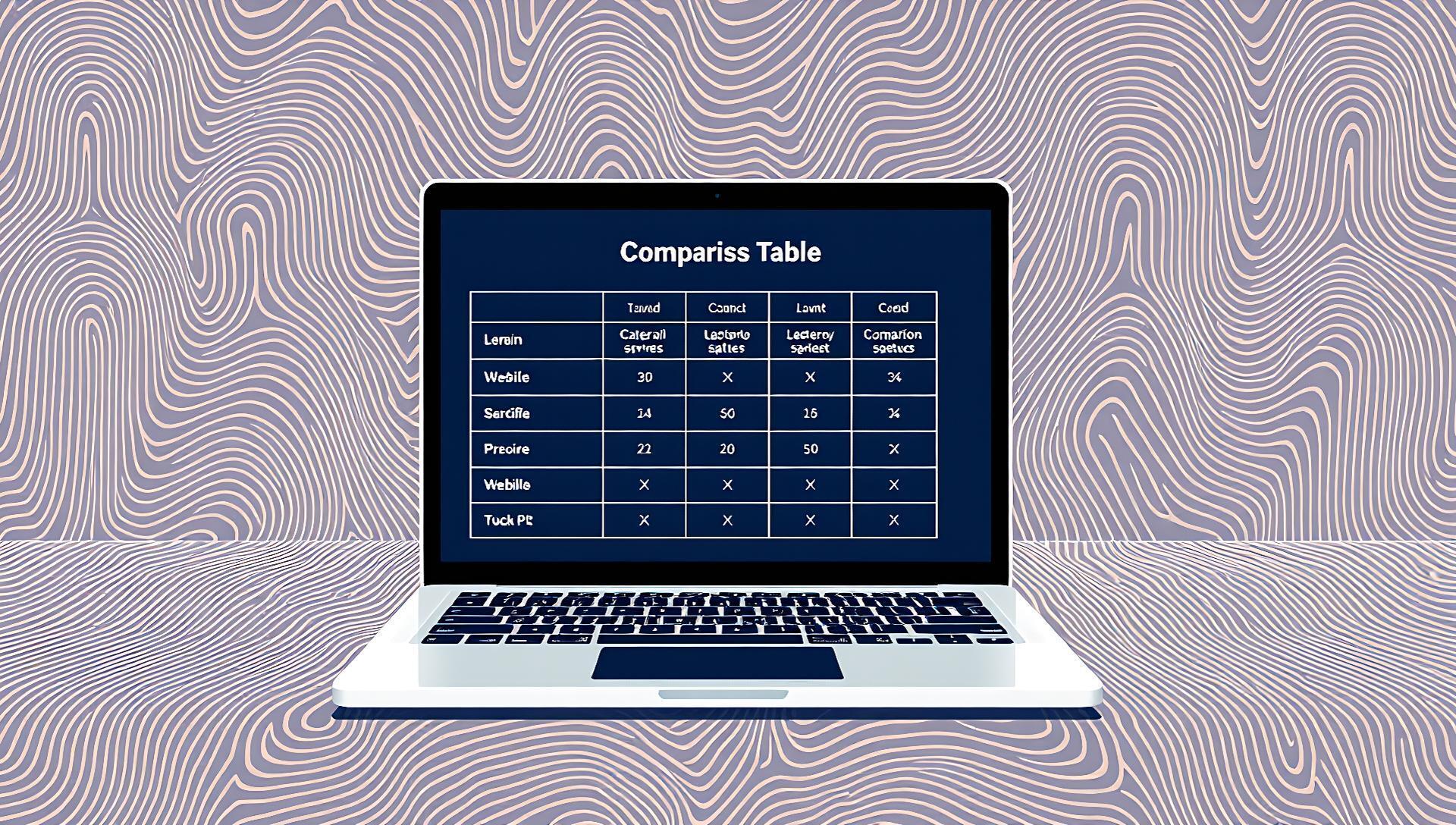
| Feature | Pi (Inflection-2.5) | Claude 3 Sonnet | GPT-4 (ChatGPT) |
|---|---|---|---|
| Response Feel | Very Fast, streaming | Deliberate | Variable |
| Free Tier Access | Yes, full model | Limited usage / region-dependent | Limited (GPT-4o) |
| File Upload | No | Yes (images, PDFs, .txt, .py, etc.) | Yes |
| Web Search | No | Yes (Claude.ai) | Yes (Plus) |
| Voice Mode | Primary UI | Limited (read-aloud) | Advanced (GPT-4o) |
| Best For | Casual chat, quick ideas | Document analysis, complex reasoning | General tasks, plugins |
The developer notes that for deep analytical work or coding, Claude’s output quality remained superior, but for brainstorming and daily chatter, Pi’s speed and tone were preferable.
How to Try Pi Immediately
Testing Pi requires zero setup. It is currently a closed, free product.
- Navigate to pi.ai on any browser or download the iOS/Android app.
- Start typing or tap the microphone for voice conversation—its intended mode.
- No account is required for a basic session, but creating one enables conversation history.
There is no public API, no file upload capability, and no integrated web search. Its utility is confined to pure text (and voice) dialogue within its platform.
"Community Feedback from HN"
The Hacker News discussion revealed nuanced adoption drivers:
Pros, Cons, and Key Tradeoffs
Advantages:
- Sub-second responsiveness: The UI is optimized for fast, word-by-word streaming, eliminating the "waiting for completion" feel.
- Persistent conversational memory: Effectively references the chat history, reducing repetition.
- Exceptional voice synthesis: Often cited as one of the most natural and engaging voice interfaces available.
- Truly free, unlimited use: No daily message caps on the core model, a significant differentiator.
Limitations:
- No multimodal or file upload: Cannot process images, PDFs, or code files. A deal-breaker for many professional uses.
- No API or integrations: Cannot be embedded into other applications, terminals, or tools.
- Weaker complex reasoning: As the source author states, it "can’t keep up with Claude’s reasoning on harder problems."
- Closed system: Little transparency into model updates or roadmap.
Who Should (and Shouldn’t) Switch to Pi
Pi is ideal for:
- Users seeking a low-friction conversational partner for brainstorming, casual learning, or companionship.
- Those prioritizing speed and flow over deep analysis for everyday queries.
- Developers and researchers evaluating state-of-the-art conversational UX and voice AI.
- Anyone frustrated by message limits on other free tiers.
Bottom line: Pi wins on conversational speed and feel but lacks the features for integrated, professional workflow tasks.
Avoid Pi if you need:
- Document analysis: You regularly upload PDFs, spreadsheets, or images for interrogation.
- Coding assistance: You rely on an AI to analyze codebases, debug from uploaded files, or write complex scripts.
- API access: You intend to build the model into an application or automated process.
- Web search: You need current information beyond its December 2023 knowledge cutoff.
The Verdict on the Claude-to-Pi Migration
The migration trend highlighted by the source article is less about raw capability and more about interface and latency. Pi dominates in creating the illusion of a real-time, attentive conversation, a use case that has been underserved by more powerful but slower models.
For the AI practitioner, Pi serves as a compelling case study in UI-centric AI design. It demonstrates that user retention can be driven by experience as much as by benchmark scores. However, its closed nature and lack of an API mean it remains a consumer-facing endpoint, not a developer's tool.
The assistant market is fragmenting into workflow engines (Claude, ChatGPT with plugins) and communication engines (Pi). The optimal setup for many will involve using both.






Top comments (0)