
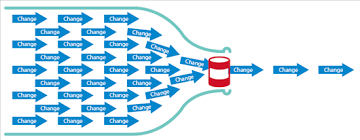

Introduction:
In any system—whether it’s a business operation, a manufacturing line, software architecture, or even personal productivity—performance is rarely limited by everything at once. More often, it is restricted by one critical constraint. This constraint is known as a bottleneck, and understanding it can be the difference between stagnation and sustainable growth.
A* bottleneck is not just a slowdown; it is the defining factor that determines how fast or efficiently an entire system can function. Ignoring it leads to wasted effort, while addressing it strategically unlocks measurable improvements.
**What Is a Bottleneck?*
A bottleneck is the weakest or most restrictive point in a process that limits overall output. No matter how optimized other parts of the system may be, performance cannot exceed the capacity of this constraint.
Think of a highway that narrows from four lanes to one. Even if traffic flows smoothly before and after, congestion is inevitable at the narrow point. That narrowing is the bottleneck—and removing it instantly improves traffic flow across the entire route.
Why Bottlenecks Matter More Than You Think
Many organizations make the mistake of optimizing everything except the bottleneck. They invest in faster tools, more staff, or better technology without identifying where the real limitation exists. This leads to:
Increased costs without proportional gains
Overworked teams downstream from the bottleneck
Idle resources upstream
Frustration due to unclear performance issues
When the bottleneck is not addressed, improvements elsewhere have diminishing returns. In contrast, even a small improvement at the bottleneck can result in exponential system-wide benefits.
Common Types of Bottlenecks
Bottlenecks appear in many forms, and recognizing the type is essential for solving it effectively.
1. Process Bottleneck
This occurs when a specific step in a workflow takes longer than others. For example, a manual approval stage in an otherwise automated process can delay the entire operation.
2. Resource Bottleneck
When limited personnel, equipment, or tools restrict output, you are dealing with a resource bottleneck. Adding work without expanding capacity only worsens the issue.
3. Technology Bottleneck
Outdated systems, slow servers, or inefficient software can throttle performance—especially in digital environments where speed is critical.
4. Decision-Making Bottleneck
Sometimes the constraint isn’t physical at all. Centralized decision-making, unclear authority, or excessive approvals can stall progress just as effectively as broken machinery.
See more: Bottleneck Rechner**
**How to Identify a Bottleneck
Finding the bottleneck requires observation, not assumptions. Some reliable indicators include:
A growing backlog at one stage of a process
Teams waiting on one person or system
Consistent overtime in one area while others are underutilized
Missed deadlines despite apparent capacity
Data helps, but visibility matters just as much. Mapping the entire workflow often reveals the bottleneck clearly—because it’s where work piles up.
The Bottleneck Principle: Improve the Constraint First
One of the most important strategic rules in operations is simple:
Improve the bottleneck before optimizing anything else.
If the bottleneck is not addressed, other improvements are cosmetic. Once the constraint is elevated or removed, a new bottleneck will emerge—and that becomes the next focus.
This creates a continuous improvement cycle:
Identify the bottleneck
Exploit it (use it efficiently)
Elevate it (increase capacity)
Reassess the system
This approach ensures effort is always directed where it has the greatest impact.
Bottlenecks in Business Growth
In growing businesses, the bottleneck often shifts over time. Early on, it might be lead generation. Later, it could be onboarding, fulfillment, or customer support. Scaling successfully requires recognizing when yesterday’s solution becomes today’s bottleneck.
Leaders who understand bottlenecks don’t chase growth blindly. Instead, they ask:
What is currently limiting our progress?
If this constraint disappeared tomorrow, what would break next?
These questions keep strategy grounded in reality.
Turning a Bottleneck into an Advantage
Interestingly, a bottleneck can also reveal where a business creates the most value. The constrained step is often critical—and improving it can strengthen competitive advantage.
Organizations that master their bottlenecks move faster, adapt quicker, and waste fewer resources. Instead of fighting symptoms, they solve root causes.
Final Thoughts
A bottleneck is not a failure—it’s a signal. It shows where attention, investment, and creativity matter most. Whether you’re optimizing a workflow, scaling a business, or refining a system, progress begins by respecting constraints rather than ignoring them.
**See more blogs: Visit Here**






Top comments (0)