
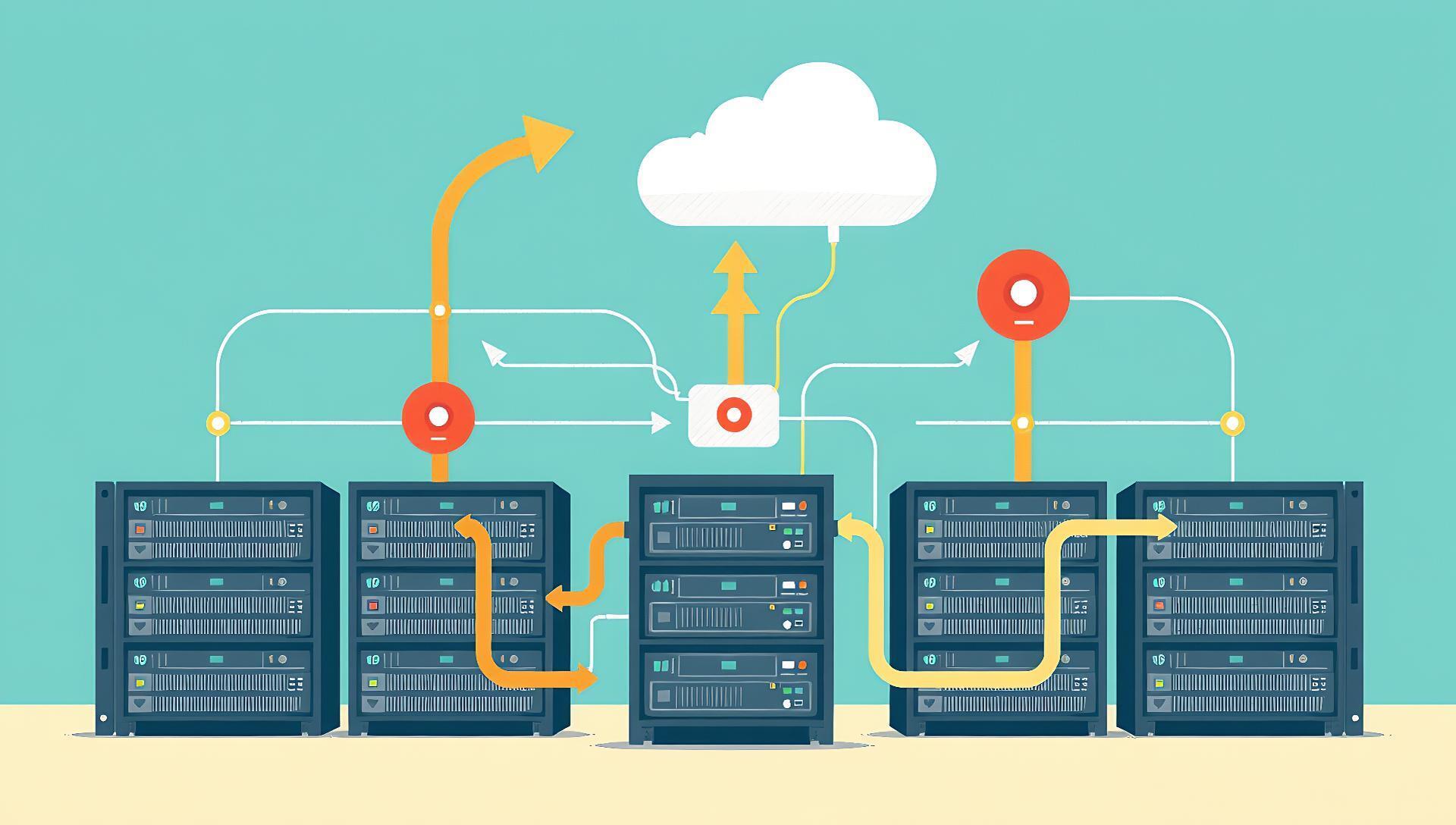

Maritime, a Y Combinator-backed startup, launched its managed cloud platform for production AI agents this week, per a recent Hacker News thread. The service aims to move AI agent development from local prototypes to reliable, shared deployments.
Product: Maritime | Pricing: Free tier + usage-based | Available: Web platform, API | License: Proprietary SaaS
What Maritime Is and How It Works
Maritime is a hosted environment designed specifically for running and managing AI agents in production. Developers write their agent logic—using frameworks like LangChain or their own code—and deploy it to Maritime’s cloud. The platform then handles execution, observability, and infrastructure.
The core offering is a managed runtime that automatically retries failed steps, manages state persistence, and provides built-in cost tracking per agent run. Unlike orchestrating agents on raw cloud VMs or serverless functions, Maritime provides agent-specific tooling like a visual debugger to trace execution steps and environment variables for managing API keys.

How to Try the Platform
Getting started requires no credit card. The process is straightforward for developers already building with agent frameworks.
- Sign up on the Maritime website for the free tier.
- Connect your code by installing the Maritime SDK (
pip install maritime-sdk) and adding a few lines of instrumentation to your existing agent code. - Deploy and monitor via the web dashboard, where you can trigger runs, view traces, and inspect costs.
The free tier includes 100 agent runs per month, which is sufficient for testing basic workflows. For production, you attach a payment method and pay for compute and LLM token usage.
The dashboard then shows a breakdown of each chain and LLM call made during execution, with associated costs and durations."Detailed setup for a LangChain agent"
For a LangChain agent, integration involves wrapping your agent executor with Maritime's runtime client.
from maritime import Runtime
runtime = Runtime(api_key="your_key")
result = runtime.run(agent_executor, inputs={"input": "user query"})
Pros and Cons: The Tradeoffs
Early adopters on Hacker News highlighted several advantages and immediate limitations.
Pros:
- Reduced DevOps Burden: Eliminates the need to manually build retry logic, state management, and monitoring dashboards.
- Built-in Cost Tracking: Shows spend per agent run, broken down by LLM call, which is critical for scaling usage.
- Team Features: Allows sharing agent deployments and traces across a development team, unlike isolated local scripts.
Cons:
- Vendor Lock-in: Your agent logic is tied to Maritime's SDK and platform.
- Early-Stage Limitations: The HN discussion notes the platform is new, with a limited set of pre-built integrations compared to established orchestration tools.
- Cost Uncertainty: While the free tier is generous, production pricing is usage-based and could become expensive for high-volume agents.
Alternatives and Comparisons
Maritime enters a competitive space between general-purpose orchestration tools and bespoke infrastructure. For production AI agents, the main alternatives are building your own system or using a different managed service.
| Feature | Maritime | LangGraph Cloud | Self-Hosted (e.g., via Fly.io) |
|---|---|---|---|
| Primary Focus | Managed runtime for any agent code | Managed runtime for LangGraph agents | Full infrastructure control |
| Retry & State Logic | Built-in, automatic | Built-in, automatic | You must build it |
| Cost Tracking | Per-run, per-LLM call | Basic | Requires third-party tools |
| Deployment Complexity | Low (SDK + deploy) | Low (LangGraph specific) | High (Docker, provisioning, scaling) |
| Pricing Model | Usage-based (compute + tokens) | Usage-based | Infrastructure costs (VM/container) |
Another alternative is CrewAI, which is an open-source framework for orchestrating multi-agent workflows. However, deploying CrewAI agents to production still requires you to solve the same infrastructure problems Maritime addresses.
Bottom line: Maritime trades flexibility and control for a significant reduction in operational complexity, positioning itself as a "Vercel for AI agents."
Who Should Use This Platform
Maritime is not a one-size-fits-all solution. Its value depends heavily on your project's stage and needs.
Use Maritime if:
- You have a working AI agent prototype and need to share it reliably with a team or clients.
- You are a small team without dedicated DevOps resources to build monitoring and state management.
- You need to track and control costs precisely as your agent usage scales.
Avoid Maritime if:
- You require fine-grained control over the underlying infrastructure (e.g., specific GPU types, custom networking).
- Your agent workflow is extremely simple or runs infrequently, making a dedicated platform overkill.
- You are deeply invested in an alternative ecosystem like LangGraph Cloud, which offers a more integrated but framework-locked experience.
The platform's sweet spot is small to mid-sized engineering teams pushing their first AI agents into production who want to avoid building and maintaining a custom orchestration layer.
The Verdict on Managed Agent Clouds
Maritime’s launch signals a maturation in the AI agent stack. The initial phase focused on framework capabilities (what agents can do), but the friction point has shifted to production concerns (how to run them reliably). By offering managed retries, cost tracking, and team tools, Maritime directly addresses this operational gap.
The success of platforms like Maritime hinges on whether AI agent adoption moves beyond experiments into sustained, business-critical applications. If that trend holds, the demand for specialized infrastructure that reduces time-to-production will only grow. Maritime is an early, opinionated bet on that future.





Top comments (0)