
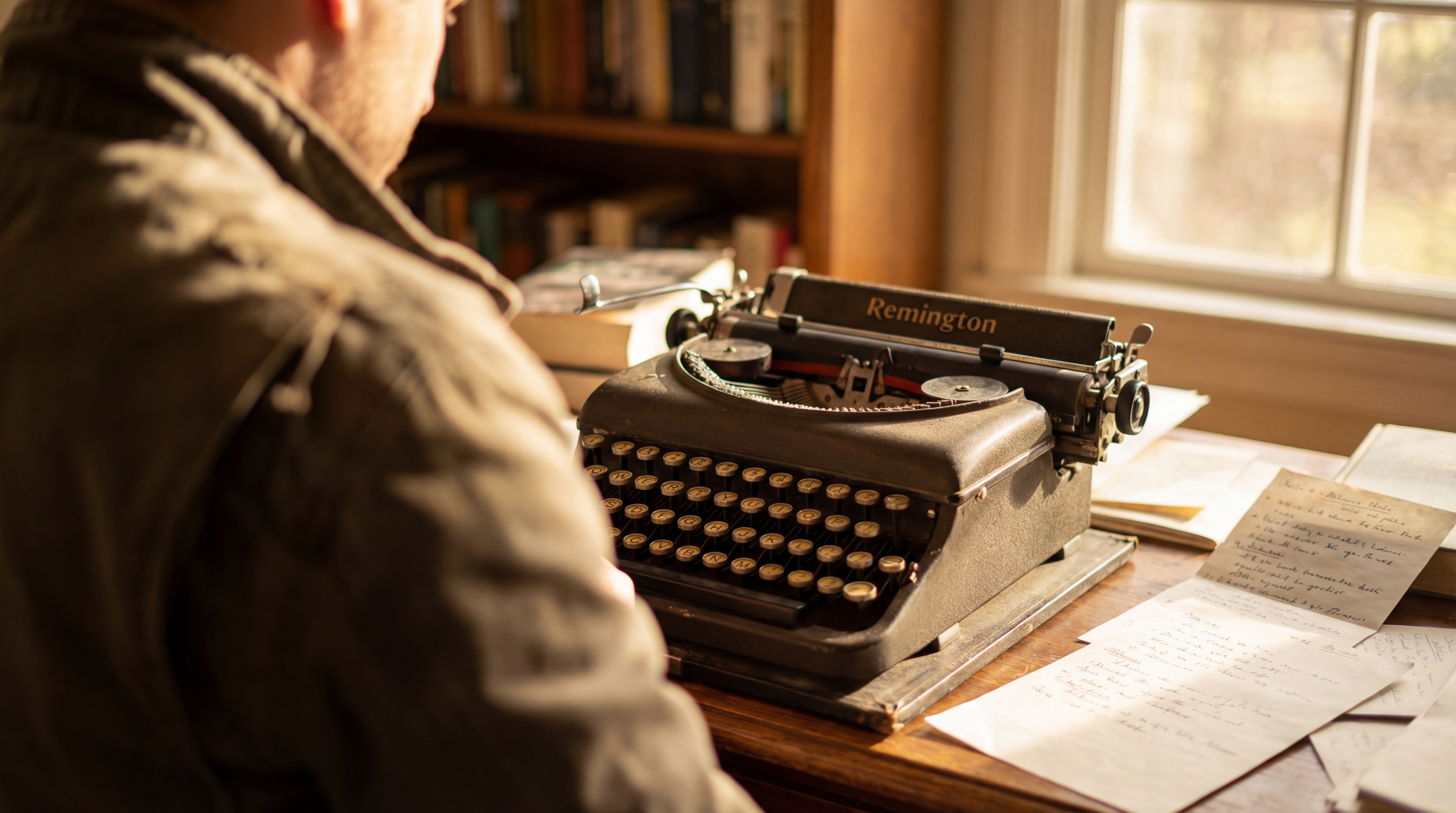

A Longing for Pre-AI Creativity
A recent Hacker News post titled "I am definitely missing the pre-AI writing era" has struck a chord with the community, earning 21 points and 6 comments. The author expresses a deep nostalgia for a time when writing felt more personal, untainted by the pervasive influence of AI tools that now dominate content creation.
This article was inspired by "I am definitely missing the pre-AI writing era" from Hacker News.
Read the original source.

The Core Sentiment: Authenticity Lost?
The original poster laments how AI-generated content often lacks the raw, human touch of pre-AI writing. They argue that even when AI tools assist, the output can feel formulaic, missing the quirks and imperfections that define personal expression. This sentiment resonates in an era where tools like large language models churn out polished text at unprecedented speeds.
Several community members echoed this view, noting that pre-AI writing required deeper engagement with ideas. One commenter highlighted how the struggle to articulate thoughts manually often led to unexpected creative breakthroughs—something algorithms rarely replicate.
Bottom line: Many feel AI tools, while efficient, dilute the soul of writing by prioritizing speed over depth.
Counterpoints: AI as a Creative Ally
Not all feedback aligned with the nostalgia. Some HN users pointed out that AI can enhance creativity by handling repetitive tasks, freeing writers to focus on ideation. One commenter mentioned using AI to draft outlines, cutting down brainstorming time by 30-40%, allowing more energy for refining unique perspectives.
Another user argued that the pre-AI era wasn’t inherently superior—it was just slower. They cited how manual research often took hours or days, whereas AI can surface relevant data in seconds, empowering writers to explore broader topics.
The Data Behind the Debate
While the discussion lacks hard metrics on AI’s impact on writing quality, community anecdotes provide a rough comparison of workflows. Here’s how pre-AI and AI-assisted writing stack up based on user feedback:
| Aspect | Pre-AI Writing | AI-Assisted Writing |
|---|---|---|
| Research Time | Hours to Days | Seconds to Minutes |
| Drafting Speed | Slow (Manual) | Fast (Automated) |
| Creative Depth | Often High (Struggle) | Variable (Formulaic?) |
This table underscores the trade-off: efficiency gains with AI come at the potential cost of originality, a recurring theme in the thread.
Bottom line: AI accelerates production but sparks concern over losing the messy, human process of creation.
"Historical Context of Writing Tech"
Writing tools have evolved dramatically over decades. Typewriters in the mid-20th century cut drafting time compared to handwriting, while word processors in the 1980s introduced spell-check and easy edits. AI is just the latest leap, automating not just formatting but ideation itself—a shift some find unsettling.
Community Reactions: A Split Perspective
The HN thread reveals a polarized take on AI’s role in writing. Key points from the 6 comments include:
- Nostalgia for the tactile, deliberate pace of pre-AI work.
- Concern over AI content flooding platforms, drowning out human voices.
- Appreciation for AI as a tool to democratize writing for non-native speakers.
These reactions highlight a broader tension in the AI community: balancing technological progress with preserving human essence.
Looking Ahead
As AI tools become more embedded in creative fields, discussions like this on Hacker News signal a growing need to define boundaries. Will future innovations prioritize mimicking human imperfection to restore authenticity, or will efficiency continue to dominate? The debate is far from settled, but it’s clear that many in the AI space are grappling with what’s gained—and lost—in this new era of writing.



Top comments (0)