

Google released Gemini 3.5 this week, adding explicit action features to its frontier model line. The announcement first appeared on the company blog and quickly surfaced in a Hacker News thread that reached 71 points and 27 comments.
Model: Gemini 3.5 | Focus: Frontier intelligence with action | Available: Google platforms
What It Is
Gemini 3.5 combines high-level reasoning with the ability to take direct actions inside supported environments. The model can generate plans and then execute steps such as calling tools, navigating interfaces, or triggering external functions without additional scaffolding.
This moves beyond pure text or image output. The action layer sits on top of the existing intelligence stack, allowing the model to close the loop between understanding and doing.
How to Try It
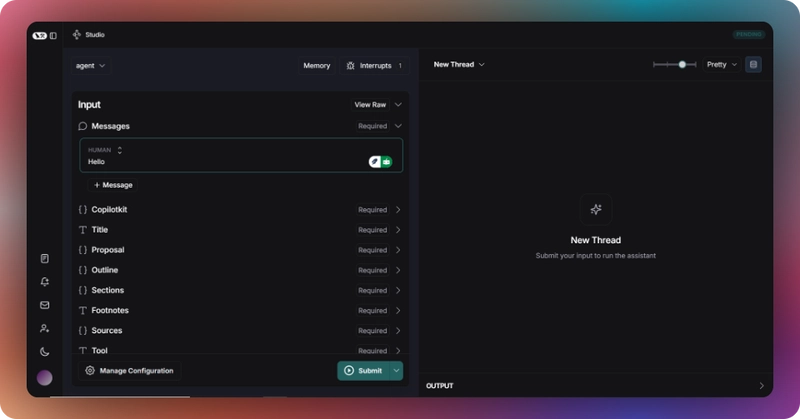
Developers can access Gemini 3.5 through Google’s current API endpoints and Vertex AI. Early users report testing action sequences in the Gemini app and Google Workspace extensions.
No public weights or local deployment options have been announced. Access currently requires a Google Cloud or AI Studio account.
Pros and Cons
- Strong reasoning baseline carried over from prior Gemini releases
- Native action execution reduces need for separate agent frameworks
- Limited transparency on exact action scope and safety boundaries
- No on-device or open-weight version available yet
Alternatives and Comparisons
Several frontier models now offer agent-style capabilities. The table below compares Gemini 3.5 against two direct alternatives on publicly discussed dimensions.
| Feature | Gemini 3.5 | Claude 3.5 Sonnet | GPT-4o |
|---|---|---|---|
| Native action support | Yes | Tool use + computer use | Function calling |
| Open weights | No | No | No |
| Primary access | Google Cloud / AI Studio | Anthropic API | OpenAI API |
Early HN comments note that Gemini 3.5’s action integration feels more unified than chaining separate tool calls in competing models.
Who Should Use This
Teams already inside Google Cloud ecosystems gain the most immediate value. Researchers studying agent reliability may find the unified action layer useful for controlled experiments.
Independent developers or those needing local inference should continue using open models until weights or smaller variants appear.
Bottom Line
Gemini 3.5 packages frontier reasoning with built-in action execution, giving Google a practical edge in agent-style workflows for users already on its platform.






Top comments (0)