
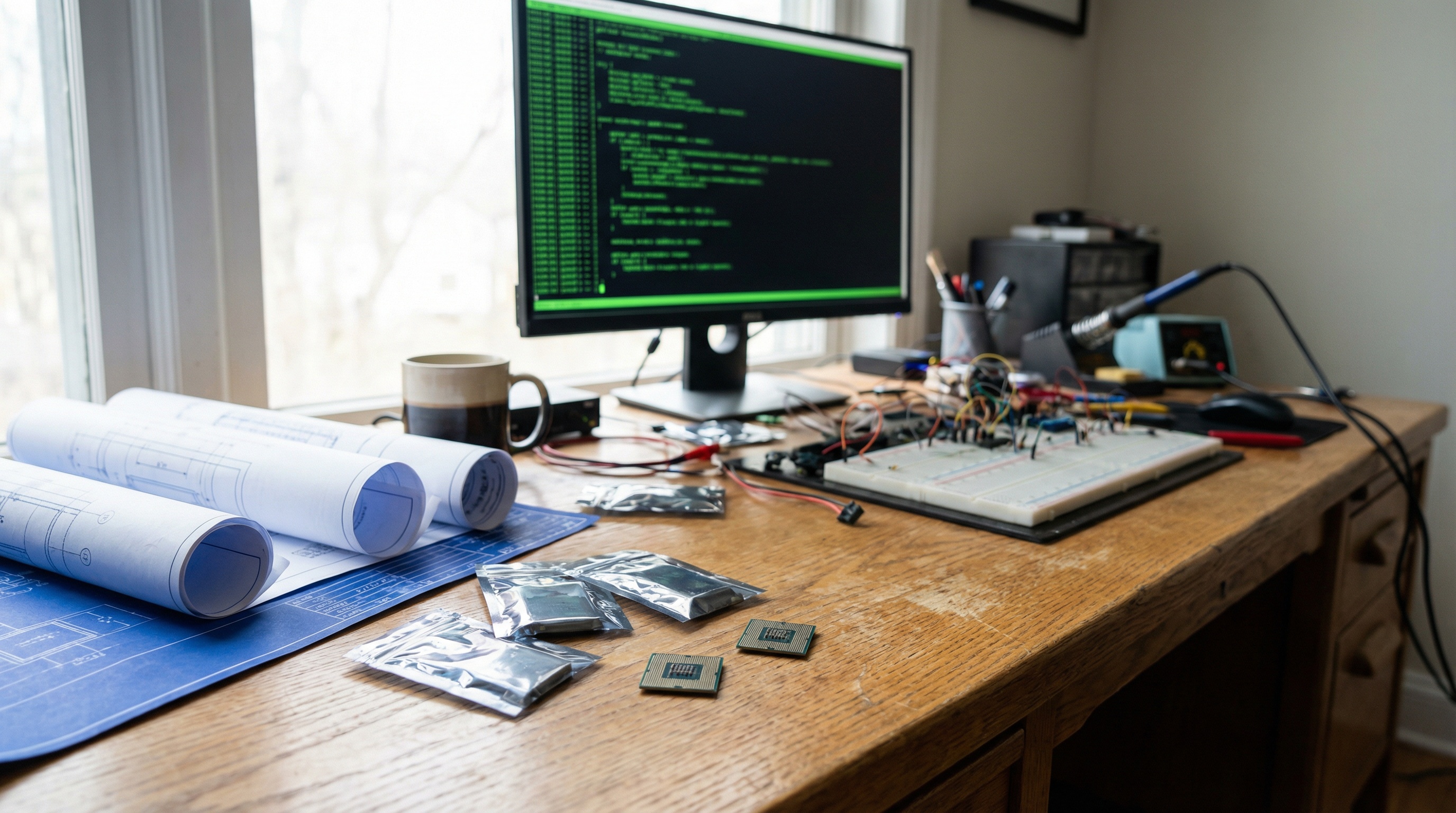

I've been covering AI for over a decade, and let me tell you, the buzz around hardwired AI is pretty wild right now. It's this idea of building specialized chips that are tailored specifically for AI tasks, bypassing the general-purpose GPUs that Nvidia has been dominating with for years. And honestly, if this catches on, it could shake up the whole industry in ways we haven't seen since the early days of deep learning.
This article was inspired by "The Last Chip: How Hardwired AI Will Destroy Nvidia's Empire and Change the World" from Hacker News. Read the original source.
So, what exactly is hardwired AI? It's not some futuristic dream; we're talking about ASICs or custom silicon that runs AI models way more efficiently than those beefy Nvidia cards. I remember attending CES a few years back and seeing prototypes that promised to cut energy use by half for the same performance. Nvidia's empire, built on versatile GPUs for gaming and AI, might start cracking if these specialized chips become the norm. But here's the thing: companies like Google and Amazon are already pushing their own versions, which means the competition is heating up fast.
In my experience, Nvidia isn't going down without a fight. They've got a massive ecosystem, from developers who swear by CUDA to partnerships that lock in their hardware. Still, I think hardwired AI could be a game-changer for folks building AI apps today, making things cheaper and faster. Look, if you're training models with generative AI tools like Stable Diffusion, the cost savings from specialized chips could let you iterate more without breaking the bank. What bugs me, though, is how this might widen the gap between big tech players and smaller startups; only those with resources can afford to design their own chips right now.
And let's not forget the broader impact. This shift could accelerate advancements in machine learning, powering everything from self-driving cars to better natural language processing. I have to say, in my opinion, it's not going to destroy Nvidia overnight— they've adapted before, like when they pivoted to AI from graphics. But over time, if hardwired solutions prove reliable, Nvidia's market share might shrink, forcing them to innovate or partner up. That's a big deal for the AI community, because it could democratize access to powerful tech.
Here's why this matters to you if you're tinkering with AI projects. Right now, relying on Nvidia means dealing with high costs and supply chain issues, which I've faced myself when deadlines loomed. Hardwired AI promises to make computing more efficient, letting you run complex models on edge devices without massive data centers. So, for beginners diving into prompt engineering or computer vision, this could mean more accessible tools. On the flip side, it raises ethics questions about who controls these specialized chips and how they might entrench inequalities.
But wait, is this all hype? Well, I've seen similar predictions flop before (like with quantum computing timelines). Anyway, the point is, hardwired AI isn't just about tech; it's about reshaping how we build and deploy AI in everyday life.
The Risks for Nvidia
Nvidia's stock has soared thanks to AI demand, but that's built on GPUs that aren't always the most efficient. If hardwired alternatives gain traction, sales could dip, especially in data centers where efficiency rules. And while I don't think it'll happen tomorrow, the writing's on the wall if competitors keep advancing.
What This Means for AI Builders
For those in the trenches, like me when I was testing LLMs, cheaper hardware could speed up development cycles. It's exciting, but it might also mean learning new tools, which isn't always fun.
Looking Ahead
In the end, this could spark a wave of innovation across deep learning and beyond. I reckon it'll change the world, but slowly, as these things do.
FAQ:
What is hardwired AI?
Hardwired AI refers to custom-designed chips optimized for specific AI tasks, making them more efficient than general GPUs.
Will this really hurt Nvidia?
It's possible, but Nvidia has a strong position; they might adapt by creating their own hardwired solutions.
How can AI builders prepare?
Start exploring alternative hardware options now to future-proof your projects and reduce dependency on one company.
What do you think—will hardwired AI flip the script on Nvidia, or is it just another trend that'll fizzle out? Let's chat about it in the comments.






Top comments (0)