

 Early childhood is a time of rapid brain growth. In fact, research shows that a child's brain develops faster during the first six years than at almost any other stage of life. During these years, every experience helps build important neural connections.
Many parents want to support this development. Yet they often wonder how to strengthen learning skills, confidence, memory, and creativity without adding pressure.
This is where right-brain training for toddlers has gained attention. It focuses on stimulating the brain through fun, engaging activities that encourage whole-brain development.
In this guide, you'll discover the key benefits of right-brain training, how it supports early childhood development, and why programmes such as Heguru continue to attract families looking for a strong foundation for lifelong learning.
What Is Right-Brain Training for Toddlers?
The right-brain development method concentrates on the stimulation of the right side of the brain in young children.
Some of the attributes that the right brain controls include:
- Creativity
- Imagination
- Vision
- Intuition
- Memory
- Pattern recognition
Instead of using conventional learning techniques, brain training for kids utilises tools such as memory games, speed reading, stories, visual aids, sound, and senses.
Why Early Childhood Is the Best Time for Brain Development
Learning occurs most easily in the early years of life. During this time, the brain becomes an effective receptacle for knowledge acquisition.
Information flows into the brain through new neural pathways that develop daily due to play, physical activity, language exposure, and socialisation.
In order to boost brain development, brain training for kids should be done when children reach a certain age so that they can develop essential skills for learning.
This is why many parents choose to train their kids' brains before they enrol them in primary school.
Related Post: Brain Training For Kids: Unlock Your Child's Full Potential From Day One
Benefits of Right-Brain Training for Toddlers
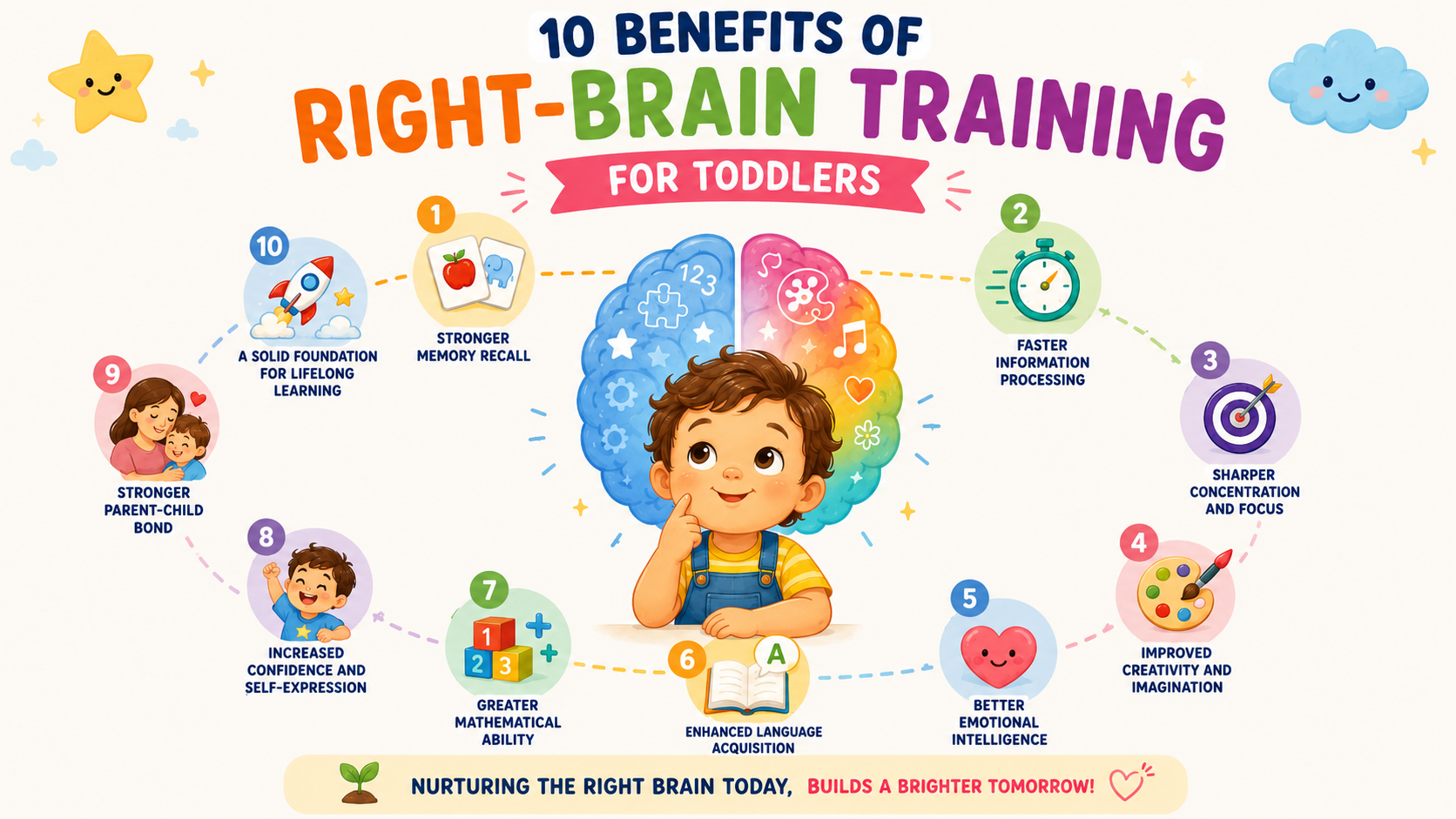
The early years are a critical period for brain development. Right-brain training for toddlers helps them build essential cognitive, emotional, and creative skills that support lifelong learning.
1. Stronger Memory Recall
The right-brain exercises employ picture exercises and flash cards to enhance memory. Consequently, toddlers learn how to better assimilate and retain information.
- Enhances visual memory and recall
- Aids children in retaining information for longer periods of time
- Lays the foundation for academic learning in the future
2. Faster Information Processing
Visual information is quickly processed by the right hemisphere. Early learning enables toddlers to grasp and react to new ideas easily.
- Helps with fast thinking abilities
- Increases efficiency in learning
- Facilitates understanding
3. Sharper Concentration and Focus
Many tasks that involve the right brain force kids to be highly attentive to visual, auditory, and other types of stimuli. This gradually develops
- the ability to maintain concentration.
- Stretches attention span
- Minimises distractions while studying
- Sharpens listening skills
4. Improved Creativity and Imagination
The right side of the brain is highly responsible for the process of creativity. The skills related to this field promote creativity among kids through exploration and self-expression.
- Stimulates imagination
- Promotes creativity
- Encourages artistic expression
5. Better Emotional Intelligence
Right-brain development allows children to understand emotions and be aware of social signals. This results in better relationships and social abilities.
- Enhances understanding of emotions
- Improves empathy for others
- Fosters positive social skills
6. Enhanced Language Acquisition
Songs, storytelling, and visual teaching methods aid in language development. Children often develop self-confidence in speaking through such activities.
- Nurtures vocabulary development
- Develops good listening and speaking abilities
- Encourages literacy skills
7. Greater Mathematical Ability
Pattern recognition is an important right-brain ability that enables mathematical reasoning. Children become adept at recognising relationships and sequences.
- Stimulates logical thinking
- Promotes number recognition
- Lays the groundwork for math skills
8. Increased Confidence and Self-Expression
Learning becomes easier when children find it fun. Tasks that engage the right brain give frequent chances for success.
- Develops individual thought processes
- Increases self-confidence
- Facilitates healthy self-expression
9. Stronger Parent-Child Bond
Parental participation is often required when engaging in learning through the right brain. This helps promote trust and bonding.
- Promotes quality bonding time
- Provides an enjoyable learning experience
- Builds emotional bond
10. A Solid Foundation for Lifelong Learning
The most significant advantage of right-brain training is that it creates long-lasting effects. The child will have curiosity, self-confidence, and a good approach to education.
- Fosters enthusiasm for learning
- Helps build cognitive abilities
- Ensures future success in academics
How Right-Brain Training Supports Whole-Brain Development
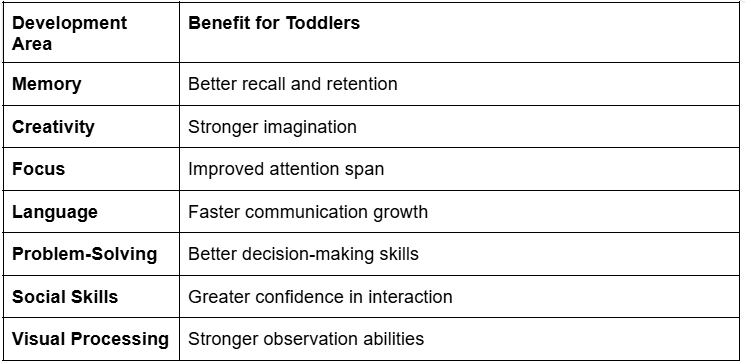
How Heguru Supports Right-Brain Development in Singapore
Heguru in Singapore is one such famous brain training program for preschoolers that was developed in Japan. Its main aim is right-brain training to help the child learn better at this age.
Why Is Heguru Unique?
- Available from six months onwards
- Utilises flashcards, songs, and storytelling techniques
- Learning takes place via fun-filled activities
- It is a parent and child learning session This method has been developed based on many years of research on early childhood development. It does not stress academics but helps develop a child's confidence and a passion for learning.
Conclusion
This early period presents an important chance to lay solid foundations for future learning. Right-brain brain training for toddlers will help with memory, creativity, concentration, language skills, emotion, and cognitive development.
When considering programs for right-brain training for toddlers, a great choice would be the Heguru, which will provide a well-balanced combination of right-brain training together with whole-brain training.
If you would like to learn more about how right-brain training may support your child's development, reaching out to the team at Heguru can be a helpful next step.
FAQs
When should right-brain training be started for toddlers?
As early as possible. The recommended age range for right-brain training is six months to three years, as these are the most critical ages for brain development. In Singapore, Heguru accepts toddlers as young as six months.
Is it safe for toddlers to undergo brain training?
Yes. Right-brain training makes use of games, imagery, and music. There is no element of pressure or tests. This type of training aims to stimulate the child's mind.
What is the difference between right-brain training and preschool
Preschools emphasize left brain training, which is focused on language and numbers, as well as other left-brain development. Right brain training concentrates on imagination and intuition, which complements but does not replace preschool education.
When can parents expect their child to show results from right-brain training?
Parents normally observe increased alertness after several weeks. However, stronger effects like improved memory and concentration are seen at least after three to six months of classes.





Top comments (0)