
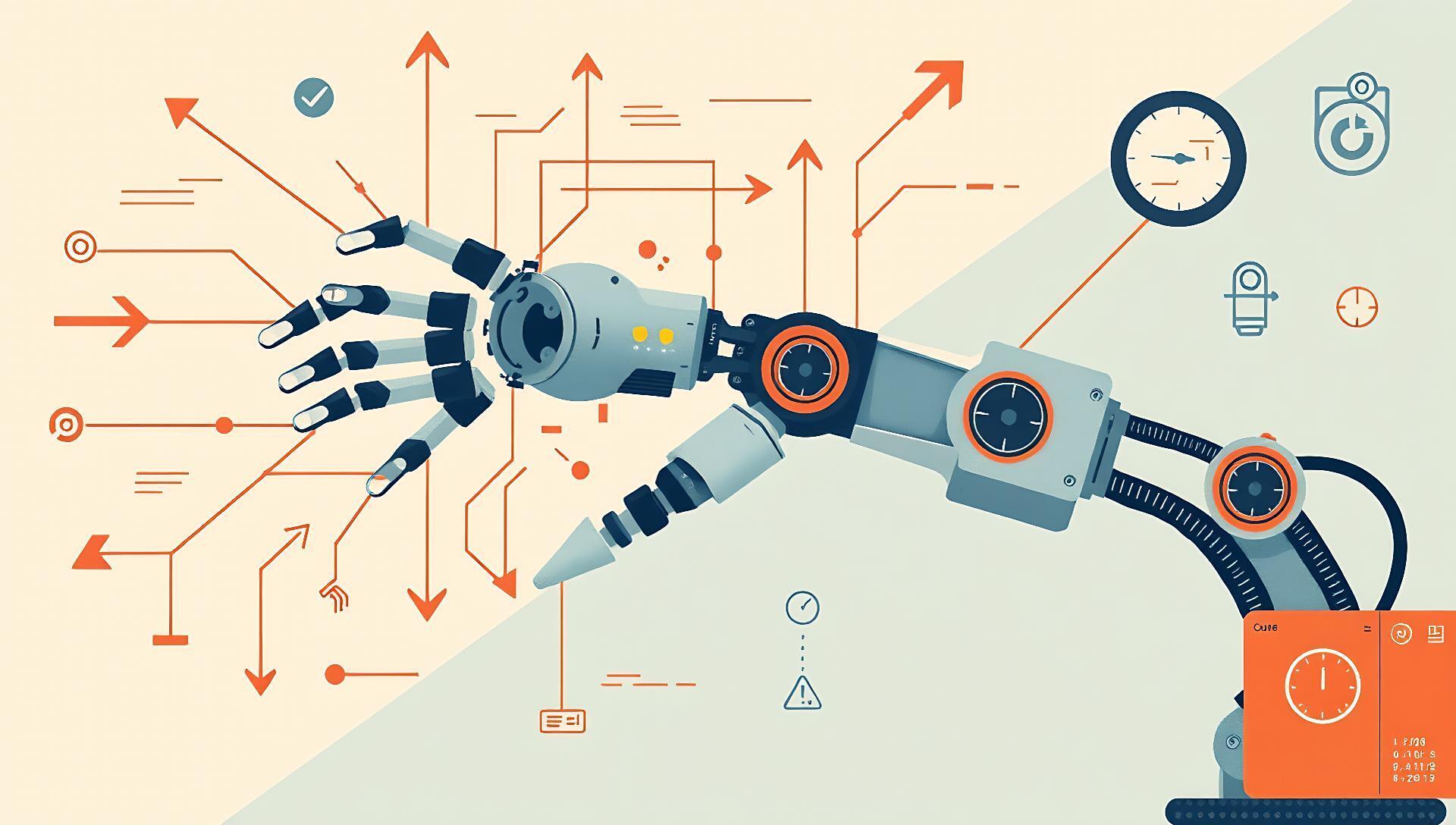

Google DeepMind’s robotics team released Vibe Robotics, an open-source tool for controlling robots in simulation or the real world directly from a web browser. The project surfaced on Hacker News as a "Show HN," allowing immediate public testing.
Tool: Vibe Robotics | Platform: Web Browser | Simulation: MuJoCo
Real Robot Support: Yes | License: Apache 2.0 | Source: GitHub
What Vibe Robotics Does
Vibe Robotics provides a unified web interface for sending motion commands to robotic hardware or a MuJoCo simulation. The backend, built on the Robotics Antigravity Plugin, translates high-level directives into low-level control.
The system is agent-agnostic. You can connect it to a pre-trained AI policy, a simple script, or manual controls. The primary value is removing the friction of setting up a custom control pipeline for each new robot or research project.

How to Try It Right Now
Access requires a local setup, as the tool interfaces directly with simulation or hardware. The process is documented in the repository.
- Clone the repo:
git clone https://github.com/google-deepmind/robotics-antigravity-plugin - Follow the setup guide to install dependencies, which include Python, MuJoCo, and the necessary plugins.
- Launch the server as instructed, which hosts the web interface locally.
- Open your browser to the local address (typically
http://localhost:8080) to see the control panel.
The interface allows you to select a robot model (like a simulated arm) and begin sending commands. For real hardware, you must configure the specific robot driver, which the documentation outlines.
"Technical Prerequisites"
You'll need a system with Python 3.9+ and a compatible OS (Linux is primary, macOS/Windows may require extra steps). Basic familiarity with terminal commands and Python environments is assumed. No cloud credits or API keys are required.
Pros and Cons: The Early Verdict
Based on the repository and its stated goals, the trade-offs are clear.
Advantages:
- Zero-Cost Experimentation: Fully open-source under Apache 2.0, with no fees or usage limits.
- Hardware/Simulation Parity: Uses the same interface for both, simplifying transition from sim-to-real.
- Modern Stack: Built on contemporary robotics frameworks, not legacy code.
- DeepMind Pedigree: Suggests robust underlying engineering and potential for future updates.
Limitations:
- Local-Only Complexity: Requires local installation and configuration, a barrier versus cloud playgrounds.
- Niche Audience: Directly useful for robotics developers and researchers, not general AI practitioners.
- Sparse Community: As a new release, troubleshooting help is limited to GitHub issues.
How It Compares to Other Robotics Platforms
Vibe Robotics enters a field with established simulators and control platforms. It distinguishes itself by focusing on the web interface and control layer rather than being a full-stack simulation suite.
| Feature | Vibe Robotics | NVIDIA Isaac Sim | Google DeepMind RoboSuite |
|---|---|---|---|
| Primary Use | Control Interface | Full-Stack Simulation & AI | Research Benchmarking |
| Interface | Web Browser | Desktop App / Python | Python API |
| Real Robot Control | Yes | Yes (via Orbit) | Limited |
| Learning Curve | Moderate | Steep | Moderate |
| Cost | Free (Open Source) | Free Tier / Paid Enterprise | Free (Open Source) |
Unlike Isaac Sim, which is a powerful but complex universe simulator, Vibe Robotics is a lighter-weight control bridge. It's more comparable to RoboSuite in spirit but with a dedicated, accessible frontend.
Who Should (and Shouldn't) Use This
This tool is for:
- Robotics researchers prototyping control policies who want a quick visual interface.
- University labs looking for a free, modern platform for student projects involving real or simulated robots.
- Hobbyists with compatible real robot arms who want to experiment with browser-based control.
Bottom line: A practical tool for those already working in robotics who want to streamline the control interface part of their workflow.
Skip this if:
- You are looking for a cloud-based "robotics playground" with zero setup.
- Your work is purely in AI for robotics (e.g., policy training) without needing a hands-on control interface.
- You require out-of-the-box support for a wide array of non-standard robot models without custom integration.
The release signals a continued push from major labs to democratize advanced robotics tooling. By open-sourcing the control layer, DeepMind is enabling more developers to build on a foundation that previously required significant in-house engineering. The next step will be community adoption and the creation of shared robot drivers and policies.






Top comments (0)