
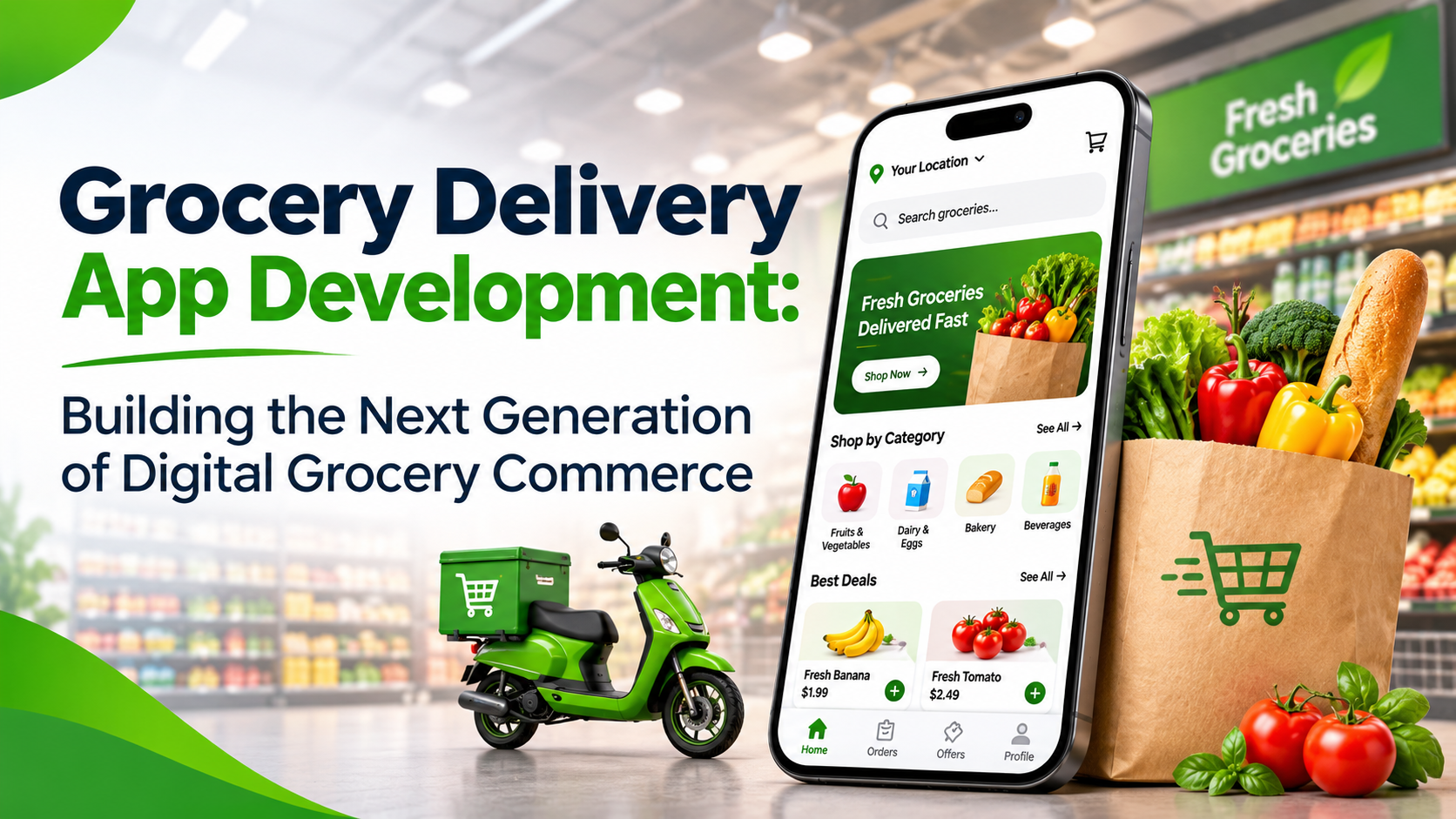

The grocery retail industry is undergoing a major transformation as consumers become more comfortable purchasing everyday essentials through digital channels. What once required a physical store visit can now be completed through mobile ordering, digital payments, and doorstep fulfilment. However, the opportunity in grocery commerce extends beyond making shopping more convenient. Retailers are now competing through product availability, fulfilment efficiency, personalized shopping experiences, and the ability to serve customers across multiple locations.
This shift is encouraging supermarket chains, independent retailers, grocery startups, and entrepreneurs to invest in digital commerce. Grocery Delivery App Development provides a foundation for creating these connected shopping experiences while helping businesses establish their own digital presence and expand beyond traditional store-based operations.
The Grocery Market Is Moving Beyond Store-Dependent Shopping
Consumer shopping habits are becoming increasingly flexible. Some customers prefer scheduled weekly grocery purchases, while others need smaller quantities of essential products delivered quickly. Working professionals, families, elderly consumers, and customers with limited access to nearby supermarkets may all have different purchasing requirements.
This diversity is creating opportunities for grocery businesses to introduce multiple fulfilment models instead of relying exclusively on traditional in-store shopping.
Online grocery platforms can support scheduled deliveries, express fulfilment, recurring purchases, and store-based pickup. Retailers can select the operating model that suits their geographical coverage, inventory capacity, and customer segment.
For entrepreneurs, this means the grocery delivery business is no longer restricted to replicating a supermarket catalogue. It can be positioned around a particular customer group, delivery expectation, or product category.
Inventory Visibility Is Becoming a Major Retail Differentiator
One of the most important challenges in online grocery commerce is maintaining accurate product availability.
Unlike many other e-commerce categories, grocery products frequently involve changing stock quantities, expiration dates, fresh produce quality, and replenishment requirements. A product displayed as available in an application may already be out of stock at the fulfilment location.
These discrepancies can lead to substitutions, delayed orders, refunds, and customer dissatisfaction.
Connected inventory management can help retailers synchronize product availability with actual store or warehouse stock. Automated stock updates, low-inventory notifications, product-level tracking, and replenishment insights can improve operational visibility.
Businesses handling fresh produce can also benefit from inventory monitoring based on product shelf life and storage requirements.
The commercial advantage is significant: better inventory visibility helps reduce avoidable order cancellations and supports more reliable fulfilment.
*Quick Commerce Is Changing the Economics of Grocery Fulfilment
*
The growth of quick commerce has introduced new expectations around delivery speed. Customers increasingly recognize that different grocery purchases have different urgency levels.
A customer purchasing fresh milk or essential cooking ingredients may prioritize rapid fulfilment, whereas someone ordering monthly household supplies may prefer a scheduled delivery slot.
This creates an opportunity for businesses to operate differentiated fulfilment services.
Instead of promising the same delivery speed for every order, retailers can introduce service categories based on order size, distance, product availability, and fulfilment capacity.
However, faster delivery also creates operational expenses. Dark store management, picking efficiency, delivery partner availability, and geographical coverage influence the economics of quick commerce.
A sustainable grocery delivery model should balance delivery promises with the actual cost of fulfilling each order.
*Personalization Is Reshaping the Digital Grocery Basket
*
Grocery shopping is strongly influenced by purchasing habits. Many customers regularly buy similar products, preferred brands, household essentials, and frequently used ingredients.
This creates an opportunity for digital platforms to make shopping more relevant.
Recommendation systems can identify frequently purchased products and suggest complementary items. Reorder functionality can simplify repeat shopping, while personalized offers can introduce customers to relevant categories.
Businesses can also use shopping analytics to understand demand for organic products, packaged foods, household supplies, personal care products, and regional grocery preferences.
For example, a retailer serving a health-conscious customer segment may highlight organic produce and specialized dietary products. A neighbourhood supermarket may prioritize commonly purchased household essentials and regional food products.
The objective is to reduce shopping friction while increasing relevant product discovery and basket value.
Grocery Businesses Are Exploring New Revenue Opportunities
Digital grocery operations can support several commercial models beyond conventional product sales.
Multi-vendor grocery marketplaces: Entrepreneurs can connect multiple local grocery retailers through one branded platform and generate revenue through vendor subscriptions, commissions, or promotional placements.
**Supermarket-owned applications: **Established retailers can develop direct ordering channels and strengthen relationships with existing customers.
Subscription-based grocery services: Businesses can offer recurring delivery packages for regularly purchased essentials.
Specialty grocery commerce: Entrepreneurs can focus on organic foods, imported groceries, regional products, premium ingredients, or health-oriented food categories.
B2B grocery distribution: Digital platforms can connect wholesalers, distributors, retailers, and institutional buyers through structured ordering systems.
Each model requires a different operational strategy. Choosing the right revenue structure depends on customer demand, product margins, supply availability, and fulfilment expenses.
The Technology Behind Connected Grocery Operations
A grocery platform must coordinate several activities simultaneously.
Customers browse products, retailers manage inventory, administrators oversee transactions, and delivery partners handle fulfilment.
A well-planned grocery delivery application can bring these activities together through connected operational capabilities.
Intelligent product catalogue: Organize grocery items by category, brand, pricing, availability, and product specifications.
Inventory synchronization: Update stock quantities and product availability across stores or warehouses.
Smart order management: Coordinate order acceptance, picking, packing, substitutions, and fulfilment.
Delivery coordination: Assign delivery partners and monitor delivery progress.
Digital payments: Support cards, wallets, and other locally preferred payment options.
Demand analytics: Identify purchasing trends, peak ordering periods, and popular product categories.
Customer engagement: Enable offers, loyalty programmes, reorder reminders, and personalized notifications.
AI-powered demand forecasting can also help retailers estimate future product requirements and make more informed replenishment decisions.
Why Market-Specific Customization Matters in Grocery App Development
Grocery businesses operate under different retail conditions depending on their target market. Product preferences, payment habits, delivery infrastructure, regulations, and customer expectations can vary significantly between regions.
An application designed for a metropolitan quick-commerce business may not be suitable for a retailer operating across smaller towns or multiple suburban locations.
Businesses should therefore consider localization when planning their technology. Regional languages, local payment methods, product categorization, delivery coverage, tax requirements, and store-level administration can all influence adoption.
Scalability is equally important. As businesses introduce additional outlets, product categories, vendors, and delivery zones, their technology should support expansion without creating unnecessary operational complexity.
Turning Grocery Demand into a Sustainable Digital Business
The next stage of grocery retail will be shaped by how effectively businesses connect customer expectations with inventory availability, fulfilment economics, and digital engagement.
For entrepreneurs, the opportunity is not limited to creating another online supermarket. It is about identifying an underserved grocery segment, establishing a suitable operating model, and building a technology platform that can grow with demand.
With spotneats, businesses can explore grocery delivery app development solutions to establish a customized digital grocery platform with customer ordering, inventory management, vendor administration, delivery coordination, and payment capabilities.
Whether the objective is to digitize an existing supermarket, create a multi-vendor grocery marketplace, or introduce a specialized grocery delivery business, the right technology can provide a foundation for entering the evolving digital retail market.






Top comments (0)