
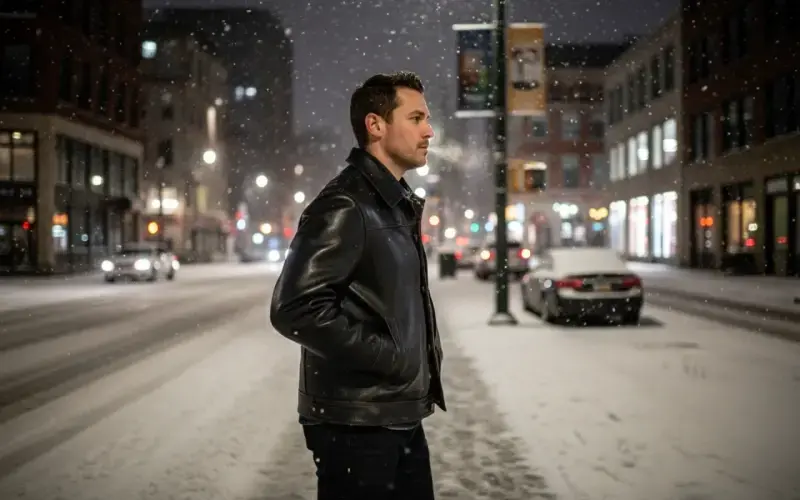

Leather winter jackets retain body heat by limiting cold air penetration, reducing heat loss, and stabilizing internal temperature through dense natural fibers.
Why Body Heat Retention Matters in Winter Jackets
Cold weather places constant pressure on the human body to maintain warmth. When heat escapes faster than it can be generated, discomfort and fatigue follow. Winter jackets act as a barrier between the body and the environment, and their effectiveness depends on material structure, layering, and airflow control.
Leather winter jackets provide wind protection and insulation, in contrast to lightweight clothing. This dual function makes them especially valuable in colder climates where fluctuating temperatures and wind exposure create inconsistent conditions.
How Leather Naturally Regulates Temperature
Dense Fiber Structure
Leather is composed of tightly packed natural fibers. These fibers slow down heat transfer by trapping warm air close to the body. Once warmth builds inside the jacket, leather prevents it from escaping quickly.
Reduced Air Penetration
Cold air entering a jacket causes rapid heat loss. Leather forms a strong outer barrier that limits airflow penetration, especially compared to fabric based winter jackets. This airflow resistance stabilizes internal warmth.
“Warmth is not about bulk, but control.” — Architectural design principle often applied to insulation
What Makes Leather Jackets for Winter Different From Regular Jackets
The design and function of winter leather jackets are different from those of casual clothing. They are designed to function in low temperatures rather than serve only as style pieces.
Winter leather jackets include thicker hides, reinforced seams, and inner linings that support insulation. Sleeves are structured to prevent cold air from entering during movement. Collar height and cuff closure further reduce exposure. These elements work together to maintain warmth without excessive layering.
Role of Inner Linings in Leather Winter Jackets
Thermal Linings
Many leather winter jackets include quilted, fleece, or shearling linings. These materials trap air pockets that hold warmth close to the skin. The lining works in partnership with leather rather than independently.
Removable Liners for Temperature Control
Some jackets allow liner removal during milder weather. This flexibility extends jacket usability while maintaining insulation during colder periods. It also prevents overheating when temperatures fluctuate.
Did You Know?
Studies referenced in textile insulation research show that garments blocking wind can retain up to 30 percent more body heat compared to breathable fabrics alone, even without added insulation layers.
How Leather Thickness Affects Heat Retention
Leather thickness directly influences insulation. Thicker hides slow heat transfer and block cold air more effectively. Winter leather jackets typically use heavier hides than fashion focused leather garments.
However, thickness alone is not the only factor. Balance matters. Overly rigid leather restricts movement and reduces comfort. Well designed leather winter jackets use processed hides that maintain flexibility while preserving insulation capacity.
Why Black Leather Jackets Perform Well in Winter
Black leather jackets are not just visually popular. Dark colors absorb and retain more external warmth when exposed to sunlight. During daytime winter conditions, this absorption slightly increases surface temperature, supporting internal warmth.
Additionally, black leather jackets conceal wear, creases, and surface marks that naturally occur during winter use. Snow, salt, and friction marks blend into darker surfaces better than lighter shades, preserving appearance over time.
How Leather Manages Moisture in Cold Weather
Moisture is a major cause of heat loss. When fabric absorbs moisture, evaporation pulls warmth away from the body. Leather resists water penetration better than many textiles, especially when treated.
By keeping moisture out, leather prevents evaporative cooling. Internal linings further manage perspiration by separating the body from the outer shell. This combination helps maintain consistent warmth during extended wear.
How Jacket Fit Influences Heat Retention
A winter jacket that fits poorly cannot retain heat effectively. Gaps allow cold air to circulate, pushing warmth out. Leather winter jackets are often structured closer to the body, reducing open airflow zones.
Proper shoulder alignment keeps sleeves sealed. A snug waist prevents cold drafts from entering. Correct sleeve length ensures wrists remain protected during movement. Fit is as important as material when it comes to warmth.
Why Layering Works Better With Leather Jackets
Leather winter jackets support layering without bulk. Because the outer shell blocks wind, internal layers focus solely on insulation rather than protection. This reduces the need for thick inner garments.
A thermal shirt combined with a lined leather jacket often provides sufficient warmth in cold conditions. This approach improves mobility and comfort compared to heavy padded jackets.
One Often Ignored Feature That Retains Heat
- High quality leather cuffs and collar closures reduce heat leaking during arm and neck movement
How Leather Jackets Adapt Over Time
Leather improves with wear. As it softens, it molds to the wearer’s body shape. This personalized fit reduces air gaps and improves thermal efficiency. Synthetic materials often lose structure over time, allowing cold air to circulate more freely.
This adaptive nature explains why long term owners find leather jackets warmer after regular use. Comfort and insulation improve rather than decline.
“The best materials evolve with the user.” — Industrial design principle
Why Winter Jackets Made From Leather Last Longer
Durability contributes indirectly to warmth. Jackets that degrade lose insulation capacity. Leather resists tearing, compression, and seam separation better than many fabrics.
A well maintained leather winter jacket remains functional across multiple winters. Its insulation performance stays consistent because the outer shell retains integrity. This longevity makes leather a practical investment rather than a seasonal item.
How Urban and Outdoor Environments Affect Jacket Choice
City Wear
Urban environments involve short exposure periods, wind tunnels between buildings, and temperature shifts. Leather jackets for winter perform well by blocking wind while maintaining comfort during indoor transitions.
Outdoor Exposure
Outdoor conditions involve sustained cold and wind. The best winter coats are made of thicker leather with insulated linings, which minimize heat loss during extended exposure.
Understanding usage context helps select the right jacket construction.
How Leather Winter Jackets Compare to Puffer Jackets
Puffer jackets work by trapping air inside down or synthetic insulation. While effective, they lose insulation when compressed or wet. Leather winter coats & jackets depend on structure and barrier performance.
Leather does not collapse under pressure. It maintains insulation during sitting, movement, and exposure. This consistency appeals to men who prioritize reliability over volume.
Choosing Among the Best Winter Jackets for Men
Selecting among the best winter jackets for men requires understanding material behavior rather than surface appearance. Leather winter coats excel in wind resistance, durability, and long term warmth. They perform best when fit properly and paired with suitable linings.
Men seeking balance between warmth, mobility, and longevity often prefer leather over bulky alternatives. Knowledge based selection improves satisfaction and performance.
Why Leather Jackets for Winter Remain Timeless
Leather jackets for winter endure because they solve real problems. They protect against cold wind, retain heat, and adapt to body movement. Trends shift, but functional performance remains relevant.
Leather bridges the gap between style and protection. It allows men to stay warm without excessive layering or compromised mobility. This balance explains continued popularity across decades.
Maintenance and Heat Retention
Leather benefits from regular conditioning. Proper moisture levels keep fibers flexible and sealed. Dry leather cracks, allowing air penetration and heat loss. Conditioning preserves insulation performance.
Storage also matters. Hanging jackets properly prevents compression of linings. Avoiding damp storage preserves thermal efficiency.
How Black Leather Jackets Fit Winter Lifestyles
Black leather jackets adapt easily to winter wardrobes. They pair with boots, scarves, gloves, and denim effortlessly. This versatility reduces the need for multiple jackets while maintaining warmth and appearance.
Their ability to hide surface wear makes them ideal for winter environments involving snow residue and salt exposure. Practicality supports long term use.
Conclusion: Why Leather Winter Jackets Retain Heat So Well
Leather winter jackets retain body heat through dense fiber structure, wind resistance, moisture control, and supportive insulation layering. Their ability to block airflow while adapting to the body creates stable warmth without bulk.
Black leather jackets add durability and heat absorption advantages. Proper fit, lining selection, and maintenance further enhance performance. Leather jackets for winter remain trusted because they give continuous warmth, comfort, and longevity. Understanding how they work helps men make informed winter clothing choices that last beyond seasonal trends.



Top comments (0)