

Discover how Audio to Text technology transforms phone recordings into accurate transcripts instantly. Explore AI-powered benefits, real-world use cases, and standout features.
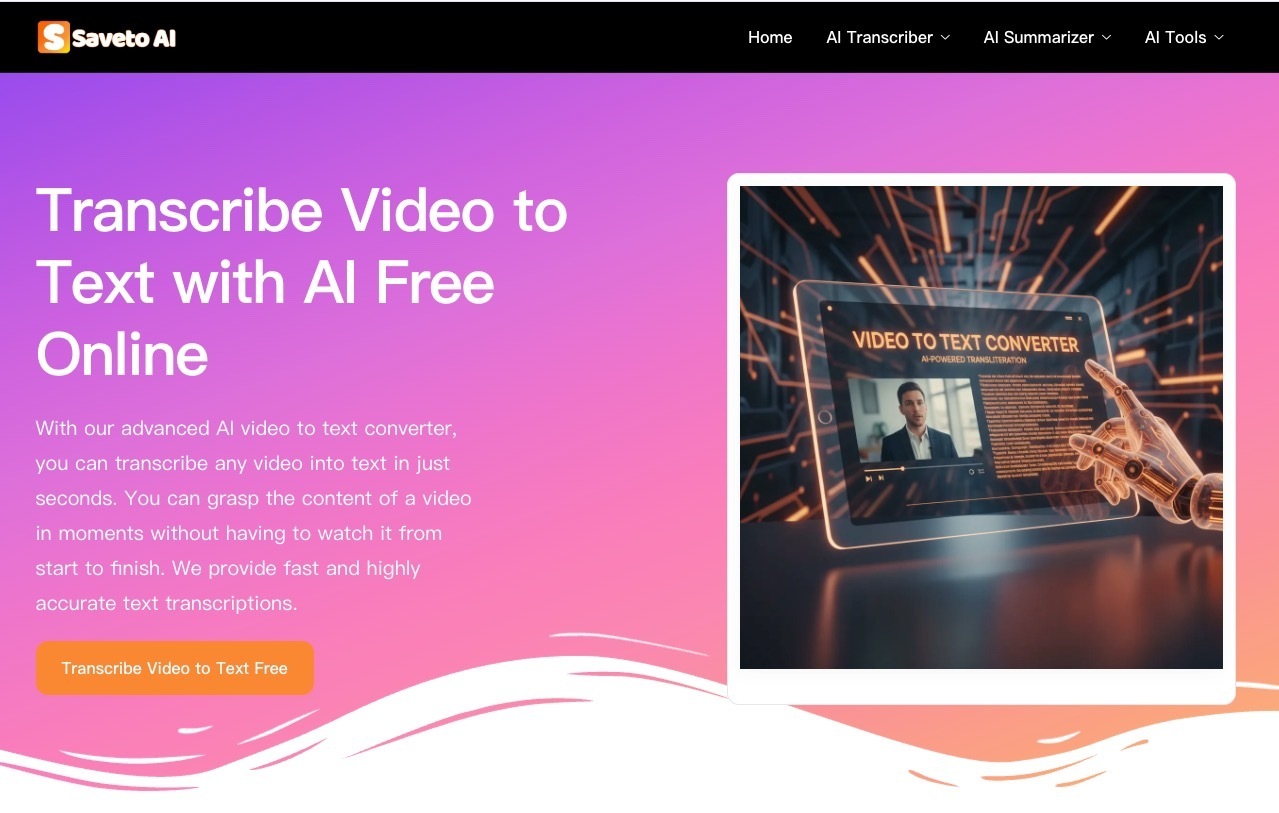
we live in a world that never stops talking. From business calls and academic lectures to personal voice memos captured in the middle of the night, our phones are constantly recording the moments that matter most to us. Yet for years, those recordings sat locked inside audio files — valuable, but inaccessible without hours of manual listening and typing. The rise of Audio to Text converter has changed all of that. What once required professional transcriptionists and expensive software can now be accomplished in seconds on the same device you used to record. Whether you're a journalist racing against a deadline, a student drowning in lecture notes, or a business professional juggling back-to-back meetings, Audio to Text has quietly become one of the most transformative tools of the modern productivity era — and its best chapter is only just beginning.
Why AI-Powered Audio to Text Is a Game-Changer
Transcription used to be a labor-intensive process. Even the fastest typist could only keep pace with audio if they were willing to pause, rewind, and replay — over and over. Artificial intelligence has fundamentally rewritten that story. Modern AI transcription engines process spoken language in real time, learning the subtle rhythms of human speech and delivering output that is accurate, fast, and increasingly context-aware.
"AI transcription doesn't just convert sound into words — it understands language the way a thoughtful human listener would."
Unmatched Speed and Accuracy
Traditional transcription services often quoted turnaround times measured in hours or even days. AI-powered solutions operate on an entirely different timescale. A thirty-minute phone recording that would take a skilled human typist well over an hour to transcribe can be processed by an AI engine in under a minute. More importantly, modern large-scale language models achieve word-error rates that rival — and in many conditions surpass — professional human transcriptionists. The technology has become especially adept at handling natural speech patterns: false starts, filler words, rapid-fire conversation, and overlapping voices are all challenges that contemporary AI handles with remarkable composure.
Multilingual Support and Contextual Intelligence
One of the most significant advantages of AI transcription is its broad linguistic range. Leading platforms now support dozens of languages and regional dialects, making the technology genuinely accessible to a global audience. Beyond simple translation, AI models are increasingly capable of understanding context — recognizing that the word "bank" means something different in a financial discussion than it does in a conversation about a riverbank. This contextual intelligence dramatically reduces editing time and delivers transcripts that read naturally from the very first pass.
Cost Efficiency at Scale
For organizations that generate large volumes of recorded content — think podcast networks, legal firms, telehealth providers, or corporate training departments — the economics of AI transcription are compelling. A subscription to a capable AI transcription platform typically costs less per month than a single hour of professional human transcription. For individual users, many platforms offer generous free tiers that cover casual use entirely. The combination of speed, accuracy, and affordability means that AI Audio to Text tools are no longer a luxury reserved for large enterprises; they are a practical, everyday solution for anyone with a smartphone.
Real-World Use Cases: Where Audio to Text Makes the Biggest Difference
Understanding the technology is one thing; knowing where to deploy it is another. The following use cases represent the scenarios where phone recording transcription delivers the most immediate, tangible value — and where a well-chosen tool can transform a frustrating workflow into an effortless one.
Business Meetings and Conference Calls
The modern professional spends an extraordinary portion of their working life in meetings. Recording those sessions is straightforward; capturing every decision, action item, and nuanced discussion point is not. By converting recordings to text immediately after a meeting concludes, teams can search transcripts for specific moments, distribute accurate summaries, and ensure that no commitment falls through the cracks. Integrated tools can even highlight speakers separately, making it easy to attribute ideas and track follow-up responsibilities.
Academic Lectures and Study Notes
Students who record lectures face the same fundamental challenge as professionals in meetings: listening takes time, and time is the one resource no student has in abundance. Transcribing a one-hour lecture produces a searchable, scannable document that can be reviewed in fifteen minutes and annotated at will. For students studying in a second language, having a written transcript alongside the audio is invaluable — allowing them to cross-reference vocabulary, clarify pronunciation, and deepen comprehension simultaneously.
Journalism and Interviews
For journalists, accurate quotation is not merely a professional standard — it is an ethical obligation. Manually transcribing interviews is one of the most time-consuming parts of the reporting process, and it carries the risk of introducing small but significant errors. AI transcription eliminates that risk, delivering verbatim records that journalists can cite with confidence. With the time saved, reporters can focus on analysis, context, and storytelling — the elements that machines cannot replicate.
Medical and Legal Documentation
Healthcare providers and legal professionals deal with documentation requirements that are both voluminous and consequential. Physicians who dictate patient notes after consultations, lawyers who record depositions and client calls, and court reporters who capture proceedings all stand to benefit enormously from fast, accurate transcription. In these fields, the ability to search a transcript, extract specific passages, and maintain a reliable written record is not just convenient — it is essential to professional practice and compliance.
Content Creation and Podcasting
Podcasters, YouTubers, and online educators face a perpetual demand for written content alongside their audio and video output — show notes, captions, blog summaries, and social media excerpts all require a written foundation. Transcribing recordings automatically gives creators a raw manuscript they can edit, repurpose, and publish across multiple channels without starting from scratch each time. The transcript becomes the seed from which an entire content ecosystem grows.
Personal Voice Memos and Idea Capture
Not every use case is professional. Many people use their phones to capture fleeting ideas, shopping lists, reflective journal entries, or creative inspiration while driving, walking, or exercising. Converting those voice memos to text creates a searchable personal archive — a record of thought that can be revisited, organized, and acted upon rather than lost in an ever-growing library of audio files that never gets listened to again.
Standout Features That Set Great Transcription Tools Apart
Not all transcription tools are created equal. As the market has matured, a handful of genuinely differentiating features have emerged that separate the best platforms from the merely adequate. Here is what to look for when evaluating your options.
Speaker Identification and Diarization
In any recording involving more than one person, knowing who said what is as important as knowing what was said. Advanced transcription platforms offer speaker diarization — the automatic identification and labeling of individual voices within a single recording. High-quality diarization engines can distinguish between speakers even when voice characteristics are similar, and many allow users to assign names to identified speakers so that the final transcript reads as a clean, attributed dialogue. This feature alone dramatically reduces the post-processing effort required to make a multi-speaker transcript useful.
Smart Punctuation and Paragraph Formatting
Raw speech is notoriously difficult to read in written form. Speakers rarely signal the end of a sentence with a clear pause; they trail off, interrupt themselves, and change direction mid-thought. The best transcription tools apply intelligent punctuation — inserting commas, periods, and paragraph breaks in the places a human editor would choose — so that the output requires minimal cleanup before it can be shared or published. Some platforms also offer automatic formatting for specific document types, such as meeting minutes or interview transcripts, saving additional editing time.
Timestamp Integration and Search Functionality
A transcript without timestamps is useful; a transcript with timestamps linked to the original audio is indispensable. Leading tools embed time markers throughout the text, allowing users to click on any word or sentence and jump directly to that moment in the recording. Combined with full-text search, this creates a powerful navigation system that makes even a multi-hour recording instantly explorable. Researchers, journalists, and legal professionals in particular will find this capability transformative for reviewing, verifying, and citing specific passages.
Export Flexibility and Integration
The final transcript should be easy to use wherever you need it. Top-tier tools offer export options in a wide range of formats — plain text, Word documents, PDFs, and subtitle files among them — and many integrate directly with productivity platforms such as Notion, Google Docs, Slack, and project management tools. Some platforms provide APIs that allow developers to build transcription directly into their own applications, extending the value of the technology across entire organizational workflows. The less friction between transcription and action, the more valuable the tool becomes in practice.
The Future Is Already Listening — Now It Can Read, Too
The distance between a recorded conversation and a searchable, shareable, actionable document has never been shorter. Whether you are a professional seeking to reclaim hours lost to manual note-taking, a student trying to keep pace with demanding coursework, or a creative looking to unlock the full potential of your recorded ideas, Audio to Text technology offers a solution that is fast, accurate, and remarkably accessible. As AI continues to advance, transcription will only get smarter — adapting to individual voices, handling complex vocabularies, and integrating seamlessly into the tools we already use. The question is no longer whether you should be using audio-to-text tools. The question is why you haven't started yet.






Top comments (0)