

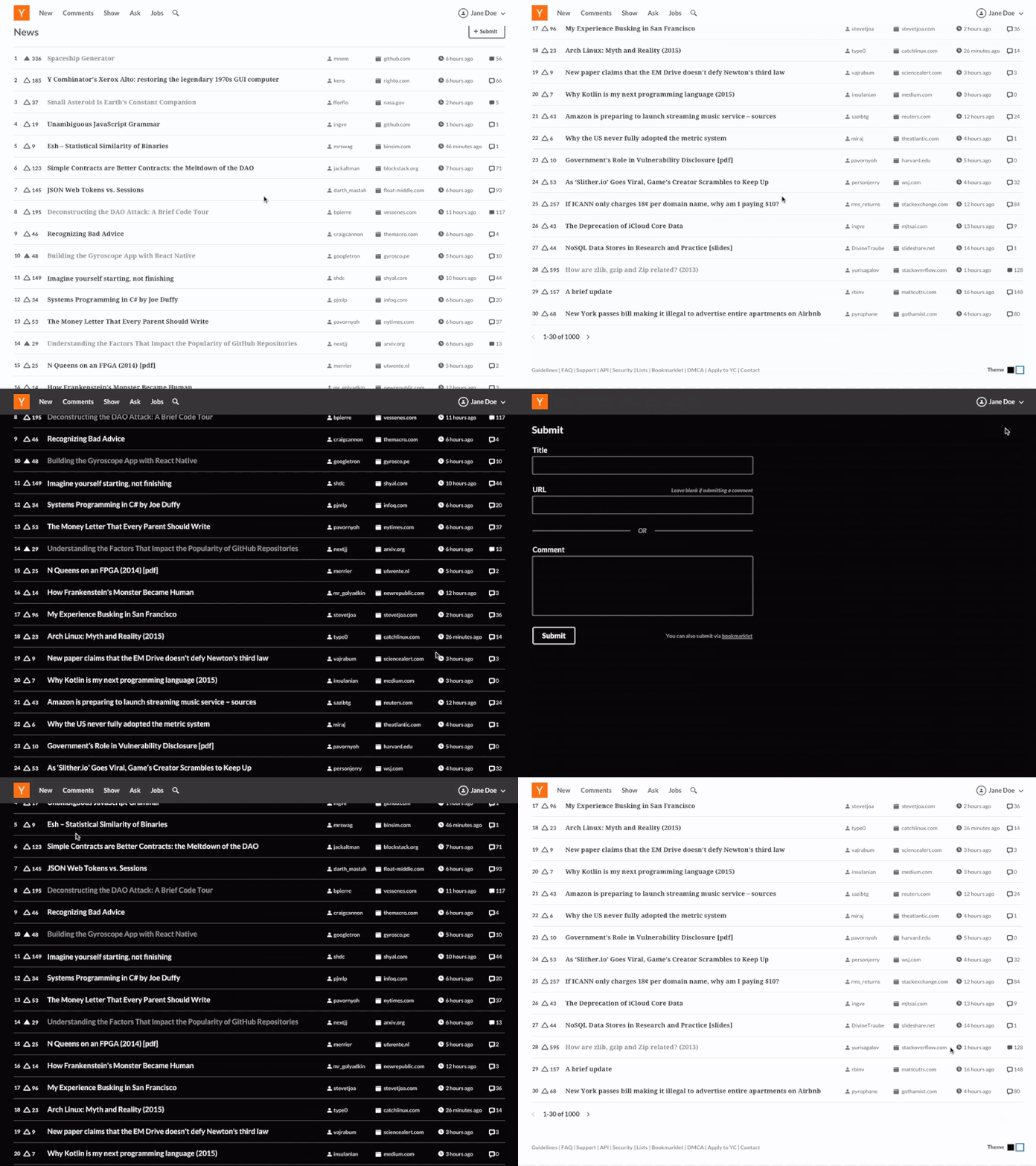
A real Claude Monet painting was uploaded to Hacker News with a prompt asking for AI image critique. The post received 43 points and 50 comments before the deception was revealed.
The experiment, first reported on PetaPixel, tested whether technical feedback would differ when viewers assumed the source was generative AI rather than an 1890s oil painting.
What Happened in the Thread
Commenters focused on typical AI failure modes. Multiple users flagged inconsistent brushwork, overly saturated colors, and floating elements that suggested prompt artifacts. Several suggested specific fixes such as lowering CFG scale or adding negative prompts for edge definition.
No participant questioned the premise that the image was AI-generated until the reveal. The discussion ran for several hours with detailed technical suggestions before the original poster disclosed the source.
Patterns in the Feedback
Early comments clustered around three themes:
- Overly perfect symmetry in water reflections
- Lack of visible canvas texture
- Color harmony that felt algorithmically balanced rather than observed
These observations mirror common critiques seen in Stable Diffusion and Midjourney communities. The same visual traits received praise when later identified as Monet's intentional style.
Comparison to Prior Detection Tests
Similar experiments have tested human judgment on AI content:
| Test | Year | Medium | Detection Rate | Key Finding |
|---|---|---|---|---|
| This Monet post | 2026 | Painting | 0% initial | Technical language applied regardless of source |
| Turing Test for Art | 2023 | Digital | 35% | Participants over-indexed on detail density |
| Deepfake Photo Study | 2024 | Photography | 62% | Lighting inconsistencies were primary cue |
The Monet case stands out for zero initial detection despite the work being widely reproduced in art history materials.
Practical Takeaways for AI Practitioners
Developers building critique tools or automated evaluators can draw direct lessons. Current vision-language models often replicate the same surface-level observations seen in the thread. Training data that includes historical art alongside synthetic images reduces false positive rates on traditional techniques.
Teams evaluating new image models should run blind tests with known historical works to measure bias before deployment.
Who Should Pay Attention
Researchers studying AI detection systems gain a clear data point on human baseline performance. Prompt engineers can use the thread comments as a checklist of recurring failure modes to target during refinement. Art platforms considering AI labeling policies see evidence that disclosure changes perception more than visual quality alone.
Skip this case if your focus is purely technical benchmarking without human factors.
Bottom line: The experiment demonstrates that critique language currently applied to AI images often reflects viewer assumptions rather than measurable differences in output.
"How to replicate the test"
The results suggest current AI critique frameworks remain heavily influenced by expectation rather than intrinsic visual analysis. Future tools that separate source metadata from visual assessment may produce more consistent evaluations.





Top comments (0)