
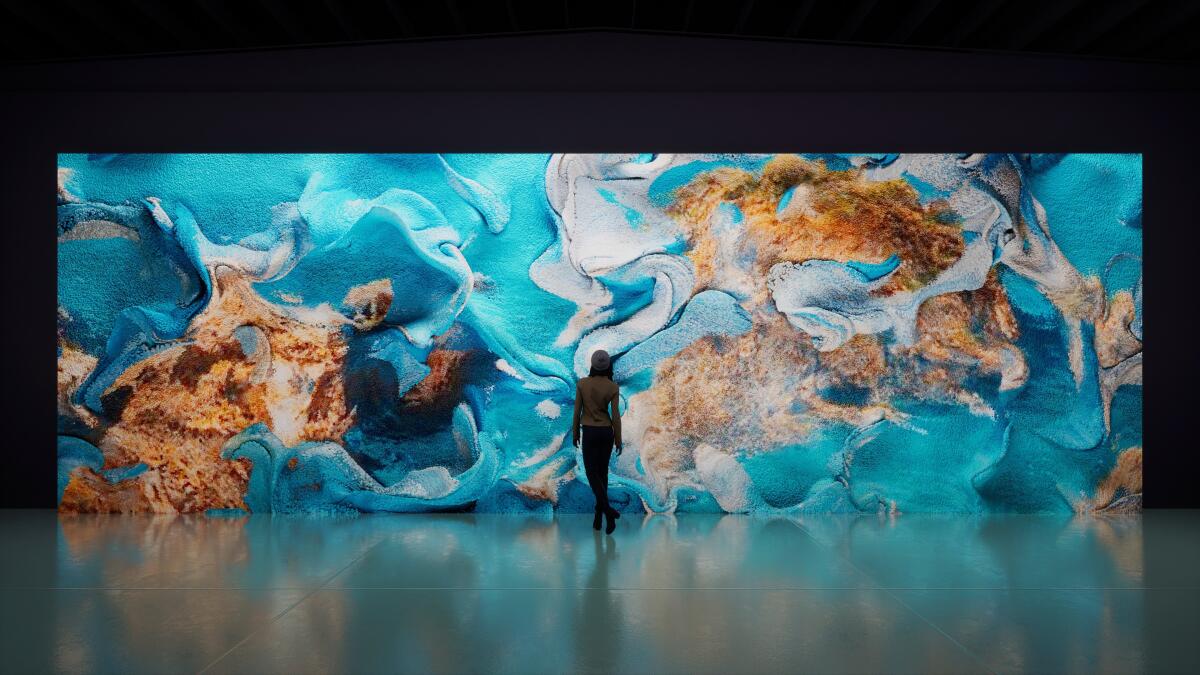

Recraft V3 is Recraft's hosted image model with style and text-placement controls. This February 2025 guide compares it with nine model versions from Google, Black Forest Labs, Midjourney, Ideogram, and Stability AI, covering their documented features and access routes. Recraft, Google, BFL, Midjourney, Ideogram, Stability
These ten entries form a historical comparison organized by product family and workflow, with documented availability changes identified where relevant.
What are the key facts about these February 2025 models?
| Field | Verified detail |
|---|---|
| Developer | Recraft, Google, Black Forest Labs, Midjourney, Ideogram AI, and Stability AI; see the individual product entries below. Recraft, Google, BFL, Midjourney, Ideogram, Stability |
| Released | The selected versions span late 2023 through January 2025; dated releases are identified below. Midjourney, Google, BFL, Stability |
| Type | Text-to-image models, including hosted services and downloadable checkpoints. Recraft, FLUX card, SD 3.5 card |
| Size or parameters | FLUX.1 dev: 12 billion parameters. Stable Diffusion 3.5 Large Turbo: distilled from the 8.1-billion-parameter Large model. FLUX card, Stability announcement |
| License and access | Hosted access for Recraft and Imagen, without open weights; FLUX.1 dev weights use the FLUX Non-Commercial License; SD 3.5 Large Turbo weights use the Stability AI Community License. Recraft, Google, FLUX card, SD 3.5 card |
| Where it runs | Vendor infrastructure for hosted models; compatible local or self-hosted runtimes for the downloadable models. BFL, Midjourney, Ideogram, SD 3.5 card |
Which ten image generators were available in February 2025?
Recraft V3 and Imagen 3
Recraft V3 was released in October 2024. Recraft documents text placement and style controls, making it a candidate for testing compositions in which lettering is part of the visual design. Recraft documentation
Prepare a poster brief with a short headline and explicit placement. Evaluate the actual spelling and layout in the output; a text-generation capability is a reason to test the model, not to skip proofreading.
Imagen 3, version 002 is Google's imagen-3.0-generate-002, released on Vertex AI on January 29, 2025. Its documented input is text and its output is images. Google model documentation
For a comparison, use the same scene brief you give the other models and record the exact identifier. “Imagen 3” alone leaves out a version detail that matters when reconstructing an experiment.
Three FLUX choices
FLUX.1 pro was part of Black Forest Labs' initial August 1, 2024 release. It was offered through hosted access, while the same launch distinguished the downloadable dev and schnell models. BFL announcement
FLUX1.1 pro followed on October 2, 2024, alongside BFL's public beta API. Keep its results separate from FLUX.1 pro so a comparison identifies which hosted model produced each image. FLUX1.1 announcement
FLUX.1 dev provides downloadable weights and documented Diffusers and ComfyUI access. Its non-commercial model license distinguishes use of the model from permitted uses of generated outputs. FLUX model card
The FLUX licensing companion is relevant when choosing that route. Decide whether you need hosted generation or possession of the weights before comparing output aesthetics.
Two Midjourney versions
Midjourney V6 was released on December 20, 2023. Midjourney V6.1 followed on July 30, 2024; Midjourney documents version selection with the --v parameter in its hosted interface. Version documentation
Treat these as separate entries when reviewing a historical image set. Preserve the version setting beside the prompt, and avoid interpreting the output of a later default model as a sample from February 2025.
Two Ideogram options
Ideogram 2.0 was released on August 21, 2024. Ideogram's model-selection guide records that date, and its legacy API reference identifies the model as V_2. Model history, API reference
Ideogram 2.0 Turbo is the faster rendering option associated with that model generation. Ideogram documents Turbo rendering and the V_2_TURBO API identifier. Render-speed guide, API reference
Try both on the same short headline and illustration brief. Compare the number of acceptable candidates and the repair work each requires, using your own results instead of assuming the faster setting fits every job.
Stable Diffusion 3.5 Large Turbo
Stable Diffusion 3.5 Large Turbo is Stability AI's distilled model for fewer-step generation, released with the Large model on October 22, 2024. Its official card includes downloadable weights and a four-step example. Announcement, card
Use it when evaluating a configurable local pipeline. The SD 3.5 deployment companion offers a separate angle on managed access.
Which historical models have access or output limitations?
Historical access changes. Google's current documentation lists June 30, 2026 as the discontinuation date for Imagen 3 version 002, so it should not be presented as a new endpoint to adopt today. Google documentation
Hosted Recraft and Imagen access provides no open weights. The proprietary FLUX pro route is also distinct from the downloadable dev checkpoint; a local interface does not change those access terms. Recraft, Google, BFL
FLUX dev's card notes prompt-following limitations. Ideogram describes a detail tradeoff for Turbo rendering. Include both content correctness and your revision effort in a practical comparison. FLUX card, render-speed guide
How can you compare these image generators in practice?
Choose one deliverable and test it through a documented access route. For a local baseline, the following uses Stability's published Large Turbo example structure with an original prompt. SD 3.5 card
Install compatible PyTorch, Diffusers, Transformers, Accelerate, and the checkpoint's tokenizer dependencies. Accept the repository's access conditions and authenticate before downloading gated weights. SD 3.5 card
import torch
from diffusers import StableDiffusion3Pipeline

pipe = StableDiffusion3Pipeline.from_pretrained(
    "stabilityai/stable-diffusion-3.5-large-turbo",
    torch_dtype=torch.bfloat16,
).to("cuda")
image = pipe(
    "A red paper boat on a dark tabletop, soft studio light",
    num_inference_steps=4,
    guidance_scale=0.0,
).images[0]
image.save("comparison-sample.png")
For hosted candidates, choose the documented version in the vendor interface or API. Save the prompt, selected settings, and output together, then compare the images at the size required by your deliverable.
How do these models compare for design and local generation?
| Requirement | Candidates to evaluate |
|---|---|
| Text placement and style controls | Recraft V3. Recraft |
| Rendering-speed choices | Ideogram 2.0 and its Turbo option. Rendering guide |
| Downloadable image workflows | FLUX.1 dev and SD 3.5 Large Turbo. FLUX, Stability |
The ComfyUI pillar explains how to organize local workflows. Set your acceptance criteria before choosing a favorite sample.
What else should you know about this February 2025 comparison?
Are these ten independent companies?
The ten entries represent six developers: Recraft, Google, Black Forest Labs, Midjourney, Ideogram, and Stability AI. Several entries are model versions from the same developer. Recraft, Google, BFL, Midjourney, Ideogram, Stability
Can I run every listed model locally?
FLUX.1 dev and Stable Diffusion 3.5 Large Turbo have downloadable weights and documented local runtimes. Recraft V3 and Imagen 3 use hosted access, with no open weights supplied through those services. FLUX, Stability, Recraft, Google
Which option should I test first?
Start with the access route and deliverable you actually need. Use a small, repeatable set of briefs and judge the finished assets, including any repair work.
Sources
- Recraft V3 announcement
- Recraft V3 documentation
- Google Imagen 3 model documentation
- Black Forest Labs launch announcement
- FLUX1.1 pro announcement
- FLUX.1 dev model card
- Midjourney version documentation
- Ideogram model versions and release dates
- Ideogram rendering-speed documentation
- Ideogram legacy model API reference
- Stable Diffusion 3.5 announcement
- Stable Diffusion 3.5 Large Turbo model card






Top comments (0)