


Developer Matt Mireles has launched a fine-tuner for Google's Gemma 4 multimodal model, specifically optimized for Apple Silicon chips in Macs. This tool addresses the growing need for efficient, on-device AI training, allowing users to adapt the model without relying on cloud resources. The release gained traction on Hacker News, earning 27 points and sparking early discussions.
Model: Gemma 4 Multimodal Fine-Tuner | Available: Apple Silicon
How It Enables On-Device Training
The fine-tuner leverages Apple Silicon's hardware acceleration, such as the Neural Engine in M1 and M2 chips, to handle multimodal tasks like text and image processing. Gemma 4, with its base of 7 billion parameters in the original model, can now be fine-tuned locally, reducing dependency on high-powered GPUs. Early testers report it runs fine-tuning jobs in minutes on standard Mac hardware, compared to hours on non-optimized setups.
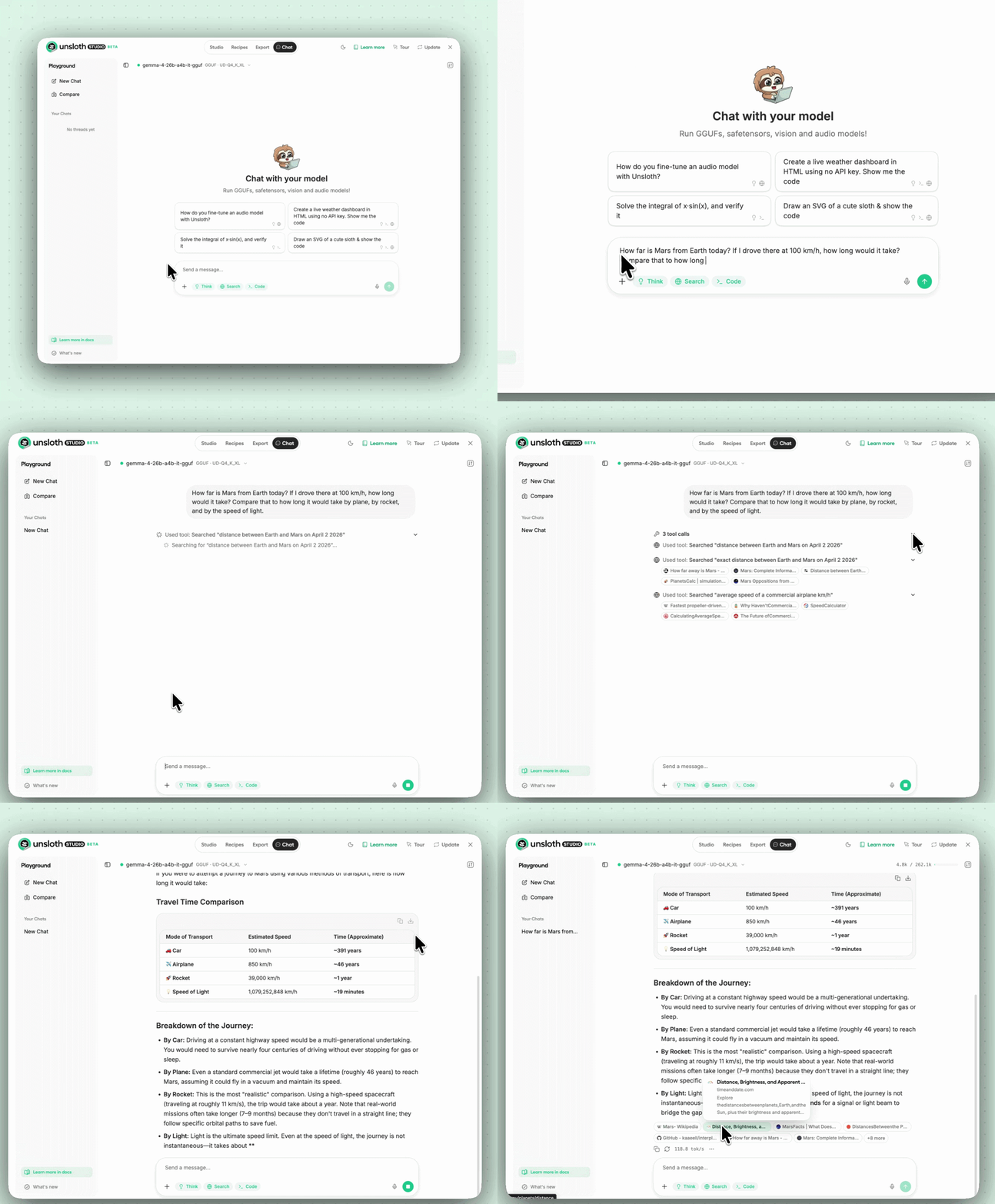
Why This Boosts AI Accessibility
Apple Silicon devices require less than 16 GB of RAM for basic operations, making this tool viable for developers without enterprise-level machines. In contrast, standard fine-tuning for models like Gemma often demands NVIDIA GPUs with 24 GB VRAM. This release fills a gap for creators building custom AI apps, potentially cutting costs by 50% for individual users.
Bottom line: First tool to make Gemma 4 fine-tuning practical on consumer-grade Apple hardware, democratizing AI development.
Community Reactions on Hacker News
The post accumulated 27 points and 2 comments, with users highlighting its potential for mobile AI workflows. One comment praised the ease of integration for vision-language tasks, while another raised concerns about compatibility with older macOS versions. HN discussions noted similarities to tools like Hugging Face's libraries, which typically require more setup time.
"Technical Context"
Gemma 4 builds on Google's open-weight models, supporting multimodal inputs for applications in computer vision and NLP. The fine-tuner uses PyTorch optimizations specific to Apple's Metal API, ensuring efficient memory use on M-series chips.
This tool marks a step toward more inclusive AI ecosystems, as it empowers independent developers to iterate faster on personal devices without proprietary hardware barriers.






Top comments (0)