

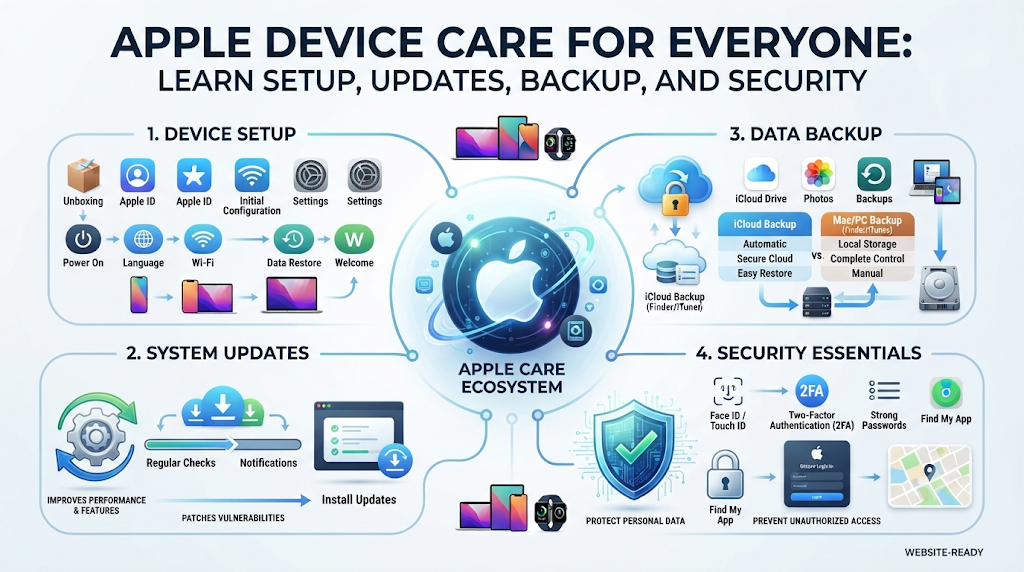
Introduction
Apple devices often become part of everyday life. People use them for work, learning, communication, and entertainment. Over time, these devices collect useful information. They may store family photos, work documents, contacts, and personal notes. Keeping everything organised takes a little care. Users also face questions when buying a device or changing software. They may not know which instructions apply to their model. A simple mistake can affect important settings or files. Learning a few basic skills makes these tasks easier. Osnivo helps users understand common Apple device needs. It brings practical learning resources into one place. This article explores device setup, software checks, data safety, and troubleshooting. Each section explains useful steps in simple English.
Start With the Right Device Information
Every Apple product has its own model details. These details matter when checking software support. They also help users find instructions for the correct device.
An Apple ecosystem may include several products. A person might use an iPhone and Mac together. Another person may own an iPad or Apple Watch. Apple TV and Apple Vision Pro have different controls and support needs.
Before changing anything, identify your device model. Check the installed software version as well. Keep these details available when reading support instructions.
Device care includes more than solving technical problems. It also means preparing for updates and replacements. Regular checks can help protect important information.
Osnivo.com is an independent Apple ecosystem knowledge platform. It covers iPhone, iPad, Mac, Apple Watch, Apple TV, and Apple Vision Pro. It is not owned or operated by Apple.
Make Device Care Part of Your Routine
Small checks can prevent avoidable confusion. Review storage before installing large apps. Check backups before changing or replacing a device. Review privacy permissions when apps change.
A useful routine can include these tasks:
- Check available storage.
- Review software information.
- Confirm that important files have backups.
- Check account security.
- Review app permissions.
- Organise photos and documents.
- Learn where important settings are located.
These habits are useful even when devices work well. They also help users explain problems more clearly. If a problem continues, contact Apple Support or an authorised service provider.
Avoid changing several settings without a clear reason. Make one change at a time. This helps you understand what has changed.
Find Out Which iPhones Support the Software
Understanding iOS 27 compatible iPhones
The phrase iOS 27 compatible iPhones refers to iPhone models that meet the release requirements. Compatibility depends on Apple's published support information. It must be checked for the exact device model.
First, identify your iPhone model. Then compare it with Apple's official compatibility details. Check the requirements for the release you plan to use.
The iOS 27 compatible iPhones check helps users understand device support. It can prevent confusion caused by old online lists. Do not assume that every iPhone can run every release.
Osnivo.com provides a Compatibility Checker for general guidance. It helps users organise their device information. Confirm the final compatibility details through Apple.
Check Mac Support Before Making Plans
Understanding macOS 27 compatible Macs
The phrase macOS 27 compatible Macs describes Mac models supported by that software release. Support depends on the computer model and Apple's requirements. The exact model matters more than a broad product name.
Find the Mac model details first. Review Apple's official compatibility information next. Read the release requirements before planning an installation.
Checking macOS 27 compatible Macs can help users plan ahead. It may prevent delays when preparing a computer for work. Avoid relying on an old list without checking current support details.
Osnivo.com offers Mac learning resources and compatibility guidance. These resources explain common software terms. Apple's published information remains the final source for support requirements.
Decide When an iPhone Update Makes Sense
A careful approach to should I update to iOS 27
The phrase should I update to iOS 27 describes a personal software decision. It depends on device support, app needs, and timing. No single choice suits every user.
Review these points before making a decision:
- Check whether your iPhone supports the release.
- Read Apple's release notes.
- Review the published security information.
- Check important apps for compatibility details.
- Confirm that enough storage is available.
- Back up important information.
- Choose a time without urgent phone tasks.
When asking should I update to iOS 27, consider your daily routine. An update may take time. Avoid starting just before an important call or task.
Osnivo.com's Should I Update tool helps organise update checks. It uses published security information and release notes as guidance. Always confirm important details through Apple's current information.
Give Your New iPhone a Smooth Beginning
Learning how to set up a new iPhone
The phrase how to set up a new iPhone describes the first steps with a new phone. These steps include language, network, and account choices. Users also decide whether to restore information or start fresh.
Switch on the device and follow its setup screens. Select the language and region. Connect to a trusted network when requested. Review the Apple Account sign-in choices.
Next, consider how to bring over existing information. You may restore a supported backup or begin with a clean setup. Read the available options before selecting one.
The how to set up a new iPhone process can vary by model and software. Follow the instructions shown on your screen. Menu names can differ by version and device.
Osnivo.com offers a Setup Companion for general preparation. Its iPhone settings guide can help users understand controls after setup.
Prepare Before Moving From Android
Planning to transfer data from Android to iPhone
The phrase transfer data from Android to iPhone means moving supported information between two phone systems. The available options depend on the devices and software. Some information may need separate handling.
Before starting, prepare both phones. Charge them and check the iPhone's available storage. Back up important information on the old device. Review Apple's current transfer instructions.
The process to transfer data from Android to iPhone may move selected information. It may not move every app, setting, or file. Check which data types the current method supports.
After the transfer, review important contacts and photos. Check messages and documents where supported. Install missing apps from trusted sources.
Osnivo.com's Migration Planner helps users prepare for device moves. It also covers transfers between Apple devices and other systems. Use it as a planning resource, not a guarantee.
Keep a Separate Copy of Important Files
Understanding how to back up an iPhone
The phrase how to back up an iPhone means creating another copy of phone information. This copy can help if a device is lost or replaced. It can also help before certain changes.
Users can review cloud backup options. They can also use a computer-based backup. Each method has different storage and access needs.
Before deciding how to back up an iPhone, read Apple's instructions. Check the latest backup date and status. Do not assume a backup completed successfully.
Choose a method that suits your needs. Keep backup access details private. Review the backup plan after major changes.
Osnivo.com offers backup planning resources. These can help users prepare before updates or replacements. Confirm important backup details through Apple.
Make Everyday Settings Easier to Manage
Getting help from an iPhone settings guide
An iPhone settings guide explains common controls and their purpose. It helps users understand network, display, and sound options. It can also explain privacy and accessibility settings.
Begin with the controls you use most. Adjust brightness and text size. Review sounds and notification choices. Set alerts that support your daily routine.
Next, look at app permissions. Check access to photos, location, camera, and microphone. Remove permissions that no longer suit your needs.
An iPhone settings guide should match your device and software version. Some controls may appear in different places. Menu names can differ by version and device.
Osnivo.com provides a Settings Pathfinder for common controls. It helps users understand where settings may be found. Use it alongside official instructions when making important changes.
Give Privacy and Security Regular Attention
Using an iPhone security settings checklist
An iPhone security settings checklist is a list of important protection checks. It helps users review account safety and device privacy. It can also make regular reviews easier.
Use this iPhone security settings checklist as a starting point:
- Set a strong device passcode.
- Use Face ID or Touch ID when available.
- Protect the Apple Account with a strong password.
- Review two-factor authentication.
- Check trusted devices linked to the account.
- Review location access for installed apps.
- Check camera and microphone permissions.
- Keep supported software current.
- Turn on Find My where appropriate.
- Protect backup access details.
An iPhone security settings checklist cannot remove every risk. It helps users notice settings that may need attention. Available features depend on the device and software.
Osnivo.com offers security checkups and practical learning resources. Users can review protection settings in a clear order. Follow Apple's official instructions for account changes.
Restore a Wireless Connection Step by Step
What to do when iPhone won’t connect to Wi-Fi
The phrase iPhone won’t connect to Wi-Fi describes trouble joining or using a wireless network. The cause may involve the phone, router, or internet service. Basic checks can help identify the problem.
Try these steps in order:
- Check whether another device can use the network.
- Make sure the router has power.
- Turn Wi-Fi off and on again.
- Restart your iPhone.
- Restart the router if it is safe.
- Forget the network and join it again.
- Check for available software updates.
- Contact your internet provider if other devices also fail.
If iPhone won’t connect to Wi-Fi after these checks, review Apple's network instructions. Resetting network settings should be a later option. This action removes saved Wi-Fi networks and passwords.
Do not erase the entire phone for a basic connection issue. Back up important information before major changes. These steps often help. Results vary.
If iPhone won’t connect to Wi-Fi across several networks, seek further help. Apple Support can review device-related issues. Your internet provider can check the router or service.
Capture a Clear Recording on Your Mac
Exploring QuickTime Player screen recording Mac
The phrase QuickTime Player screen recording Mac refers to capturing screen activity with QuickTime Player. It can help users explain a computer problem. It can also support simple demonstrations.
Open QuickTime Player and review its recording options. Select screen recording when available. Check the microphone choice if you need audio.
Mac also offers built-in screen capture controls. Their options may vary by software version. Review privacy permissions if recording does not work.
Before using QuickTime Player screen recording Mac, prepare your desktop. Close private files and messages. Avoid showing passwords or personal account details.
Menu names can differ by version and device. Osnivo.com explains common Mac tasks in simple language. Check Apple's current instructions if your controls look different.
Explore Practical Tools on Osnivo.com
Apple users often need help with one clear task. They may want to check software support. They may need to prepare a new device. Others may want to understand a setting.
Osnivo.com brings different learning resources together:
- Compatibility Checker: Helps users review device support.
- Should I Update tool: Helps organise update decisions.
- Settings Pathfinder: Explains common settings locations.
- Version Compare: Helps users review software versions.
- Setup Companion: Supports new-device preparation.
- Update Readiness Checker: Helps users review update needs.
- Migration Planner: Helps plan information transfers.
- Osnivo Fix: Offers guidance for common issues.
- Security checkups: Support reviews of important protection settings.
- Backup planning: Helps users prepare before device changes.
The platform covers iPhone, iPad, Mac, Apple Watch, Apple TV, and Apple Vision Pro. Its resources draw on official Apple documentation. Topics are organised around device models and software versions.
My Osnivo can save selected device models and software versions. This can make later guidance more relevant. Browser-based use does not require an account.
Users can explore tutorials and practical explanations. The community forum offers space for everyday questions. Osnivo.com is independent from Apple. Its tools provide guidance, not guaranteed repairs or results.
Quick Reference for Common Apple Tasks
| Topic | What to Check | Who It Helps |
|---|---|---|
| iOS 27 compatible iPhones | Exact model and official support details | iPhone owners |
| macOS 27 compatible Macs | Mac model and release requirements | Mac users |
| should I update to iOS 27 | Release notes, apps, and backup status | Update planners |
| how to set up a new iPhone | Network, account, and setup choices | New iPhone owners |
| transfer data from Android to iPhone | Storage and supported information | Switching users |
| how to back up an iPhone | Backup method and latest status | iPhone users |
| iPhone settings guide | Display, network, and privacy controls | Everyday users |
| iPhone security settings checklist | Passcode and account protection | Privacy-conscious users |
| iPhone won’t connect to Wi-Fi | Router and phone connection checks | Users with network trouble |
| QuickTime Player screen recording Mac | Recording and privacy options | Mac users |
Habits That Can Create Unnecessary Device Problems
A rushed choice can make a simple task harder. These mistakes are worth avoiding.
1. Trusting old compatibility information: Check iOS 27 compatible iPhones and macOS 27 compatible Macs through current official details.
2. Updating without preparation: Read release notes before deciding should I update to iOS 27. Review app needs and backup status.
3. Skipping setup screens: Read each choice when learning how to set up a new iPhone. Check account and transfer options carefully.
4. Starting a migration without checking storage: Before you transfer data from Android to iPhone, prepare both devices and review important files.
5. Assuming a backup is ready: Learn how to back up an iPhone and check the latest status. A backup that did not finish cannot protect missing information.
6. Changing settings without understanding them: Use an iPhone settings guide to learn what each control does. Make one change at a time.
7. Ignoring privacy permissions: Follow an iPhone security settings checklist. Review app access to personal information.
8. Resetting network settings too early: If iPhone won’t connect to Wi-Fi, try basic checks first. Remember that a reset removes saved network details.
9. Sharing screen recordings without checking them: Before sending QuickTime Player screen recording Mac files, review the content. Remove private details from the recording.
A Fictional Example: A Wildlife Survey Coordinator
Imagine a fictional wildlife survey coordinator named Meera. She records field observations and organises reports. Her iPhone stores location notes and reference photos. Her Mac helps prepare survey documents.
Meera receives a replacement iPhone before a field project. She learns how to set up a new iPhone and checks the available transfer choices. She prepares a backup before moving information.
She reviews how to back up an iPhone. Then she checks her important contacts and files. She uses an iPhone settings guide to understand notification and privacy controls.
At a field office, iPhone won’t connect to Wi-Fi. Meera checks another device on the same network. She follows the basic steps and asks the office team to review the router.
Later, she captures a software issue using QuickTime Player screen recording Mac. She checks the recording before sharing it with a colleague.
Meera reviews the iPhone security settings checklist before storing field notes. When considering a software change, she asks should I update to iOS 27 after reading Apple's information. She checks iOS 27 compatible iPhones and macOS 27 compatible Macs through official support details.
Osnivo helps her organise learning about these tasks. Its tools provide useful preparation steps. She confirms important instructions through Apple.
How Osnivo Supports Better Device Decisions
Apple users may have different levels of experience. Some people are buying their first iPhone. Others manage several devices for daily work. Clear learning resources can help both groups.
Osnivo offers tutorials, device explanations, and practical tools. Users can explore compatibility, setup, updates, backups, and security. The community forum provides space for questions and discussion.
My Osnivo can save selected device details. This can help users return to relevant guidance. Browser-based use does not require an account.
Osnivo is an independent Apple ecosystem knowledge platform. It is not operated by Apple. It does not replace Apple Support or authorised service providers. Confirm important instructions through Apple's official resources.
Frequently Asked Questions
1. What information should I write down before contacting device support?
Keep the device model and software version available. Describe what happened and when it began. Note any steps you already tried. Avoid sharing passwords or private account details. Clear information can help support staff understand the issue more quickly.
2. How can I reduce clutter on my iPhone without losing important files?
Review large apps, downloads, and duplicate items first. Check important photos and documents before deleting anything. Save files you want to keep. Review Apple's storage guidance if you are unsure about a category. Avoid removing unfamiliar system files.
3. What should I check before connecting an Apple device to a public network?
Use a trusted network when possible. Avoid entering sensitive information on unfamiliar pages. Keep software current and review network prompts carefully. Do not share passwords with strangers. If a network behaves strangely, disconnect and ask the venue for help.
4. Can I use an Apple device if I do not install every available app?
Yes. Install apps that meet your actual needs. A smaller app collection can make the device easier to organise. Check the developer and app requirements before installing anything. Review permissions after setup and remove apps you no longer use.
5. How should I prepare photos before replacing my phone?
Check where your photos are stored and whether they have synced or been backed up. Review important albums and files. Follow Apple's current photo and backup instructions. Do not erase the old phone until you confirm that important images are available elsewhere.
6. Why is it useful to review notification settings?
Too many alerts can interrupt work and rest. Review which apps need to send notifications. Adjust sounds and alert styles where available. Use an iPhone settings guide to understand the controls. Keep essential alerts enabled while reducing distractions.
7. What should I do if a Mac application stops responding?
Give the app a moment to respond. If it remains stuck, follow Apple's instructions for closing an unresponsive app. Check for updates and save other work first. If the issue returns often, record the details and seek support.
8. How can I protect personal information in a screen recording?
Close private windows before recording. Hide notifications and remove sensitive details from the screen. Review the finished file before sharing it. QuickTime Player screen recording Mac can capture information outside the main task, so check the full recording carefully.
9. Should I keep my old phone after moving to a replacement?
Keep it until you confirm that important information has moved. Check contacts, photos, messages, and essential apps. Follow Apple's official instructions before preparing the old device for trade-in or recycling. Erase personal information only after confirming your backup.
10. Is Osnivo suitable for people who are learning about Apple devices?
Osnivo offers simple explanations, practical tools, tutorials, and a community forum. It helps users explore common Apple tasks at their own pace. The platform is independent from Apple. Users should confirm important technical and account instructions through official Apple resources.
Final Thoughts
Good device care begins with knowing what you own. Check model details before following technical instructions. Prepare backups before moving or removing information. Review privacy settings as your needs change. Use simple checks when a problem appears. Avoid major resets until you understand their effects. Osnivo offers independent learning resources for Apple users. Its tools and tutorials can make unfamiliar tasks easier to understand. Still, official Apple information should guide important decisions. A little preparation can protect useful information. It can also make everyday device management less stressful.






Top comments (0)