
A family memory usually arrives as a paragraph, not a verse. The useful job is to preserve what happened while removing words that crowd the song. This checklist separates those tasks: write a factual brief, then edit for speech, breathing and pronunciation before approving any music.
Disclosure: This tutorial is prepared in connection with SongStory, not as an independent review. Every person, memory and lyric below is a fictional Example, not a customer story or a tested recording.
1. Build a brief that keeps the memory intact
Start with the moment the recipient would recognize without an explanation. Name what someone did, the setting and the reason it matters now. Avoid asking a generator to summarize an entire childhood: a list of milestones can become a speech with rhymes rather than a scene worth hearing twice.
Example — completed brief:
Recipient: Mum, called Leena by her family. Occasion: her birthday. Narrator: her adult child, addressing her directly. Memory: on rainy Saturdays we repaired a torn paper kite at the dining table; she let me choose the patches. Present-day meaning: she made mistakes feel fixable. Mood: affectionate, lightly playful; acoustic folk. Main message: thank you for helping me try again. Keep: paper kite, crooked patches. Avoid: invented achievements, exact addresses, family disagreements and jokes about age.
Treat this as a worksheet, not an instruction to paste every field into a tool. For a short input box, condense it to the memory, message and mood. Keep the full version beside the draft so you can check what changed. If your occasion is also a mother's birthday, the occasion-specific personalized song generator is relevant; another recipient does not need that birthday framing.
Now separate the information into three jobs. The verse describes the kite repair. The chorus says why that patience mattered. An optional later verse connects the memory to a present feeling without inventing a new event. Do not make a generator supply missing family history. Leave a detail out when you cannot verify it.
| Example: source detail | Wordy draft | Shorter lyric option |
|---|---|---|
| We repaired a paper kite together. | We were sitting together repairing my broken paper kite. | We patched that paper kite. |
| I chose uneven patches. | You always allowed me to choose all the crooked patches. | You let my patches lean. |
| Her patience made mistakes less frightening. | Your patience taught me not to be so scared of mistakes. | You made room to try again. |
These are editing options, not finished verses. The second option is shorter but less literal; reject it if “lean” feels unnatural. Preserve the event and the speaker's voice before chasing a rhyme. A sound-alike ending is not worth changing who helped whom.
2. Check the words aloud before approving the music
First read the draft without a melody. Underline words you would not normally say to this person. Replace formal praise with the language of the brief. Then speak each line at a steady pace and mark where you need a breath. A syllable count can flag a crowded line, but it cannot prove that a lyric fits a melody: stress, pauses and delivery matter too.
Example — pronunciation note: “Leena: LEE-nuh, two syllables, stress on LEE.” That is the intended pronunciation for this fictional person, not a rule for everyone with that spelling. Ask the recipient or someone who knows when uncertain. Keep a pronunciation note separate from the sung lyric unless you deliberately want those characters sung; do not assume brackets or capital letters act as production controls.
Use this review checklist:
- Name: Say it naturally, then read the whole name-bearing line. Does the wording encourage an awkward emphasis? Use a familiar nickname only if the recipient actually uses it.
- Length: Compare corresponding verse lines. Shorten the one that makes you rush; keep the image rather than cutting randomly to match a number.
- Facts: Check names, relationships and the direction of each action against the brief. Delete plausible-sounding additions that never happened.
- Privacy: Remove addresses, children's school names, medical details and private disputes. Ask before making someone else's sensitive memory shareable.
SongStory lets you review and edit lyrics before music generation. Its separate lyrics tool at songstory.ai also supports revising text before deciding whether to continue to music. Neither replaces your factual check or guarantees a particular pronunciation.
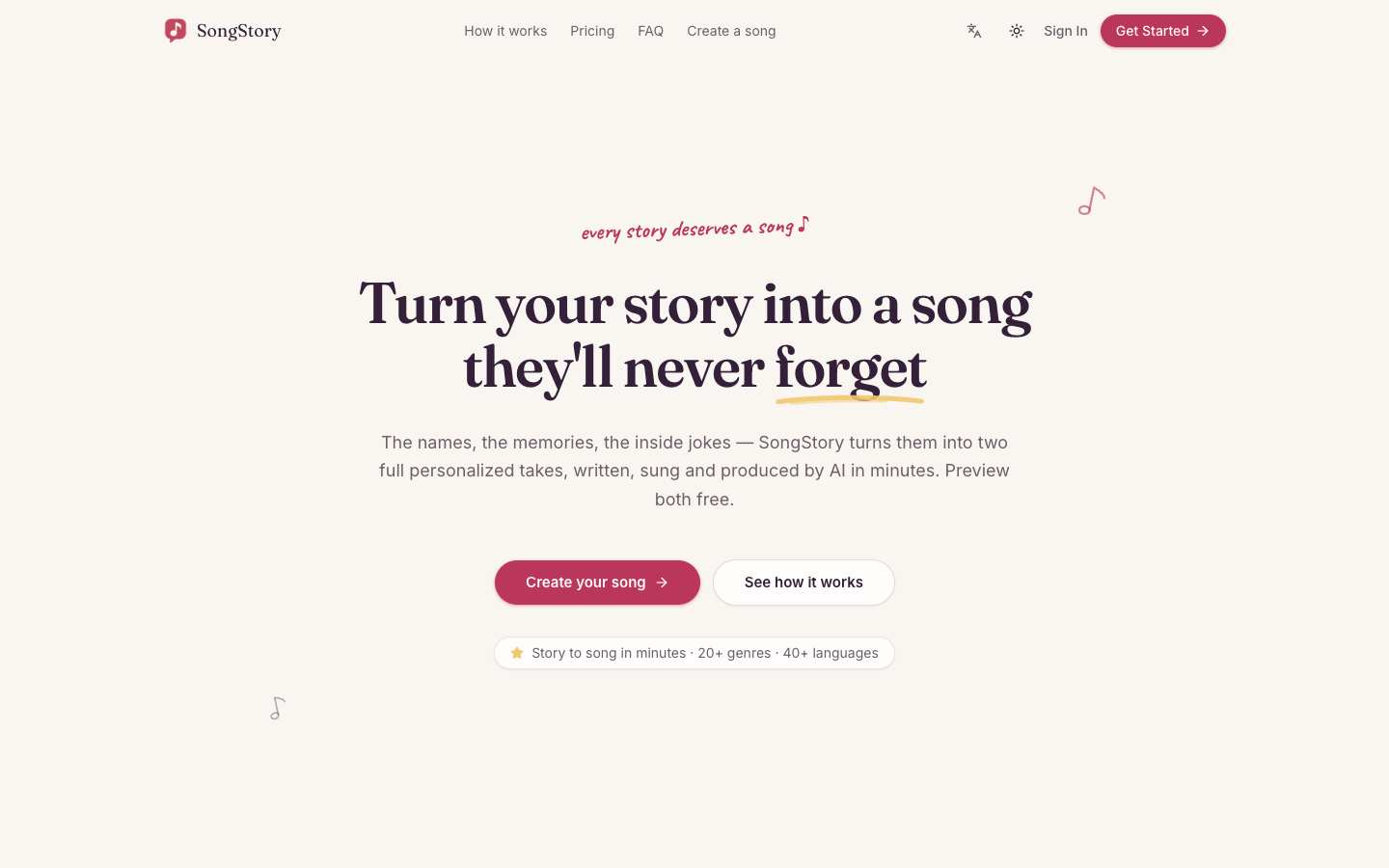
Homepage screenshot, not a lyrics-editor screenshot. It illustrates the product entry point, not a demonstrated editing session.
After approving the words, listen rather than assuming the written fix worked. SongStory produces two takes. The first-song free preview allows one minute of each take and is retained for three days; it is not a free full-song download. A preview may not contain every name-bearing line. Check what is actually audible and do not treat an unheard section as verified.
Keep the brief and approved lyrics together. If the story is accurate, the name sounds right where audible, and the lines leave room to breathe, you have a clearer basis for deciding what to change next.




Top comments (0)