
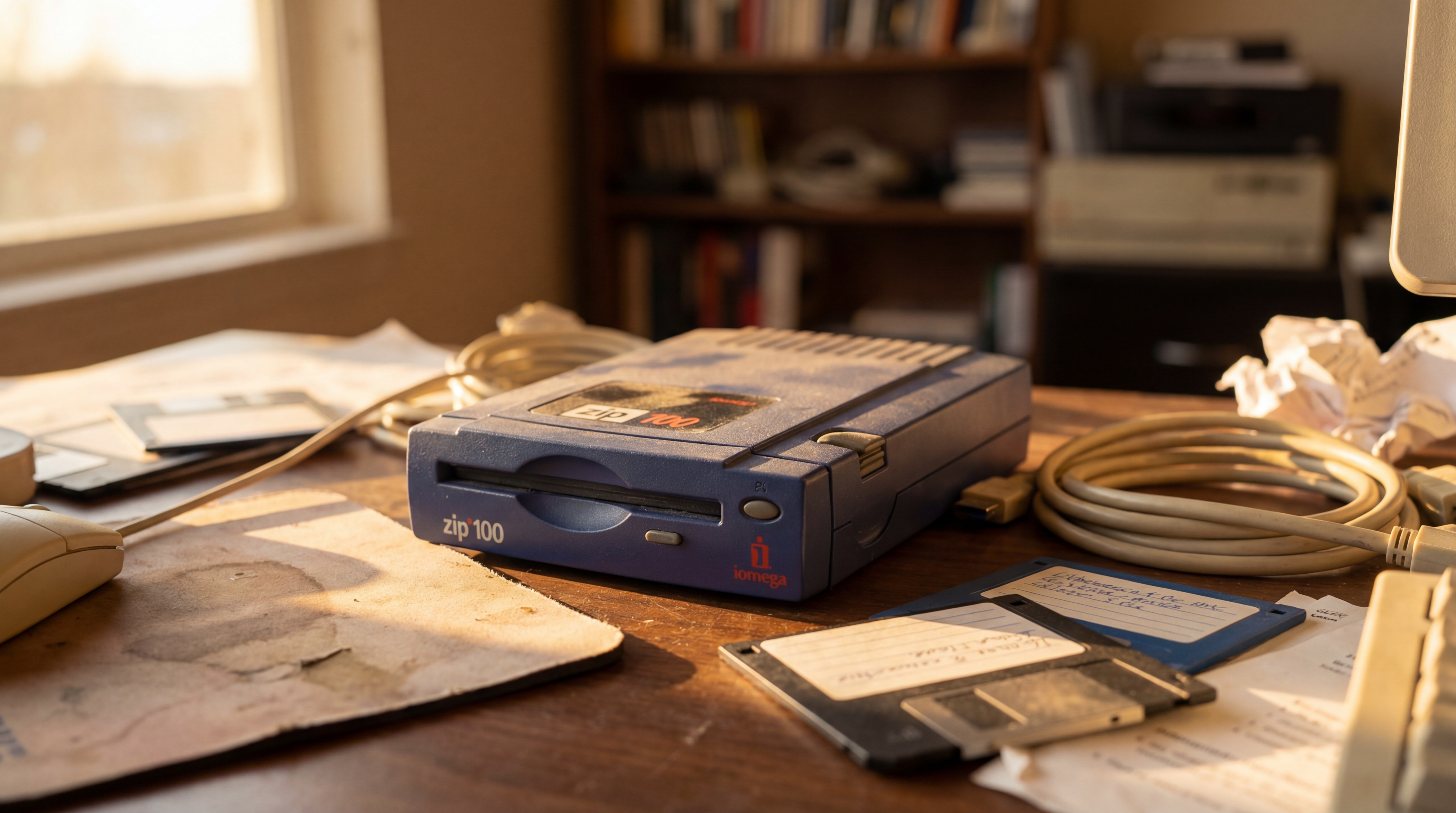

Iomega once dominated the personal storage market with its Zip drive, a revolutionary product in the mid-90s that promised high-capacity, portable data storage. At its peak, the company shipped millions of units, becoming a household name for anyone needing more space than a floppy disk could offer. But by the early 2000s, Iomega’s fortunes crumbled under competition and technological shifts.
This article was inspired by "From Zip to Nought: The Rise and Fall of Iomega" from Hacker News.
Read the original source.
The Zip Drive’s Meteoric Rise
Introduced in 1994, the Zip drive offered 100 MB of storage—a massive leap over the 1.44 MB floppy disks of the era. By 1998, Iomega had sold over 12 million drives, capitalizing on the growing need for data backup and file sharing among PC users. Its proprietary format and sleek design made it a status symbol for tech enthusiasts.
Bottom line: Iomega’s Zip drive filled a critical gap in the 90s, scaling storage capacity by nearly 70x over floppies.
Fatal Flaws and Market Missteps
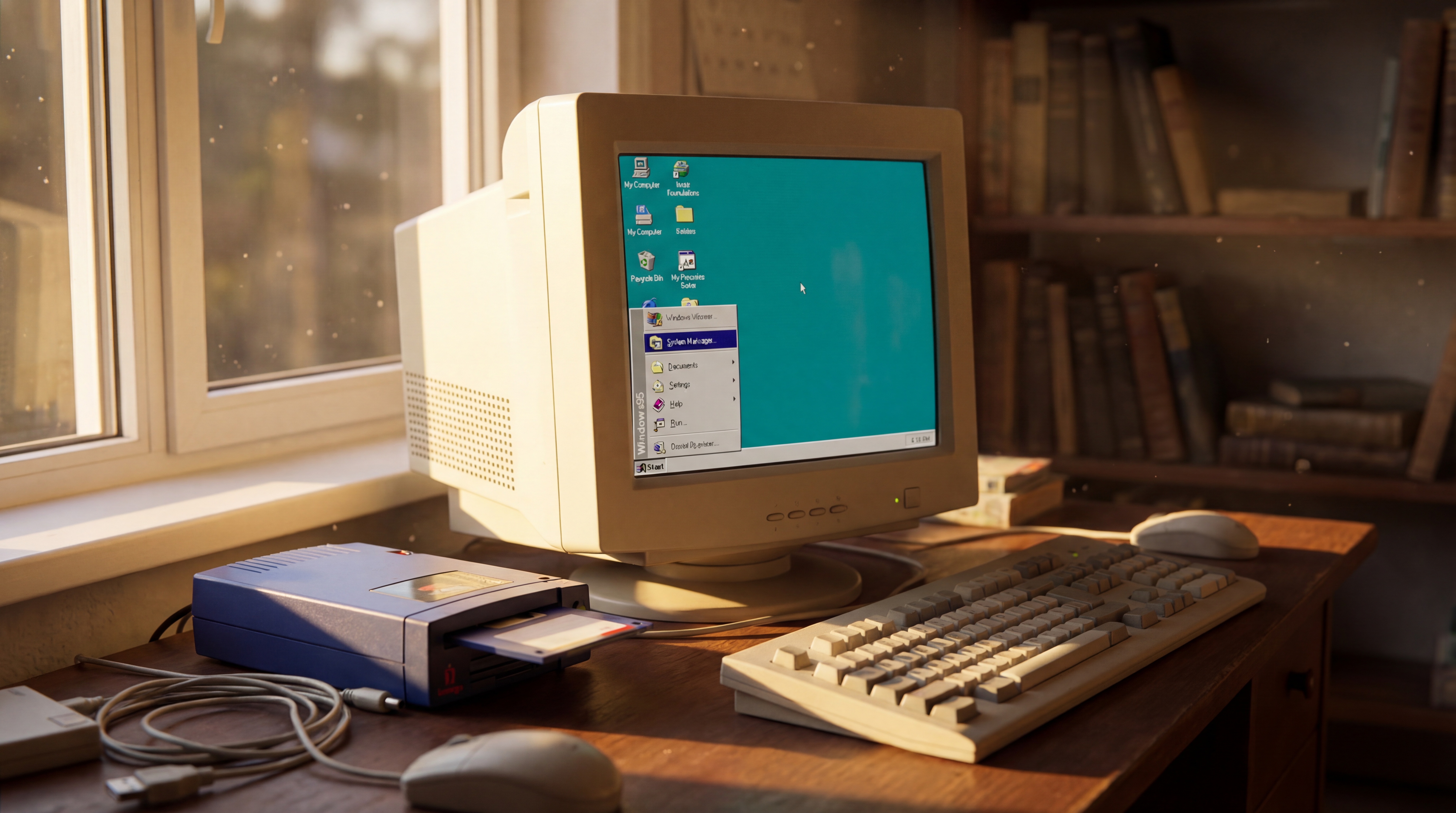
Despite early success, Iomega stumbled with reliability issues. The infamous “click of death”—a hardware failure that rendered drives and disks unusable—plagued users, eroding trust. By the early 2000s, competitors like CD-RW drives offered cheaper, more universal storage at 650-700 MB per disc, dwarfing Zip’s capacity.
Iomega tried pivoting with higher-capacity Zip 250 and Zip 750 models, but adoption lagged. USB flash drives, introduced around 2000, further sealed Zip’s fate with smaller form factors and no moving parts.
| Storage Tech | Capacity | Cost (circa 2000) | Portability |
|---|---|---|---|
| Zip Drive (100 MB) | 100 MB | $10-15 per disk | Moderate |
| CD-RW | 650-700 MB | $1-2 per disc | High |
| USB Flash (early) | 8-64 MB | $30-50 per drive | Very High |
What Hacker News Thinks
The HN discussion, with 12 points and 4 comments, reflects on Iomega’s story as a cautionary tale. Key takeaways include:
- Hardware innovation must prioritize reliability over novelty.
- Proprietary formats risk obsolescence when open standards emerge.
- Nostalgia for Zip drives persists, but few mourn their demise.
Bottom line: HN sees Iomega’s fall as a textbook case of failing to adapt to cheaper, more universal tech.
Lessons for AI Hardware and Storage
AI practitioners rely on massive datasets and high-speed storage for training and inference. Iomega’s story warns against over-reliance on proprietary hardware in a field where open standards like NVMe and cloud storage dominate. Modern AI storage solutions must balance capacity with accessibility—something Zip drives couldn’t sustain.
"Historical Context on Storage Needs"
In the 90s, personal storage needs exploded with the rise of multimedia files—think early MP3s and digital photos. Zip drives met that demand temporarily, but their $10-15 per disk cost was unsustainable against CD-RW’s $1-2 discs. Today’s AI datasets, often in the terabyte range, echo that scaling challenge but at a far larger magnitude.
Looking Ahead
Iomega’s collapse underscores a brutal truth for AI hardware innovators: adaptability isn’t optional. As edge devices and local inference grow, storage solutions tailored for AI workloads will face similar pressures to balance cost, speed, and compatibility. History suggests the winners won’t be the first movers, but those who learn fastest from the past.



Top comments (0)