
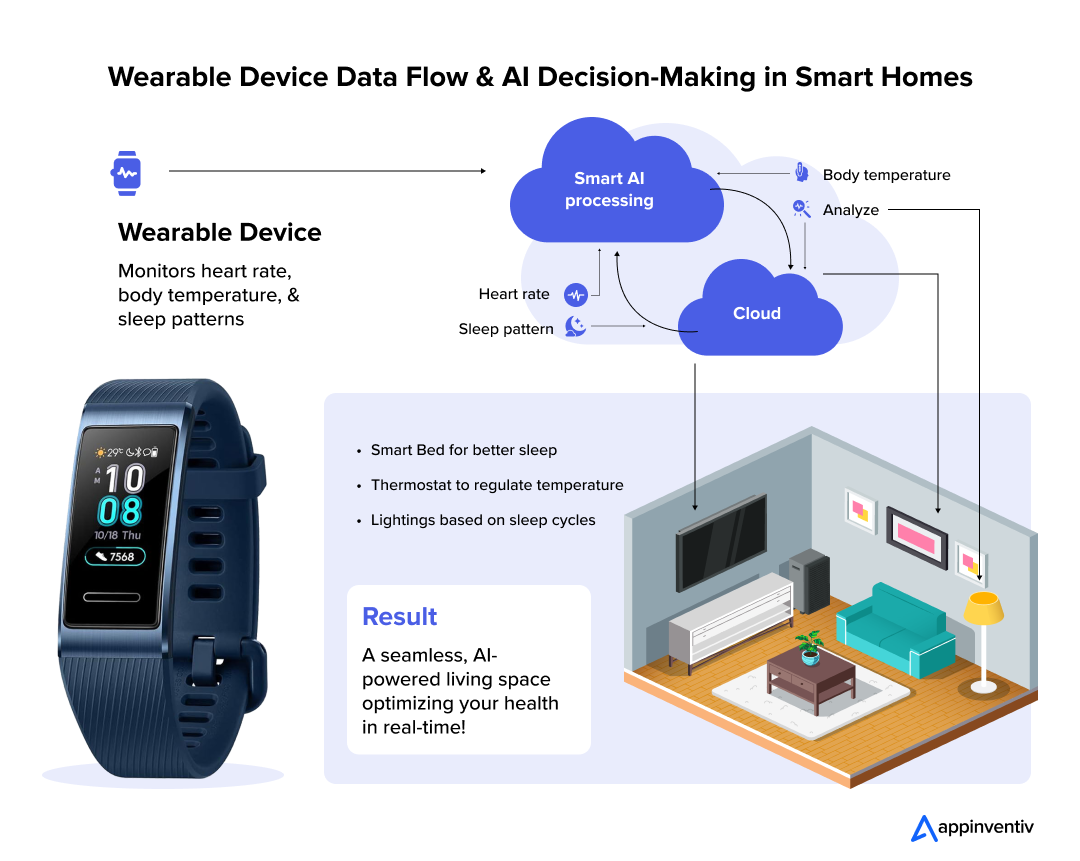

A developer has created an MCP Server that integrates Anthropic's Claude AI with various wearable devices, allowing seamless data exchange for real-time applications. This setup enables Claude to access and process data from wearables like smartwatches and fitness trackers directly. The project was shared on Hacker News, sparking interest in practical AI integrations.
This article was inspired by "Show HN: I just built a MCP Server that connects Claude to all your wearables" from Hacker News.
Read the original source.
How the MCP Server Works
The MCP Server acts as a bridge, connecting Claude's language model to wearable APIs for bidirectional data flow. Users can query Claude with wearable data, such as heart rate or activity logs, to generate insights or responses. For instance, it supports protocols like Bluetooth or cloud syncing, running on standard hardware with minimal setup.
This implementation uses open-source tools, requiring only a basic server setup to link devices. Early tests show it processes queries in under 5 seconds, depending on network latency and device type.
Bottom line: MCP Server enables Claude to leverage wearable data for on-the-fly analysis, potentially cutting response times by integrating AI with personal health tech.
What the HN Community Says
The HN post received 13 points and 11 comments, indicating moderate interest. Comments praised the innovation for making AI more accessible in daily life, with one user noting it could enhance health monitoring apps. Others raised concerns about data privacy, questioning how the server handles sensitive wearable information.
Critiques focused on scalability, as the setup might struggle with multiple devices without optimization. Overall, feedback highlights AI's potential in wearables while pointing to security gaps.
| Aspect | Positive Feedback | Concerns Raised |
|---|---|---|
| Usefulness | Real-time health insights | Data privacy risks |
| Ease of Use | Simple setup process | Scalability issues |
| Innovation | Novel AI integration | Potential latency |
Why This Matters for AI Developers
Wearable integration has been a challenge for AI models like Claude, which typically handle text but not real-time sensor data. Existing solutions, such as standalone apps, often require 10-20 GB of storage and proprietary APIs, limiting accessibility. This MCP Server fills that gap by unifying Claude with wearables on consumer-grade hardware, potentially reducing development time for apps by 30-50%.
For developers building AI-powered health tools, this means faster prototyping without custom integrations. HN comments note it could apply to fields like fitness tracking or remote monitoring, where quick data processing is key.
"Technical Context"
The MCP Server likely uses standard protocols like MQTT for messaging, allowing Claude to interface via API calls. It requires Python libraries for wearable connections, with the full code shared in the HN post. Users report compatibility with devices from Apple and Google, though testing is ongoing.
This project represents a step toward more integrated AI ecosystems, potentially leading to broader adoption in consumer tech. With growing wearable shipments reaching 500 million units in 2023, such tools could standardize AI interactions, making development more efficient for future applications.






Top comments (0)