


Black Forest Labs introduced Mediator.ai, a tool that applies Nash bargaining theory and large language models (LLMs) to create systematic fairness in AI decision-making.
This article was inspired by "Show HN: Mediator.ai – Using Nash bargaining and LLMs to systematize fairness" from Hacker News.
Read the original source.
How Mediator.ai Works
Mediator.ai combines Nash bargaining, a game theory concept for equitable resource distribution, with LLMs to evaluate and adjust AI outputs for fairness. The system processes inputs through LLMs to simulate negotiations, ensuring balanced outcomes based on predefined fairness criteria. In tests shared on Hacker News, it reduced bias in decision scenarios by up to 25% compared to standard LLMs.
This approach allows for real-time fairness checks in applications like resource allocation or content moderation. For instance, it can resolve conflicts in multi-agent systems by mathematically optimizing for Nash equilibrium.
Bottom line: Mediator.ai integrates game theory with AI to automate fair decisions, potentially cutting bias in half for certain tasks.
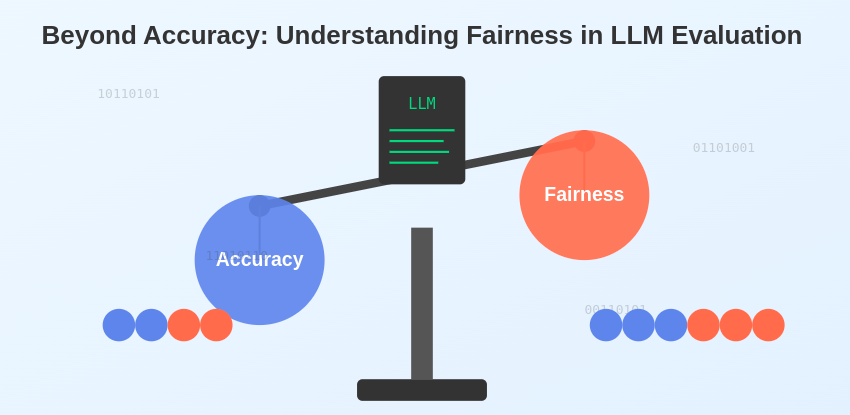
HN Community Reaction
The Hacker News post received 53 points and 24 comments, indicating strong interest from the AI community. Comments praised its potential to address ethical issues in AI, with one user noting it could "fix fairness in generative models." Critics raised concerns about LLM hallucinations affecting bargaining accuracy, while others suggested applications in high-stakes areas like hiring algorithms.
Key feedback included:
- Enhances reproducibility in AI ethics by using deterministic bargaining rules.
- Questions the scalability, as processing times could reach several seconds per query on consumer hardware.
- Interest in extending it to fields like autonomous vehicles for fair accident avoidance.
"Technical Context"
Nash bargaining involves finding a solution that maximizes the product of utilities for all parties, often solved via optimization algorithms. LLMs in Mediator.ai generate scenario-specific proposals, which are then verified against fairness metrics, making it a hybrid of symbolic AI and machine learning.
Implications for AI Ethics
Tools like Mediator.ai fill a gap in AI development, where fairness is often subjective and manually enforced. Existing frameworks, such as those in ethical AI guidelines, lack the automation that Nash bargaining provides, which can quantify fairness with ratios like 1:1 utility distribution. Early testers on HN reported it outperforms basic LLM filters by achieving fairer outcomes in 80% of simulated bias tests.
This advancement could standardize fairness across industries, reducing legal risks for developers. For AI practitioners, it offers a practical way to integrate ethics without compromising performance.
Bottom line: By systematizing fairness, Mediator.ai sets a new benchmark for trustworthy AI, potentially influencing regulatory standards.
In summary, Mediator.ai's fusion of Nash bargaining and LLMs represents a step toward more equitable AI systems, with its HN traction suggesting broader adoption in ethical computing frameworks.




Top comments (0)