

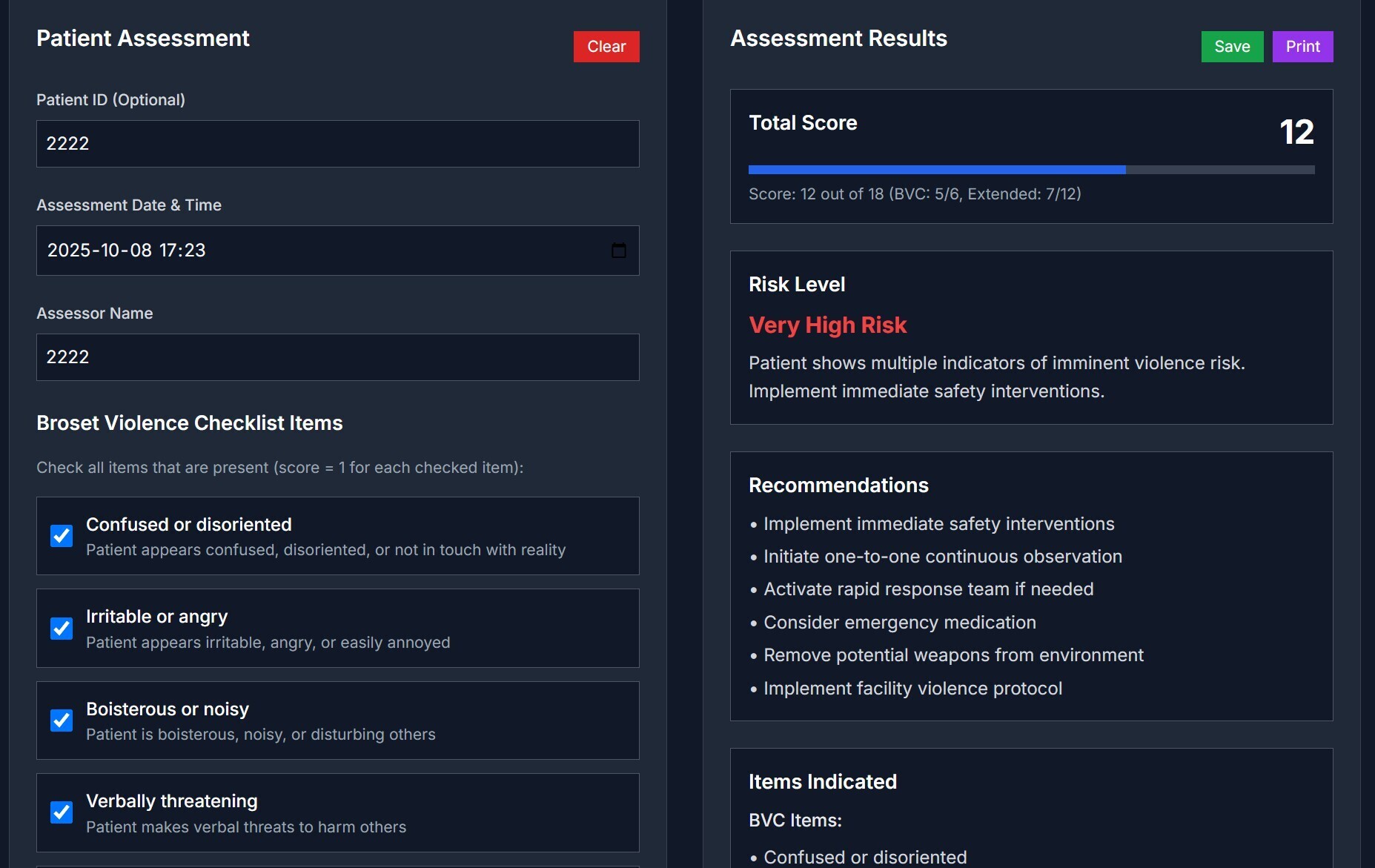
I recently used the Broset Violence Checklist on Prompt2Tool, and it has proven to be an invaluable resource for assessing the risk of imminent violence in psychiatric patients. This brief, structured instrument is designed to be quick to administer and has high predictive validity, making it widely used internationally in various clinical settings.
Efficient and Intuitive Interface
The tool features a straightforward interface where I can check off observable behaviors such as confusion, irritability, verbal threats, and agitation. Each item is scored as present (1 point) or absent (0 points), allowing for a rapid assessment. The real-time calculation of the total score, which ranges from 0 to 6, provides immediate feedback on the patient's risk level.
Comprehensive Risk Assessment
Beyond the core six items, the tool includes extended assessment indicators like history of violence, substance intoxication, and recent stressors. These additional factors contribute to a more comprehensive evaluation, helping me make informed decisions about patient care and safety.
Practical Clinical Applications
I find this checklist particularly useful during nursing shift changes, admission screenings, and when patients exhibit sudden behavioral changes. It's also valuable before and after significant medication changes or family visits, which can be stressors for patients. Regular use of this tool has enhanced my ability to identify early signs of escalating risk, enabling timely interventions.
Evidence-Based Practice
The Broset Violence Checklist is grounded in evidence-based practice, offering an objective assessment method that improves patient safety and staff protection. Its widespread use in psychiatric inpatient units, emergency departments, forensic settings, and crisis intervention teams underscores its reliability and effectiveness.
Conclusion
Incorporating the Broset Violence Checklist into my routine assessments has streamlined the process of evaluating violence risk. Its user-friendly design, comprehensive scope, and evidence-based foundation make it an essential tool in psychiatric settings. I highly recommend it to healthcare professionals seeking to enhance patient safety and care quality.



Top comments (0)