

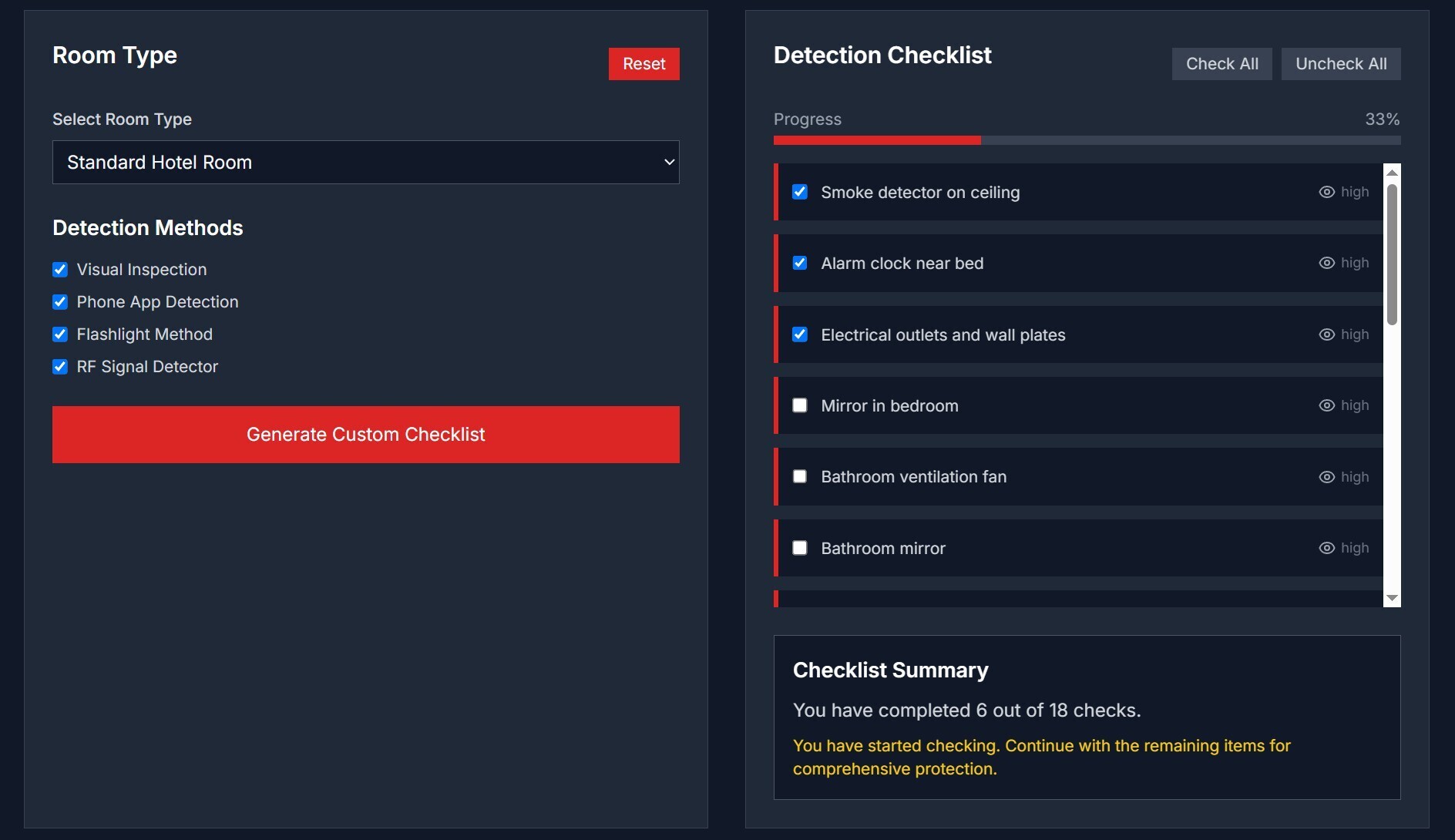
I just tried out the Hidden Camera Detector tool on Prompt2Tool and I’m impressed by how straightforward and useful it is. The interface welcomes you with a selection for room type and detection methods. You can choose things like hotel room, vacation rental, or hostel, and then pick from visual inspection, smartphone app detection, flashlight scanning, or RF signal detection. Right away that flexibility tells me they built this with real users in mind, not just a gimmick.
One feature I especially appreciate is the custom checklist generator. After selecting the room type and detection methods you prefer, the tool produces a tailored checklist of steps to follow. That checklist covers things like inspecting unusual holes, checking electronic devices, verifying smoke detectors, and scanning mirror surfaces. As someone who travels often, having that checklist means I don’t forget little but important things. It feels like a personal privacy guide.
In a practical scenario, when I arrived at a new hotel room last week, I ran through the list from the tool. I turned off lights, used my phone’s flashlight to scan for lens reflections, and looked for odd gaps behind decorations and vents. I also used RF detector apps suggested by the checklist to see if any signal anomalies appeared. The combination gave me confidence that I hadn’t missed a hiding spot. That peace of mind is the real value here.
For vacation rentals, the tool shines. Some places have less oversight and more risk of hidden devices planted by previous guests or owners. Using the Hidden Camera Detector checklist in every room—especially in bedrooms and bathrooms—becomes a habit that protects privacy. I’ve used it in Airbnbs, guesthouses, and even dorms. Each time, it saved me from second-guessing whether I should trust the setting.
The tool also doesn’t rely on needing special hardware or apps alone. Although it references smartphone detection and RF scanning, it emphasizes that combining those with a systematic visual scan gives the best results. The creators are realistic about limits—some highly sophisticated or dormant devices could escape detection—but they clearly designed the checklist to cover the most common hiding spots. That balance between ambition and realism makes the tool trustworthy.
If you value your privacy as much as I do when staying in unfamiliar spaces, give this tool a try. It’s quick to use, doesn’t require downloads, and gives you a clear path to ensure your personal areas remain your own. I find myself running the checklist almost automatically now when I reach any unfamiliar lodging.



Top comments (0)