


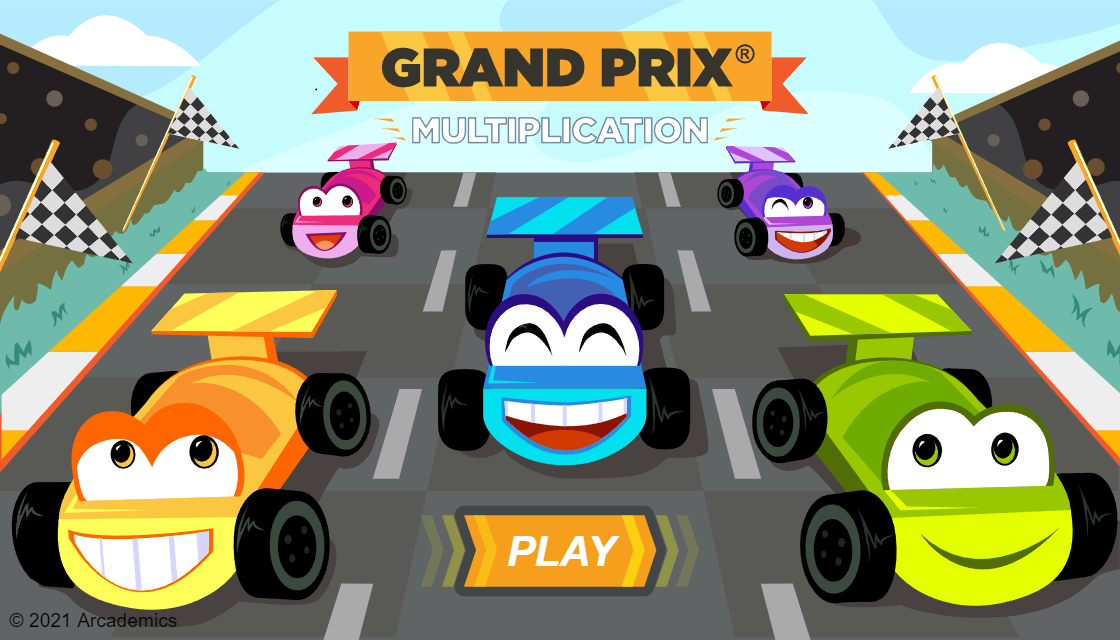
I took Mathematics Racing on prompt2tool for a spin and found it to be a surprising blend of speed-gameplay and mental math challenge. From the moment the virtual engines revved up, I realised the race wasn’t just about going fast—it was about solving math problems correctly to accelerate. I jumped into the featured tracks and felt that familiar mix of adrenaline and concentration as I answered questions under pressure. The game managed to make me feel both competitive and focused, which I hadn’t expected from a “math genre” racer.
The core mechanic is simple and clever: your car moves along a track, but your speed and success depend on solving arithmetic problems correctly. Every correct answer gives you a boost, every mistake slows you down. I found myself glancing back and forth between the math prompt and the accelerator bar, strategising not just how quickly to answer, but how confidently. That blend of cognitive and motor challenge made every race feel meaningful. The game scales its difficulty so that the math gets harder as you succeed, which kept me from breezing through too easily.
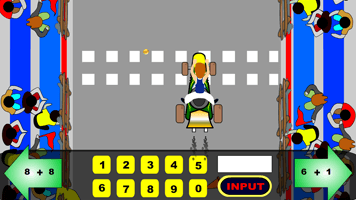
Visually the game is straightforward and functional rather than flashy. The racing visuals are basic—road, car, dashboard—and the math questions pop up in a clear overlay. It’s not trying to be a high-fidelity racer, and that’s fine: the focus is on the brain part of the challenge, not pure graphics. The controls are intuitive: you answer via keyboard or mouse, and the car responds instantly. I appreciated that I didn’t need to learn complex driving mechanics—just concentrate and click. During my session I liked how the UI kept distractions minimal, so I could stay in the flow.
In my practical use, I found Mathematics Racing works well both for quick bursts and longer sessions. If I had 2-3 minutes between tasks I could jump in, answer a few problems, run a short track, and feel a mini achievement. Later in a calmer session I tried to improve my accuracy, tackle tougher math rounds, and beat my best time. The sense of progression—moving from simple addition to more complex operations—gave me a subtle reward system. I also liked that it didn’t rely on long tutorials or gimmicks; I was racing within seconds of starting.
That said, there are a few things to be aware of. Because the focus is on math, some players expecting a full racing simulator might find it lighter on driving thrills. The environments don’t change dramatically and the primary challenge is cognitive rather than reflex-based. For me this wasn’t a negative, but if you typically play high-octane racing games you might prefer the “mental workout” aspect here. Also, if you hit a streak of wrong answers you feel the slowdown more sharply, which can be frustrating if you’re just looking for casual fun.
I’d recommend Mathematics Racing to anyone who enjoys quizzes, mental agility games, or wants a racing twist on homework-style math. It’s especially suited to quick break sessions where you want to keep your mind active while still enjoying a game atmosphere. It blends two often separate genres in a way that kept me coming back for “one more race” to beat my previous score. If you’ve browsed prompt2tool and want something a little different that tests your brain while entertaining you, this one is a great pick.



Top comments (0)