


A critical OAuth failure in Anthropic’s Claude API caused significant service disruption, as detailed in a recent Hacker News thread where developers reported widespread authentication errors. The incident, which occurred on the morning of April 10, 2025, blocked API access for numerous applications and highlighted a single point of failure in a core dependency.
Service: Claude API | Incident: OAuth Failure | Duration: ~3 hours (peak)
Impact: Widespread authentication errors | Root Cause: External OAuth provider dependency
How the OAuth Failure Broke the API
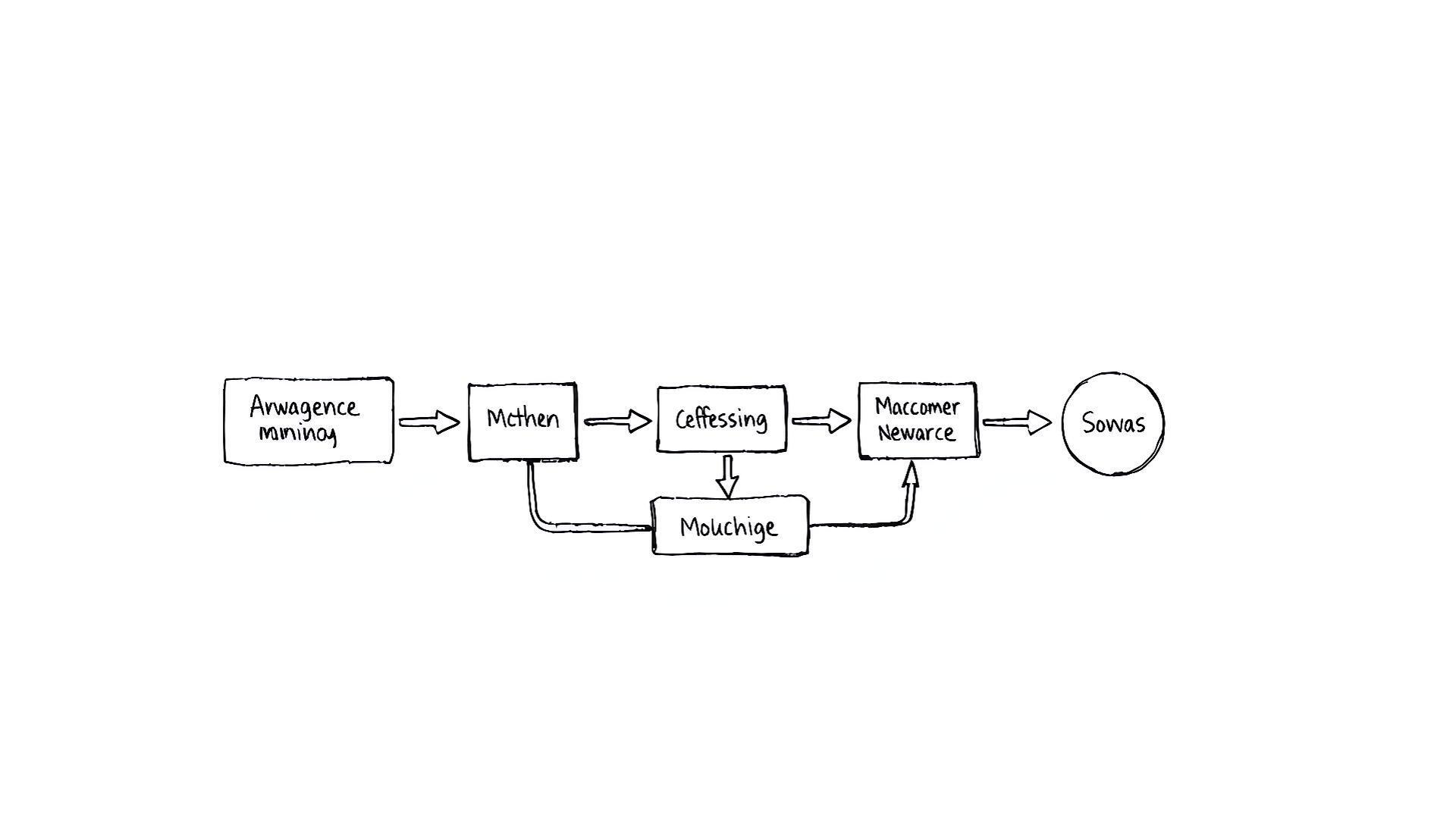
The Claude API relies on an external, centralized OAuth 2.0 provider to issue and validate access tokens for all API requests. When this third-party authentication service experienced an internal failure, the Claude API's token validation endpoints began returning 5xx server errors. This rendered valid API keys useless, as the service could not confirm their authenticity. The system lacked a graceful fallback mechanism, causing a complete authentication denial rather than degraded service.
The HN discussion, with 27 points and 24 comments, served as a real-time incident board where developers confirmed the scope. One commenter noted their application's error rates spiked to 98% during the outage.
The Core Architectural Vulnerability
The failure exposed a critical design flaw: a hard dependency on an external service for a foundational operation. Every API call requiring authentication needed a successful handshake with this OAuth provider. There was no cached validation state or circuit breaker pattern in place to temporarily allow traffic during a downstream outage.
This contrasts with a more resilient service mesh design, where authentication can be decentralized or where tokens can be validated against a recently cached certificate or key. The outage lasted for approximately three hours at peak severity, indicating a slow recovery path for the dependent OAuth service.
Comparison: API Authentication Resilience
The incident provides a concrete point for comparing the operational stability of major AI API providers. While all use OAuth/OIDC standards, their implementations and dependency structures differ.
| Feature | Claude API (Incident) | OpenAI API | Google Vertex AI |
|---|---|---|---|
| Auth Dependency | Single external provider | Internal, distributed system | Google Cloud IAM (platform-wide) |
| Recent Major Auth Outage | Yes (April 2025) | No (last in 2023) | No (platform incidents rare) |
| Graceful Degradation | No observed fallback | Yes (cached validation) | Yes (redundant IAM endpoints) |
| Public Status History | Limited detail | Detailed history on status page | Integrated with Google Cloud Status |
Immediate Developer Mitigation Steps
For developers building on Claude or similar APIs, this incident underscores the need for defensive coding. Implement these steps to improve your application's resilience:
- Implement Robust Retry Logic: Use exponential backoff for 5xx errors. Libraries like
backofffor Python oraxios-retryfor JavaScript can handle this automatically. - Cache Valid Tokens Aggressively: Access tokens typically have a 1-hour lifespan. Cache them locally for at least 55 minutes to avoid redundant validation calls during intermittent issues.
- Employ Circuit Breakers: Use a pattern (via libraries like
resilience4joropossum) to fail fast and prevent cascading failures when the auth service starts throwing errors. - Monitor Authentication Error Rates: Set up alerts for a spike in 401/403 errors from the API, which can be an early signal of broader issues.
Bottom line: Treat external authentication as a critical, failure-prone dependency, not a guaranteed service.
Who Should Be Most Concerned
This incident is a critical case study for specific developer audiences.
This should be a high-priority review for:
- Production applications with Claude API integration: Any service requiring high availability must implement the mitigations above.
- Architects designing microservices: The failure is a textbook example of a cascading failure in a dependent service.
- Startups with a single AI provider dependency: Lack of a fallback LLM provider amplifies the business risk.
You can likely deprioritize if: you are using the API for internal, non-critical tools where downtime is acceptable, or are in early prototyping.
Alternatives and Fallback Strategies
Relying on a single AI provider's API introduces a single point of failure. The most effective mitigation is a multi-provider strategy.
- Multi-Provider Abstraction: Use a library like
LiteLLMor build a simple wrapper that can route requests to OpenAI's API, Google's Gemini API, or a local model viaollamaif your primary provider fails. - Feature Flagging: Implement a kill switch to disable non-essential AI features during prolonged outages, preserving core app functionality.
- Local Fallback Model: For certain use cases (e.g., simple classification), a small, locally-run model (like a quantized Llama 3.1 8B) can serve as a basic fallback, though with significant capability trade-offs.
This Python example layers a circuit breaker (opens after 5 failures) with exponential backoff retry logic for temporary errors."Code Sample: Simple Circuit Breaker for API Calls"
from circuitbreaker import circuit
import backoff
import anthropic

@circuit(failure_threshold=5, expected_exception=anthropic.APIConnectionError)
@backoff.on_exception(backoff.expo, anthropic.APIError, max_time=60)
def call_claude_with_resilience(prompt):
    # Your standard API call here
    client = anthropic.Anthropic()
    message = client.messages.create(...)
    return message
Verdict: A Wake-Up Call for API Reliability
The Claude OAuth failure was not a novel bug but a classic infrastructure fragility manifesting in the AI space. It confirms that as AI APIs become core infrastructure, they inherit the same availability requirements as databases or payment gateways. Anthropic's challenge is now to decouple its critical auth path from a single external dependency, a problem other cloud giants have spent years solving.
For the industry, the incident moves the conversation beyond mere model accuracy and cost to include operational maturity. The next benchmark for leading AI APIs will include publicly documented resilience patterns and finer-grained SLA guarantees for authentication services. Developers will increasingly choose providers based on these operational metrics, not just model capabilities.






Top comments (0)