

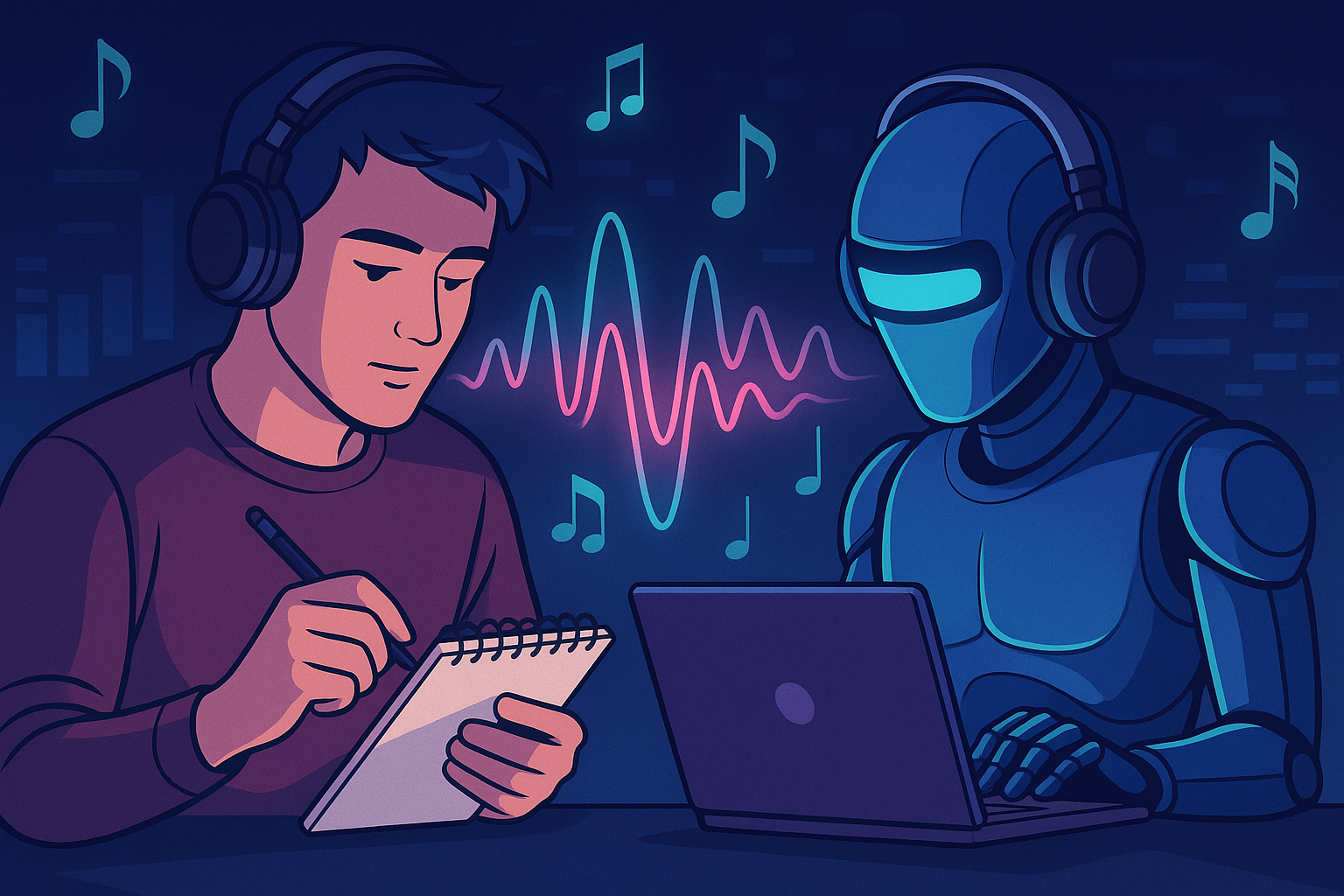
Have you ever felt frustrated watching musicians effortlessly create beautiful melodies while you struggle to hum a simple tune? I remember sitting in my small apartment, staring at expensive music production software I'd just downloaded, feeling completely overwhelmed. The interface looked like a spaceship cockpit, and I had no idea where to even begin. That was three years ago, before I discovered something that changed everything: AI music generators for beginners.
Today, anyone can turn words into music without spending years learning music theory or thousands of dollars on equipment. If you've been curious about creating your own songs but thought it was beyond your reach, this guide will show you exactly how to start—even if you've never touched a musical instrument in your life.
What Exactly Is an AI Music Generator?
An AI music generator is a software tool that uses artificial intelligence to compose original music based on simple text descriptions you provide. Think of it as having a skilled musician who listens to what you want and creates it for you—except this musician lives inside your computer and works at lightning speed.
Here's how it actually works, in plain language: These systems have been trained on millions of songs across every genre imaginable. They've learned patterns in melody, rhythm, harmony, and song structure by analyzing how professional musicians create music. When you type something like "upbeat pop song with piano and drums," the AI understands what those elements sound like and how they typically work together, then generates a completely new track matching your description.
The crucial difference between creating music with AI and older methods is that you're not just stitching together pre-recorded loops. The AI is actually composing new musical elements from scratch, similar to how a human songwriter would start with a blank page. What used to require years of training now takes minutes of experimentation.
How AI Is Changing Music Creation for Beginners
Traditional music production had serious barriers that kept most people out:
- Years of training: Learning piano, guitar, or music theory takes dedication most people can't commit to
- Expensive equipment: Professional instruments and studio gear cost thousands
- Technical knowledge: Understanding DAWs (Digital Audio Workstations) felt like learning a new language
- Time investment: Creating a single song could take weeks from start to finish
AI music generators for beginners have demolished these barriers. Today, someone with zero musical background can describe the emotion they want to capture, and within two minutes have a polished, professional-sounding track. I've watched friends who claimed they were "not musical" create beautiful instrumental pieces on their first try, simply by describing feelings rather than technical specifications.
This shift mirrors what happened when smartphones put professional photography in everyone's pocket. Suddenly, artistic expression became accessible to people who were previously locked out. We're seeing the same democratization happening with music right now.
Your First Song: A Step-by-Step Walkthrough
Let me walk you through creating your first AI-generated song. I'll use a realistic scenario: you need background music for a YouTube video about morning routines.
Step 1: Choose Your AI Music Generator
Several platforms exist, but for beginners, I recommend tools with simple interfaces and clear controls. Look for features like text to music AI conversion, where you can describe what you want in plain English rather than technical terms.
When evaluating the best AI song generator for beginners, check whether it offers:
- Royalty-free music (so you can use it commercially)
- Multiple format exports (MP3, WAV)
- Customization options (tempo, instruments, mood)
- Preview before finalizing
Step 2: Describe Your Music
Instead of thinking about technical details, focus on emotion and context. For our morning routine video, you might write:
"Gentle, uplifting music with soft piano and light percussion. Calm and optimistic mood, medium tempo. Perfect for a peaceful morning atmosphere."
Notice how this description focuses on feelings (gentle, uplifting, calm, optimistic) and context (morning atmosphere) rather than musical jargon. The AI music tool interprets this human-friendly language and translates it into musical elements.
Step 3: Refine Your Parameters
Most free AI music creation tools let you adjust specific elements:
- Genre: Ambient, Pop, Classical, Electronic, Jazz
- Mood: Happy, Melancholic, Energetic, Relaxed
- Instruments: Piano, Guitar, Strings, Drums, Synths
- Tempo: Slow (60-80 BPM), Medium (90-120 BPM), Fast (130+ BPM)
For our morning video, select:
- Genre: Ambient or Acoustic
- Mood: Calm, Uplifting
- Instruments: Piano, Light Percussion
- Tempo: Medium
Step 4: Generate and Listen
Click generate and wait 30 seconds to two minutes (depending on the platform). When the track finishes, listen with fresh ears. Ask yourself:
- Does this match the feeling I wanted?
- Would this work with my content?
- Is anything too loud or too quiet?
- Does it feel too generic or pleasantly unique?
Many beginners make the mistake of expecting perfection on the first try. That's not how creativity works—even with AI. The real magic happens when you generate three to five variations and compare them.
Step 5: Iterate and Improve
If the first result isn't quite right, adjust your prompt. Try being more specific:
- Instead of "happy," try "quietly joyful with nostalgic undertones"
- Instead of "medium tempo," try "relaxed pace like a Sunday morning"
- Add or remove instruments: "less drums, more acoustic guitar"
Each generation teaches you how the AI interprets language, making your next prompt better. Within 15 minutes, most beginners find something they genuinely like.
Step 6: Download and Use
Once you've found the perfect track, download it in your preferred format. For YouTube videos, MP3 works fine. For professional productions, use WAV for higher quality. Make sure you check the licensing—most copyright-free AI music generators allow commercial use, but always verify.
Real-World Use Cases: Who Benefits Most from AI Music Tools?
Through my experience and watching others, I've noticed certain groups benefit tremendously from AI music generators:
Content Creators on Tight Deadlines
YouTubers, TikTokers, and Instagram creators need fresh music constantly. Copyright strikes from using popular songs are costly, and generic stock music makes content forgettable. AI-generated music for YouTube gives them unique soundtracks that perfectly match their content's pacing and mood without legal worries.
I know a food blogger who creates three videos weekly. Before discovering AI music tools, she spent hours searching stock libraries. Now she generates custom tracks in minutes, and her audience has commented multiple times on how professional her videos sound.
Podcasters Building Brand Identity
Podcast intros, outros, and transitions define a show's personality. Generic jingles sound amateur, but hiring composers is expensive. AI music tools for podcasters let podcasters create memorable theme music that reflects their show's tone—whether that's serious investigative journalism or lighthearted comedy.
Independent Game Developers
Small game studios and solo developers need soundtracks but lack budgets for composers. Adaptive background music that changes with gameplay used to be impossible without significant resources. Now, with AI music for game developers, indie developers generate atmospheric soundscapes that make their games feel professional.
Aspiring Musicians Overcoming Creative Blocks
Even people with musical training use AI as a brainstorming partner. When stuck on a chord progression or melody, they generate variations until something sparks inspiration. The AI doesn't replace their creativity—it jumpstarts it when they're stuck.
Meditation and Wellness Creators
Teachers creating guided meditations, yoga videos, or sleep content need calming background music that doesn't distract. AI ambient music generators excel at creating calming soundscapes—gentle, repetitive, and soothing without becoming monotonous.
Tips for Getting Better Results (What I Wish I'd Known Earlier)
After generating hundreds of tracks, here's what actually makes a difference:
Be Emotionally Specific, Not Technically Vague
Bad prompt: "Make a song"
Better prompt: "Create upbeat electronic music"
Best prompt: "Energetic electronic track with pulsing synths that feels like driving at night through a neon-lit city—exciting but not aggressive"
The more emotional context you provide, the better the AI captures what you actually want.
Generate Multiple Versions
Never settle for the first result. Create at least three variations with slightly different prompts. Compare them side by side. Often, the third or fourth attempt captures something special the first one missed.
Start Simple, Then Layer
Begin with basic elements: "Piano and strings, slow, melancholic." Once that foundation works, you can add complexity: "Add subtle percussion in the second half" or "Include a gentle guitar melody."
Use Reference Language
Describe music using familiar references: "like a coffee shop background," "similar to lo-fi study music," or "reminiscent of summer evening ambiance." The AI music generator understands contextual language better than technical specifications.
Know When to Stop
There's a temptation to keep generating forever, hoping for perfection. Set a reasonable limit—maybe ten attempts. Usually, by the fifth try, you've found something good enough. Perfectionism kills creativity, even with AI.
Honest Limitations: What AI Music Still Can't Do Well
Let's talk about reality. AI music creation has advanced dramatically, but it's not magic. Here's what still doesn't work perfectly:
Complex Lyrical Content
While AI lyrics generators can create coherent verses and choruses, deeply personal storytelling with nuanced wordplay still feels mechanical. AI can write generic love songs competently, but it struggles with specific narratives or cultural references that require lived experience.
Subtle Emotional Nuance
AI captures broad emotions—happy, sad, energetic, calm—very well. But subtle emotional combinations, like "bittersweet nostalgia with underlying hope," often come out generic. The finest emotional shadings still require human judgment.
Consistent Artist Voice
Professional musicians develop a distinctive sound over years. AI generates competent music in various styles, but it doesn't develop a recognizable artistic voice across multiple tracks. Each generation is somewhat isolated rather than part of an evolving creative identity.
Intentional Imperfection
Sometimes music needs to sound raw, slightly off-beat, or deliberately imperfect. AI tends toward polished, technically correct compositions. Creating intentional roughness requires specific prompting and isn't always successful.
Cultural Authenticity
Music deeply rooted in specific cultural traditions—flamenco, traditional Indian classical, authentic blues—often sounds like surface-level imitations when AI-generated. The cultural knowledge embedded in these styles requires lived experience AI doesn't possess.
Understanding these limitations helps set realistic expectations. AI music generators excel at certain tasks while falling short in others. Knowing the difference saves frustration.
The Future: Where AI Music Creation Is Heading
The technology improves monthly. Here's what's emerging:
Better emotional understanding: Next-generation models are getting better at interpreting complex emotional language and translating it into nuanced musical expression.
Real-time editing: Instead of generating complete tracks and hoping they're right, future tools will let you adjust elements on the fly—"make the chorus more energetic" or "add strings here"—with instant results.
Voice integration: Combining AI lyrics generators with voice synthesis means complete songs with vocals are becoming more accessible, not just instrumental tracks.
Collaborative AI: Rather than AI creating entire pieces autonomously, emerging tools focus on collaboration—AI suggests ideas, humans refine them, back and forth until something special emerges.
Personalization: AI that learns your preferences over time, understanding your taste and generating music increasingly aligned with your unique style.
Your Creative Journey Starts with Curiosity, Not Perfection
The biggest barrier to creating your first AI-generated song isn't technical—it's psychological. Most people hesitate because they assume they need to understand music first. That's backwards. Start creating, and understanding follows naturally.
When I generated my first track three years ago, it sounded mediocre. But it existed. That mattered more than I realized. Each subsequent creation taught me something: how tempo affects mood, how instrument choice changes atmosphere, how minor adjustments create major differences.
AI music generators don't replace the need for taste and creative direction—they remove the technical barriers that previously blocked expression. Your job isn't to become a producer overnight. Your job is to know what you want to hear and describe it clearly enough for the AI to create it.
The democratization of music creation means more voices, more diversity, more experimentation. Some professionals worry this dilutes quality, but I see it differently. When more people can express themselves through sound, we discover musical ideas that would never have emerged from traditional gatekeepers.
Take the First Step Today
Stop reading and start experimenting. Open a free AI song generator, type a simple description of how you're feeling right now, and generate something. It won't be perfect. That's not the point. The point is hearing your idea transformed into sound within seconds—something that would have been impossible just a few years ago.
Remember: every professional musician started as a beginner. The difference now is that beginning doesn't require years of preparation. It requires curiosity and willingness to experiment. With AI music creation tools, your creative journey can start today, not someday when you're "ready."
Music is no longer reserved for the specially trained. It's becoming a universal language anyone can speak. All you need is something to say and the willingness to try saying it.





Top comments (0)