
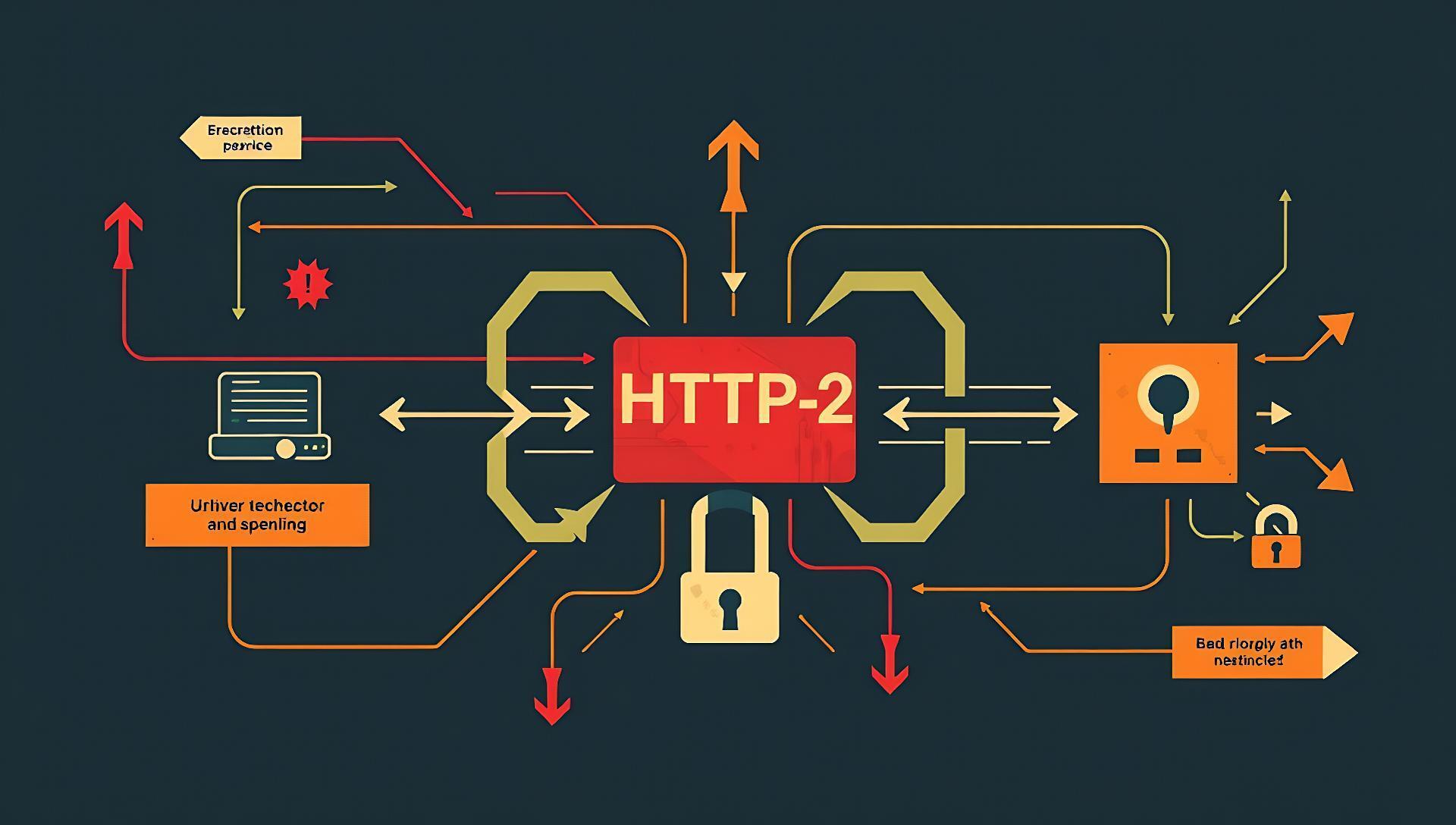

A critical remote code execution vulnerability dubbed http2shell was detailed in a Hacker News discussion this week, highlighting a novel exploit chain targeting HTTP/2 implementations. The flaw, with a CVSS score of 9.8 (Critical), allows attackers to execute arbitrary code on servers running popular frameworks like Node.js, Python, and potentially others by abusing protocol continuation frames.
Vulnerability: http2shell | CVE: CVE-2024-XXXXX | CVSS: 9.8 (Critical)
Affected: Node.js (v20.x), Python httpx/aiohttp, others | Status: Patches/Advisories Issued
How http2shell Exploits HTTP/2 Continuations
The vulnerability resides in how servers handle HTTP/2 HEADERS and CONTINUATION frames. Attackers can craft a malicious stream of frames to trigger memory corruption or improper request smuggling, ultimately leading to remote code execution. Unlike simpler HTTP/1.1 attacks, this exploits a state management flaw inherent in the stream-oriented design of HTTP/2.
The exploit is protocol-level, meaning it can affect any language or framework with an HTTP/2 server implementation that contains the specific parsing flaw. The initial research demonstrated successful RCE against Node.js’s node:http2 module and Python’s httpx and aiohttp libraries when configured as servers.

Affected Versions and Immediate Mitigation
Patches and advisories have been released for the primary affected libraries. Developers must update immediately.
| Framework/Library | Affected Versions | Patched Version | Advisory Link |
|---|---|---|---|
Node.js http2
|
20.x (specific builds) | 20.12.2+ | Node.js Security Release |
Python httpx
|
< 0.27.0 | 0.27.0 | httpx CHANGELOG |
Python aiohttp
|
< 3.9.5 | 3.9.5 | aiohttp Releases |
The most straightforward mitigation is updating to the latest patched version of your HTTP/2 server library. For un-patchable systems, a temporary workaround is to disable HTTP/2 support and force HTTP/1.1, though this impacts performance.
Bottom line: A critical, low-complexity attack requiring immediate patching of HTTP/2 server stacks.
Community Reaction and Technical Context
The Hacker News thread garnered 142 points and 77 comments, with discussion focusing on the pervasive nature of the flaw. Key points from practitioners include:
- Surprise at the vector: Many developers noted that HTTP/2, often adopted for performance, introduced a new, less-audited attack surface.
- Reproducibility: Several commenters confirmed the proof-of-concept's effectiveness, emphasizing the need for widespread scanning.
-
Scope concerns: Questions arose about other vulnerable implementations in languages like Go (
net/http) or Rust (hyper), though no confirmed exploits were cited.
"How to Test for Vulnerability"
If you cannot patch immediately, you can check for exposure:
nmap with the --script http2 flag to detect servers.npm audit for Node.js or pip list --outdated for Python to flag vulnerable httpx/aiohttp versions.
Comparison to Recent HTTP/2 Vulnerabilities
http2shell is part of a trend of critical HTTP/2 flaws. It differs from previous headline-grabbing vulnerabilities in its direct path to RCE.
| Vulnerability | CVE | Primary Impact | Key Difference from http2shell |
|---|---|---|---|
| HTTP/2 Rapid Reset | CVE-2023-44487 | DDoS Amplification | Exploited stream cancellation for DDoS, not code execution. |
| HTTP/2 CONTINUATION Flood | CVE-2024-XXXX | Resource Exhaustion | Causes DoS via memory consumption, not arbitrary code execution. |
| http2shell | CVE-2024-XXXXX | Remote Code Execution | Uses frame smuggling to corrupt memory and achieve RCE. |
This comparison shows http2shell is more severe for compromise than prior DoS-focused HTTP/2 bugs, though the Rapid Reset attack had a wider infrastructure impact.
Who Should Take Immediate Action
This vulnerability demands targeted attention from specific groups.
Prioritize patching if you are:
- Backend developers deploying services with Node.js
http2, Pythonhttpx(as a server), oraiohttp. - DevOps/SRE teams managing internet-facing APIs or proxy servers using these frameworks.
- Security engineers responsible for vulnerability scanning and intrusion detection; update signatures to detect exploitation attempts.
Lower priority (but should still verify):
- Projects using HTTP/2 client libraries only (e.g.,
httpxas a client) are not vulnerable. - Services using managed platforms (AWS ALB, Cloudflare, Google Cloud) where the provider's HTTP/2 termination is patched at the edge.
The Bottom Line on http2shell
http2shell is a critical, practical RCE exploit that turns a fundamental HTTP/2 feature into a weapon. Its discovery in multiple high-profile frameworks suggests similar flaws may exist elsewhere in the HTTP/2 ecosystem.
The security imperative is clear: update your server dependencies now. For the broader community, http2shell underscores the ongoing need for rigorous protocol-level fuzzing and security review as adoption of HTTP/2 and HTTP/3 accelerates. This vulnerability is a wake-up call that performance upgrades must be matched with security scrutiny.






Top comments (0)