
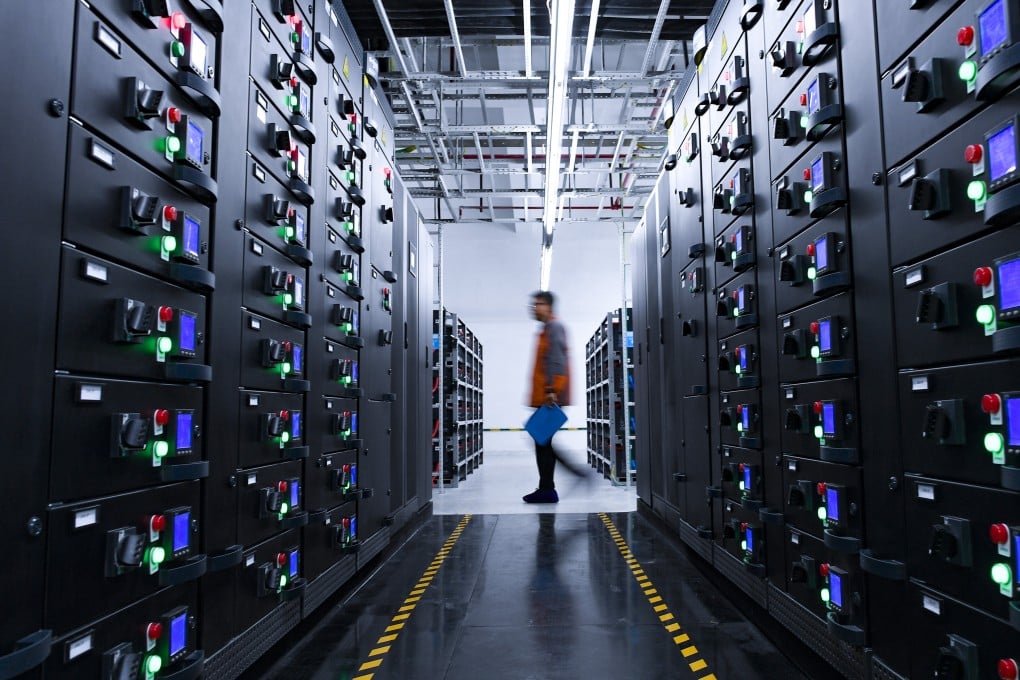

China announced a $295 billion five-year investment in AI infrastructure, according to Grok AI News. The plan targets data centers, chip production, and talent pipelines while export controls remain in place.
A Chinese AI CEO separately stated his firm will reach Fable 5-class model performance before Elon Musk’s Q1 2027 timeline.
What the Plan Covers
The investment focuses on three areas: new GPU clusters, domestic semiconductor capacity, and university AI programs. Funds will flow through state-backed funds and provincial governments rather than direct company grants.
No detailed per-year breakdown was released.
Key Numbers and Timeline
- Total commitment: $295 billion across 2026-2030
- Primary goal: close the gap in high-end training clusters
- Secondary claim: match closed-source frontier models by early 2027
These figures sit between the US CHIPS and Science Act’s $52 billion in direct subsidies and the much larger private AI spending by US hyperscalers.
Geopolitical and Hardware Context
US export controls still block advanced NVIDIA GPUs from Chinese buyers. The new plan therefore emphasizes domestic chip design and older-node manufacturing at scale.
Early signals point to increased orders for Huawei Ascend and Biren chips, though neither has yet demonstrated training runs above 100k H100-equivalent scale.
Pros and Cons for AI Teams
Pros
- Expanded domestic compute may lower training costs inside China
- Faster talent pipelines could increase open research output from Chinese labs
Cons
- Export restrictions remain unchanged, limiting access to the fastest GPUs
- State-directed funding may favor large state-linked labs over independent developers
Alternatives and Spending Comparisons
| Region | Direct Public AI/Chip Funding | Time Period | Focus |
|---|---|---|---|
| China | $295 billion | 2026-2030 | Data centers + domestic silicon |
| United States | $52 billion (CHIPS Act) | 2022-2026 | Advanced fabs + R&D |
| European Union | €43 billion (Chips Act) | 2023-2030 | Manufacturing + skills |
Private US spending on AI infrastructure already exceeds $100 billion annually from Microsoft, Google, Amazon, and Meta alone.
Who This Affects Most
Researchers and startups inside China gain the clearest near-term benefit through subsidized clusters. Teams outside China see indirect effects via talent competition and potential new open models from Chinese labs.
Developers relying on the absolute latest NVIDIA hardware for frontier training will continue facing the same access limits.
Verdict
The $295 billion commitment signals sustained state support for Chinese AI infrastructure, yet hardware constraints and funding allocation details will determine whether it narrows the capability gap with US labs by 2027.






Top comments (0)