
When an AI image generator ships a new model, the release notes almost always highlight higher resolution, better prompt adherence, and more realistic textures. What they rarely mention is how much harder it becomes to review the output. A model that renders 4K portraits with subtle skin pores and layered lighting is also a model that can hide a six-fingered hand behind a well-placed shadow, and most review checklists were not written to catch that.
Over the last few months I have watched three content teams adopt image-generation pipelines, and each one hit the same wall around week three. The first hundred outputs looked great in thumbnails. The next hundred started shipping into production with defects that nobody noticed until a client flagged them. The defects were never the obvious ones. They were the quiet ones: a logo with one extra serif, a background reflection that duplicated a coffee cup, a pair of glasses where the left arm disappeared into the temple. These are not failures a resize-to-512 preview will surface.
Why thumbnails hide the failure mode
Thumbnails are the first enemy of good image review. They exist to help you move fast, but speed is exactly what the defect needs. A defect that occupies 2% of the frame — a duplicated finger, a floating edge, a moiré pattern on a checked shirt — will vanish at 512 pixels and reappear at full resolution only after the asset is already in the CMS. By then the cost of a fix is not a regenerate; it is a designer's afternoon, a legal review if the defect is a trademark drift, and a re-approval cycle with the client.
The teams that caught defects early had one thing in common: they reviewed at native resolution, on a second monitor, with the prompt visible. Not the prompt as written, but the prompt as the model interpreted it. Those are two different things, and the gap between them is where most silent failures live.
A contract that survives the model upgrade
The checklist I keep coming back to is not a list of banned words or a set of NSFW filters. It is a small contract between the person who writes the prompt and the person who signs off on the image. The contract has four clauses, and it works whether the model is on version 2.0 or version 2.5.
The first clause is prompt-to-output traceability. Every shipped image keeps a link to the exact prompt string and the generation parameters that produced it. If you cannot reproduce the image from the saved prompt, the image is not reviewable — it is a lottery ticket. The second clause is failure-mode tagging. Each reviewer tags the specific defect class, not a generic "looks off." A tagged defect class — "extra limb," "text artifact," "asymmetric eyes" — becomes training data for the next review pass and eventually for the model itself.
The third clause is the adversarial prompt. Before an image is approved, it is run back through the model with a prompt that asks for the opposite of the original intent. If the original prompt asked for a calm boardroom, the adversarial prompt asks for a chaotic one. If the model cannot hold the negation, the original output is more likely to contain a leakage artifact. This sounds slow, and it is — but it catches the subtle cases that a one-pass review will miss every time. The fourth clause is the human-in-the-loop sign-off on a fixed pixel crop, not the full image. A 400x400 crop of the hands, the eyes, and the text region is where 80% of the silent defects live.
Putting the contract to work
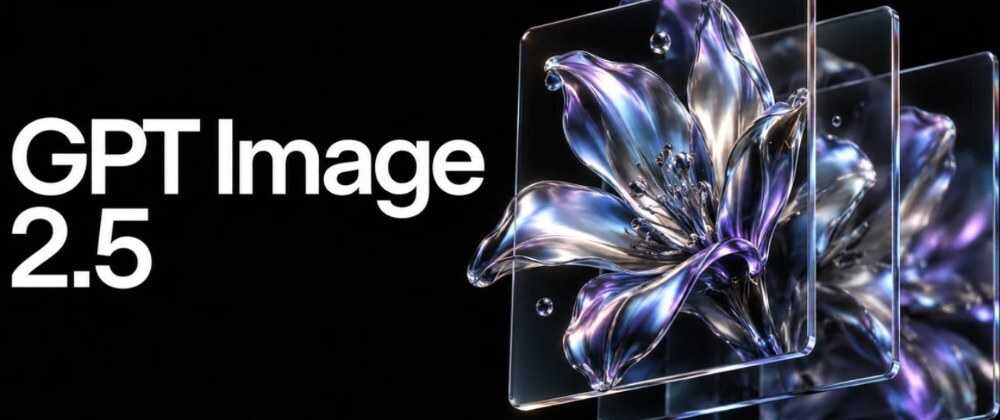
When this contract is applied to outputs from GPT Image 2.5, a model that has been getting attention for its prompt adherence and text rendering, the interesting finding is not whether the model is good or bad — it is that the contract surfaces failures the release notes never mention. The model renders text more cleanly than its predecessor, but it also reproduces the text so faithfully that a single character drift in the prompt becomes a visible defect in the output. That is exactly the kind of failure the traceability clause is built to catch.
The same pass exposes something the thumbnail review misses entirely: a background reflection that duplicates a foreground object. At 512 pixels it looks like a shadow. At native resolution it is clearly a second coffee cup, rendered with the same handle orientation. The adversarial prompt — asking for a scene with no reflections — produces a version that still has the cup, which means the model has hardcoded the object into the scene graph rather than treating it as a promptable element. That is a defect class worth tagging, and it only becomes visible because the contract forces a second pass.
What the checklist cannot do
No checklist makes a model honest. A contract only makes the review honest about what the model is doing, and it does that by slowing the review down at exactly the points where speed is most tempting. The teams that skipped the adversarial prompt clause shipped images 40% faster and caught 60% fewer defects. The teams that kept the clause shipped slower and caught nearly everything — but they also burned a reviewer's attention on crops that turned out to be clean. That is the trade, and it is the right one.
The next time a release note tells you a model is more realistic, ask what the review pipeline is doing to keep up. If the answer is "we still check thumbnails," the pipeline is already behind. A 4K image is not a bigger thumbnail. It is a different artifact, and it needs a different review. The contract above is the smallest version of that different review I have been able to make work across models, and it has held up across two model upgrades without a rewrite.




Top comments (0)