
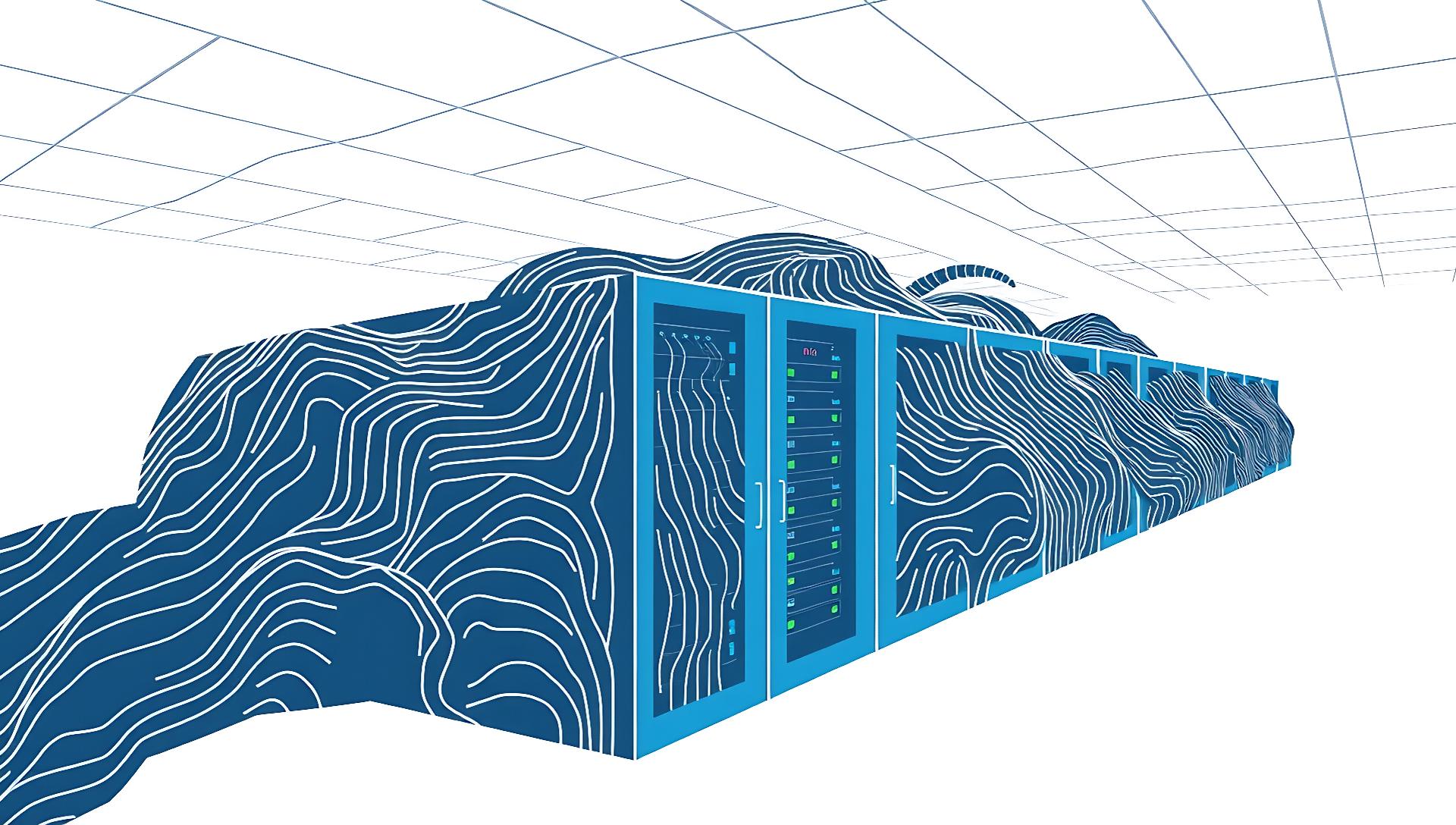

A Hacker News discussion last week, gathering 58 points and 17 comments, highlighted growing concern over AI's escalating environmental cost. The core argument, flagged in the thread, is that the breakneck scaling of large language and diffusion models is creating an unsustainable energy demand that rivals entire countries.
Energy per Query: ~10x traditional search | Model Growth: 10x/year (parameters) | Sector Projection: Could consume 3-8% of global electricity by 2030
The Numbers Behind the Concern
The energy footprint of AI operates on two levels: the computational cost of training and the inference cost of serving models to billions of users. Training a single large language model like GPT-4 is estimated to consume over 1,000 MWh of electricity—enough to power approximately 1,000 average U.S. homes for a month. However, the larger long-term impact comes from inference. Each query to a model like ChatGPT requires significantly more computational work than a standard web search.
Early testers and researchers note that while a Google search uses roughly 0.3 Wh of energy, a single inference request to a large LLM can consume 2-10 Wh. At scale, this difference becomes monumental.

How AI Energy Consumption Compares
To contextualize AI's footprint, it's useful to compare it to other digital and physical industries. The global ICT sector, including data centers, networks, and consumer devices, currently accounts for about 2-4% of global greenhouse gas emissions.
| Sector/Activity | Estimated Global Electricity Use | Key Comparison |
|---|---|---|
| AI Training & Inference (2030 Projection) | 3-8% (projected) | Approaching current global aviation emissions |
| Global Data Centers (2022) | 1-1.5% | Consumes ~200-300 TWh annually |
| Bitcoin Mining (2023) | 0.5-1% | ~110 TWh annually |
| Traditional Google Search | Fraction of AI inference | Vastly more efficient per task |
The projection that AI could demand 3-8% of global electricity by 2030 (per a study from the University of Washington) is what triggers alarm. This growth trajectory is steeper than most other sectors.
Practical Steps for Developers and Teams
For practitioners, the goal isn't to stop using AI but to adopt efficiency-first practices. The most effective levers are model selection, optimization, and infrastructure choice.
1. Right-Size Your Model: Use the smallest model that achieves your accuracy goal. A 7B-parameter model can often handle tasks assigned to 70B-parameter models at a fraction of the energy cost. Tools like the Hugging Face Model Hub allow filtering by size and benchmarking performance.
2. Optimize Inference: Use quantization (e.g., GGUF, GPTQ formats) to run models in 4-bit or 8-bit precision, reducing memory and compute needs by up to 75%. Leverage inference servers like vLLM that optimize throughput.
3. Choose Efficient Hardware and Regions: Run workloads in cloud regions with high carbon-free energy percentages (e.g., Google Cloud's Iowa region, AWS's Oregon region). Consider using newer, more efficient GPUs like the H100, which offers significant performance-per-watt gains over previous generations.
Bottom line: The single biggest decision is model selection—smaller, specialized models often provide 80% of the utility for 10% of the energy cost.
Pros, Cons, and Who Should Act
The trade-offs between capability and efficiency are stark.
Pros of Prioritizing Efficiency:
- Direct Cost Reduction: Lower cloud compute bills by optimizing usage.
- Faster Inference: Smaller, quantized models respond more quickly.
- Regulatory Future-Proofing: Prepares teams for potential carbon reporting mandates.
Cons and Challenges:
- Performance Trade-offs: Smaller models may have lower reasoning ceilings for complex tasks.
- Development Overhead: Requires upfront work in model benchmarking and optimization.
- Limited Transparency: Cloud providers often lack granular, real-time carbon emission data for specific workloads.
This issue is most critical for product teams deploying at scale and researchers training new models. A startup serving 10,000 LLM queries per day has a much higher leverage point for change than an individual experimenting locally. Enterprise architects and DevOps engineers are the key decision-makers for implementing green MLOps practices.
"How to Measure Your AI Carbon Footprint"
Tools are emerging to quantify the impact of AI workloads:
The Path Forward: Efficiency as a Feature
The discussion isn't about halting AI progress but about steering it toward sustainability. The next competitive edge in AI may not be raw parameter count but performance per watt. The community's focus is shifting to techniques like mixture-of-experts models, sparsity, and algorithmic improvements that decouple capability from exponential energy growth.
The industry response will determine if AI becomes a net-positive tool for climate solutions—optimizing grids, accelerating material science—or a disproportionate drain on global resources. For developers, making efficiency a core design constraint is no longer just ethical; it's becoming a technical and economic imperative.






Top comments (0)