


AI content on YouTube went from “interesting experiment” to full-blown industry in about 18 months.
Now you’ve got:
- faceless documentary channels pulling 5 million views
- AI Shorts factories uploading 20 clips a day
- solo creators running entire media businesses with automation tools
- people cloning their own voices because recording at 1:14 AM stopped being fun somewhere around video #37
And the question keeps circling back:
Is AI content actually allowed on YouTube?
Yes.
But YouTube’s relationship with AI content feels a lot like airport security. You can bring liquids through, just maybe don’t show up with 14 unlabeled containers taped together inside a potato sack.
The platform cares about quality, trust, and viewer behavior. That’s the real story.
Prompt engineering became creator infrastructure fast
You can feel the shift all over creator communities right now.
Prompt marketplaces are growing.
People trade workflows like recipes.
Entire Discord servers exist just to tweak thumbnail prompts and retention hooks.
A few years ago creators mostly talked about:
- cameras
- microphones
- editing software
Now they swap prompts for:
- script pacing
- storytelling structures
- AI B-roll generation
- thumbnail ideation
- title variations
- audience psychology
The workflow changed.
And honestly, a lot of creators quietly became part-time prompt engineers without realizing it.
YouTube already uses AI everywhere
This part gets weird when people act morally shocked about AI-assisted videos.
YouTube itself runs heavily on AI:
- recommendations
- captions
- moderation
- dubbing
- translations
- music tools
- search understanding
Creators use AI because the platform itself is built around machine learning systems.
That ship sailed years ago.
The real issue is whether your content feels useful, watchable, and original enough for people to stick around.
Low-effort AI content burns out fast
You’ve seen the channels.
Same robotic voice.
Same stock clips.
Same pacing.
Same “top 10 facts you didn’t know about billionaires” script generated by a prompt that probably smells faintly like burnt coffee and desperation.
Those channels sometimes spike early because YouTube tests almost everything.
Then retention collapses.
Comments dry up.
Suggested traffic slows.
Views flatten into a sad horizontal line.
The algorithm reacts to audience behavior brutally fast now.
Retention exposes weak scripts immediately
This is where AI-generated content usually cracks.
Weak scripts feel padded.
Hooks drag.
Sentences repeat themselves in slightly different wording like the video is stalling for time before the mid-roll ad arrives.
Viewers notice.
Especially Gen Z viewers. Their tolerance for slow pacing is basically gone. If your intro meanders for 40 seconds, they’re already watching a guy pressure-wash driveways or ranking gas station burritos somewhere else.
Good creators trim aggressively now.
That matters way more than whether AI touched the workflow.
Prompt quality changes the final video more than people think
Bad prompts create generic videos.
You can spot them instantly:
- broad language
- vague claims
- fake confidence
- repetitive structure
- emotional flatness
The script sounds like it was assembled by someone who skimmed 12 Reddit posts while trapped inside an airport Chili’s.
Strong prompts create structure:
- pacing
- tension
- rhythm
- specificity
- transitions that feel human
That difference matters a lot more than creators admit publicly.
AI voices stopped sounding terrible
This changed fast.
About a year ago, AI narration still sounded slightly haunted. Like Siri had just watched a Christopher Nolan movie and needed a minute to recover emotionally.
Now some voice models are genuinely hard to catch.
Especially when creators:
- edit pacing manually
- inject pauses
- rewrite scripts conversationally
- cut filler
- add personality
You can absolutely build solid YouTube videos with AI narration now.
But audiences still punish boring content immediately.
A realistic voice won’t rescue a weak idea.
YouTube wants content people actually finish
That’s really the core metric underneath everything.
People obsess over:
- upload frequency
- automation stacks
- AI tool lists
Meanwhile YouTube watches:
- average view duration
- session time
- rewatches
- engagement
- viewer satisfaction
A strong 12-minute AI-assisted documentary can outperform 50 low-effort Shorts uploaded by an automation farm running on caffeine and panic.
The platform rewards attention.
Always has.
Educational channels are getting huge mileage from AI
This category probably benefits the most right now.
Research-heavy creators used to spend ridiculous amounts of time:
- organizing notes
- outlining scripts
- finding visuals
- editing captions
- repurposing clips
AI sanded down a lot of that workload.
Now solo creators can produce:
- explainers
- tutorials
- commentary
- long-form educational videos
…without needing a full team.
That’s why educational AI channels exploded recently.
The economics finally make sense.
Faceless channels still work fine

People keep predicting the death of faceless YouTube.
Meanwhile some faceless channels are quietly pulling millions of views with:
- documentaries
- history breakdowns
- finance explainers
- true crime
- business content
The successful ones still craft the viewing experience carefully.
You can feel the difference immediately when a creator actually edits for rhythm instead of dumping narration onto random stock footage like wet laundry.
Advertisers shape a lot of this behind the scenes
Creators sometimes forget YouTube answers to advertisers too.
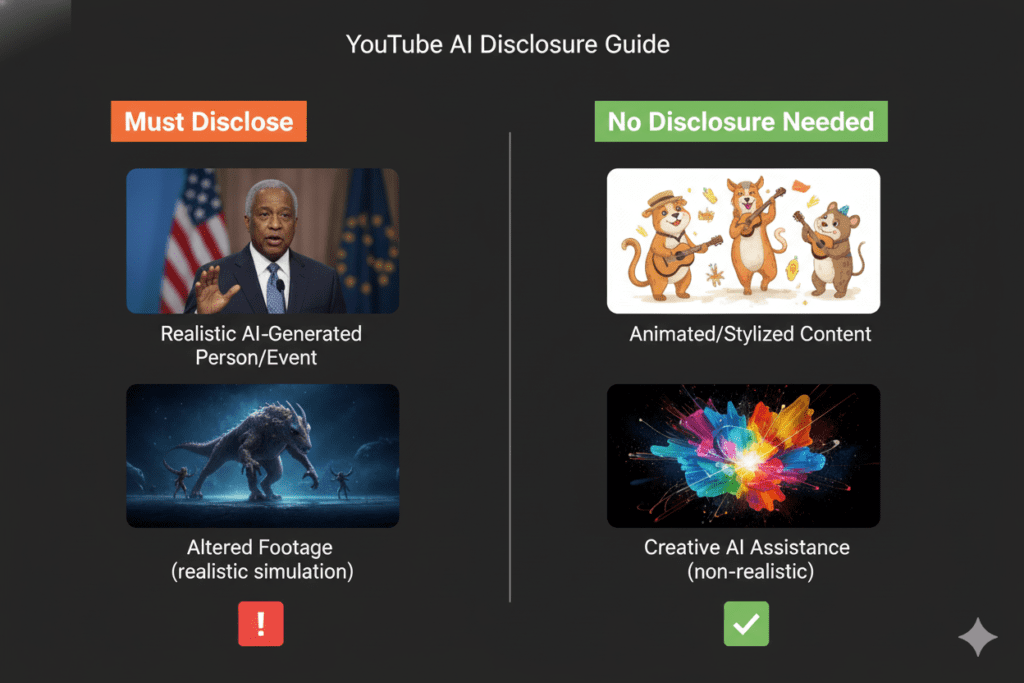
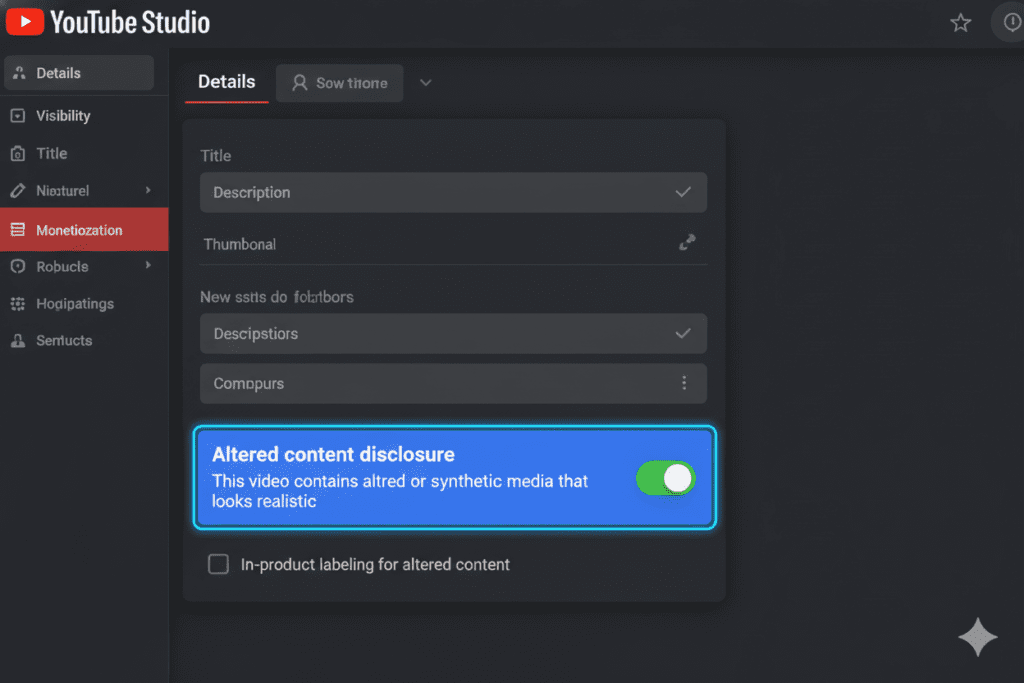
Brands care about:
- misinformation
- spam
- fake celebrity content
- AI deepfakes
- low-quality uploads
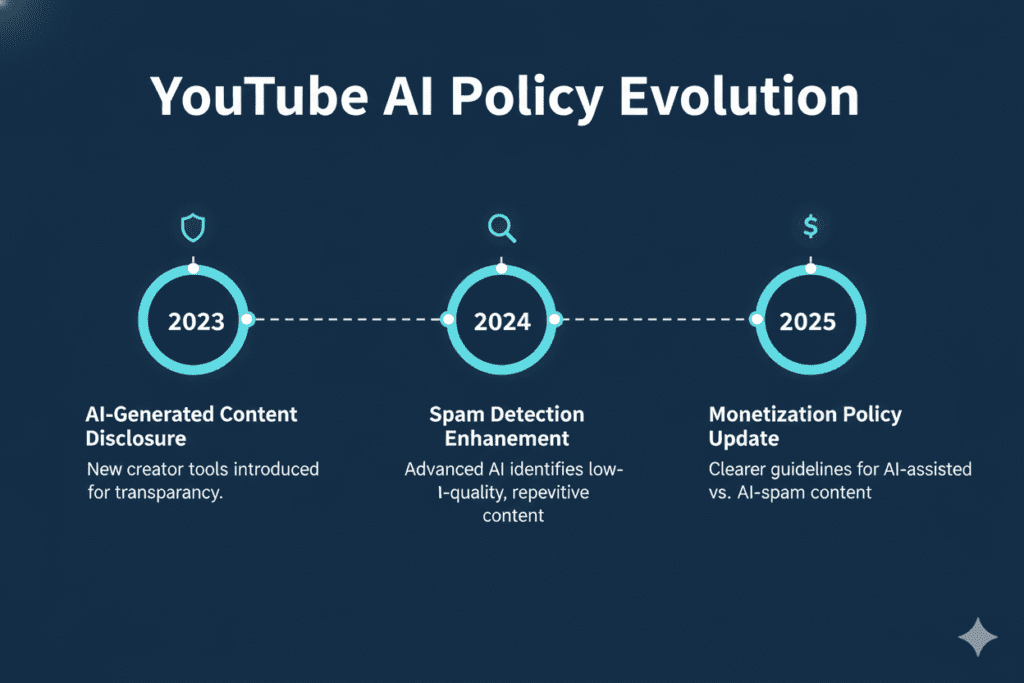
That pressure affects monetization policy constantly.
Which explains why YouTube keeps tightening rules around reused and repetitive content.
The platform wants content brands feel safe attaching ads to.
That’s where demonetization issues usually begin.
Most creators already use AI somewhere
This whole debate got weirdly binary online.
As if creators fall into:
“real creators”
“AI creators”
That distinction barely exists anymore.
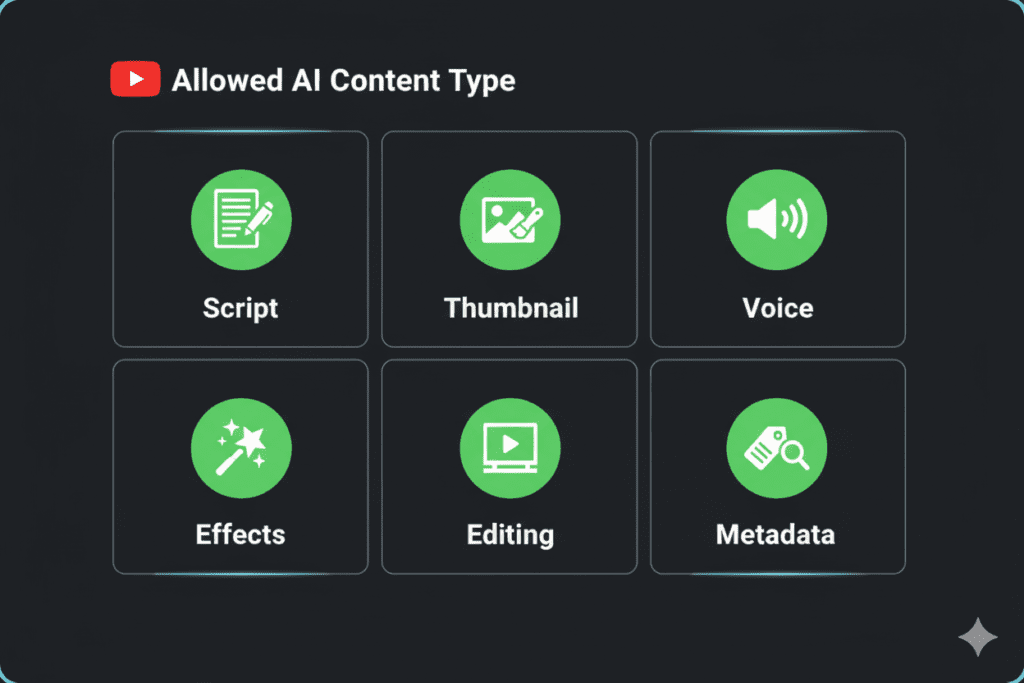
A huge chunk of creators use AI tools already for:
- thumbnails
- outlines
- captions
- translations
- editing cleanup
- SEO ideas
- research summaries
Even creators loudly complaining about AI often use AI-powered tools without thinking twice about it.
The real difference comes down to editorial control.
Human judgment still carries the video
This part keeps surviving every tech cycle.
People respond to:
- timing
- perspective
- emotion
- humor
- pacing
- storytelling instincts
AI can assemble words quickly.
It still struggles with taste.
You can feel when someone actually shaped a video carefully instead of just pressing “generate” six times and uploading the least broken version.
And viewers are getting surprisingly good at spotting that difference.
LinkedIn and creator communities are obsessed with AI workflows
Search interest around:
- AI YouTube automation
- faceless channels
- AI monetization
- YouTube AI policy …keeps climbing.
Because creators see what’s happening:
1 person can now produce the amount of content that once required a small team.
That changes:
- business models
- production speed
- creator burnout
- competition
The bottleneck shifted from “Can you make videos?” to “Can you hold attention?”
That’s a much harder skill.
Where ytZolo fits into this
A lot of creators are trying to figure out how far AI can go before content quality falls apart.
That balance matters now.
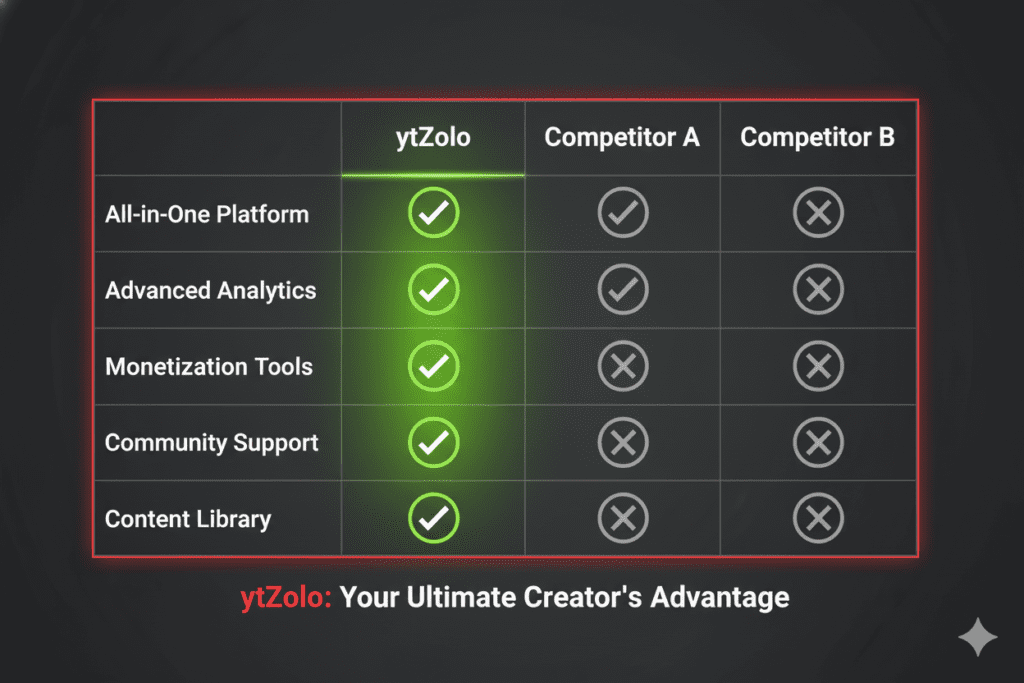
I found this breakdown from ytZolo useful because it gets into the actual platform concerns around AI-generated YouTube content instead of recycling generic “AI is the future” talking points:
Is AI content allowed on YouTube?
It covers:
- monetization concerns
- faceless channels
- AI workflows
- YouTube policy direction
- creator risks
Worth reading if you’re building AI-assisted content seriously.
The channels growing fastest still feel human
That’s the part people keep circling back to.
AI helps creators move faster.
It trims production friction.
It handles repetitive work.
But the videos people remember still have:
- personality
- judgment
- weird little creative decisions
- emotional timing
That part still matters a lot.
Probably more now than before, honestly, because audiences are getting flooded with synthetic content every day.
And viewers can smell lazy automation from a mile away.






Top comments (0)