

Creators spend hours editing Shorts.
Then they spend 20 seconds writing the title.
That's backwards.
A title is often the first thing a viewer sees alongside the thumbnail and opening frame. If it doesn't create curiosity, the quality of the video barely matters.
The strange part is that most creators know this.
Yet title writing remains one of the most overlooked skills in short-form content.
That's why AI-powered title generators have become popular among YouTube creators over the last year.
Not because creators can't write titles.
Because coming up with dozens of fresh title ideas every week gets exhausting.
The title has one job
Many creators try to cram everything into a title.
Keywords.
Context.
Description.
Branding.
The result usually looks like this:
"10 Amazing Productivity Tips That Will Help You Work Better Every Single Day"
Nobody clicks that.
Good Shorts titles create a gap between what viewers know and what they want to know.
Examples:
- I tested this for 30 days
- This changed my editing workflow
- I wasn't expecting this result
- The easiest mistake to make
Notice something?
They're simple.
The viewer immediately feels a reason to watch.
Why Shorts titles work differently from long-form titles
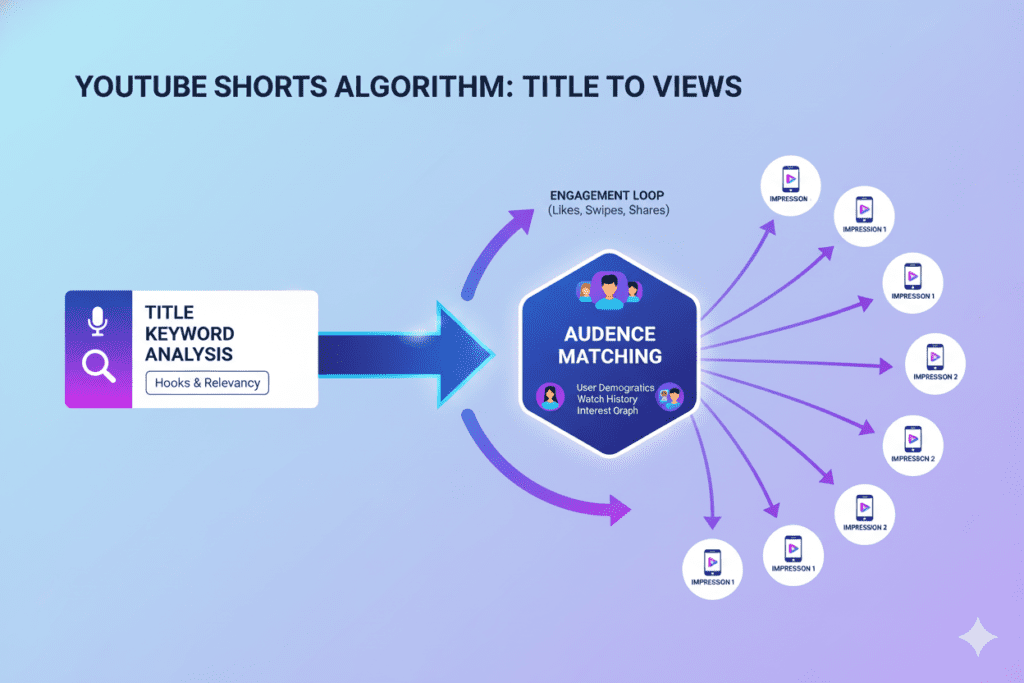
Traditional YouTube videos often depend heavily on search.
Shorts depend much more on attention.
A viewer scrolling through Shorts isn't looking for a detailed explanation.
They're deciding in a fraction of a second whether the content deserves attention.
That changes how titles work.
The best Shorts titles tend to be:
- shorter
- curiosity-driven
- emotionally clear
- easy to read on mobile
Every extra word creates friction.
Most AI-generated titles sound like AI-generated titles
Anyone who has experimented with title generators has probably seen this.
You enter a topic.
The tool produces:
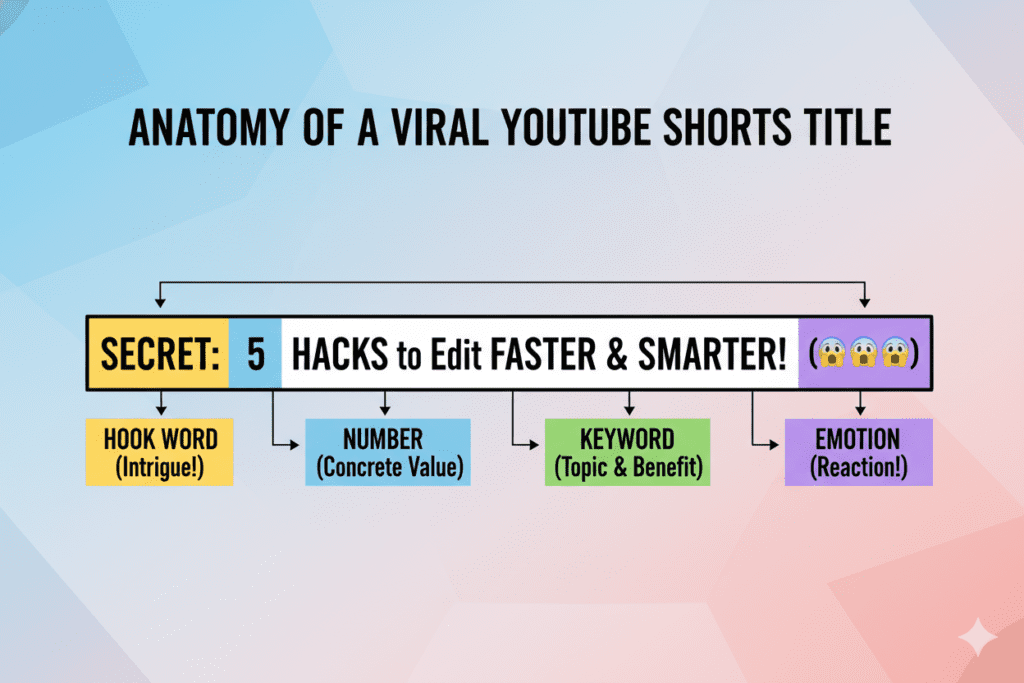
- Ultimate Guide to...
- Top 10 Reasons Why...
- Everything You Need to Know...
- The Complete Beginner's Guide...
Technically correct.
Completely forgettable.
The issue isn't the technology.
The issue is that many tools optimize for information instead of attention.
People don't click because a title is informative.
They click because they're curious.
What actually makes a Shorts title perform
I've analyzed hundreds of successful Shorts across different niches.
Patterns appear quickly.
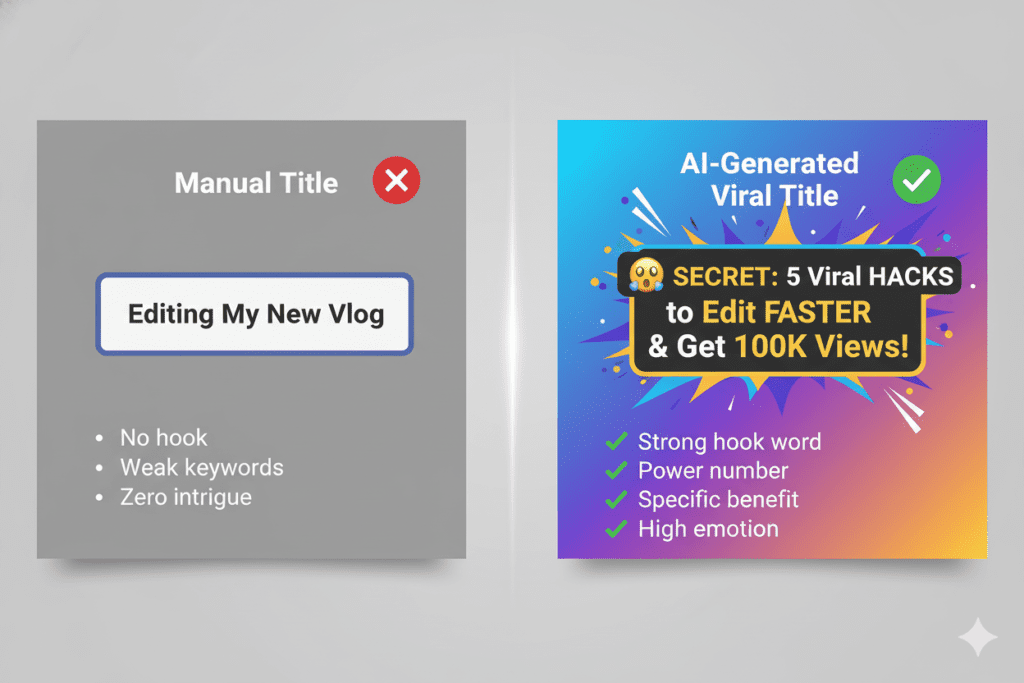
Good titles usually trigger one of these responses:
Curiosity
Examples:
- I tried this so you don't have to
- Nobody expected this outcome
- This worked way better than expected
The viewer wants resolution.
Surprise
Examples:
- I thought this was fake
- The results shocked me
- I was completely wrong
Surprise interrupts scrolling.
Specificity
Examples:
- 7 days later
- After 100 uploads
- I spent $50 testing this
Numbers create credibility.
Personal experience
Examples:
- Here's what happened
- My biggest mistake
- What I learned from this
Stories naturally attract attention.
AI title generators work best during brainstorming
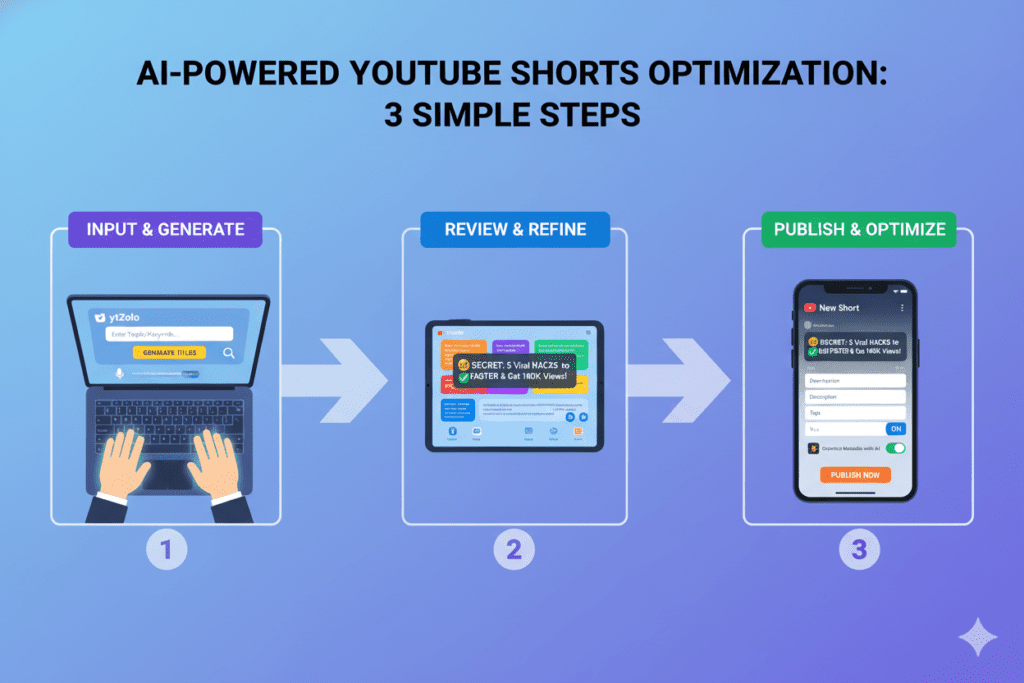
One mistake creators make is treating AI output as finished output.
Usually it isn't.
The best workflow looks more like this:
- Generate 20 ideas
- Keep 3
- Rewrite them
- Test variations
- Publish the strongest option
Think of AI as a creative assistant.
A surprisingly fast one.
But still an assistant.
Human judgment decides which title feels worth clicking.
The hidden challenge: title fatigue
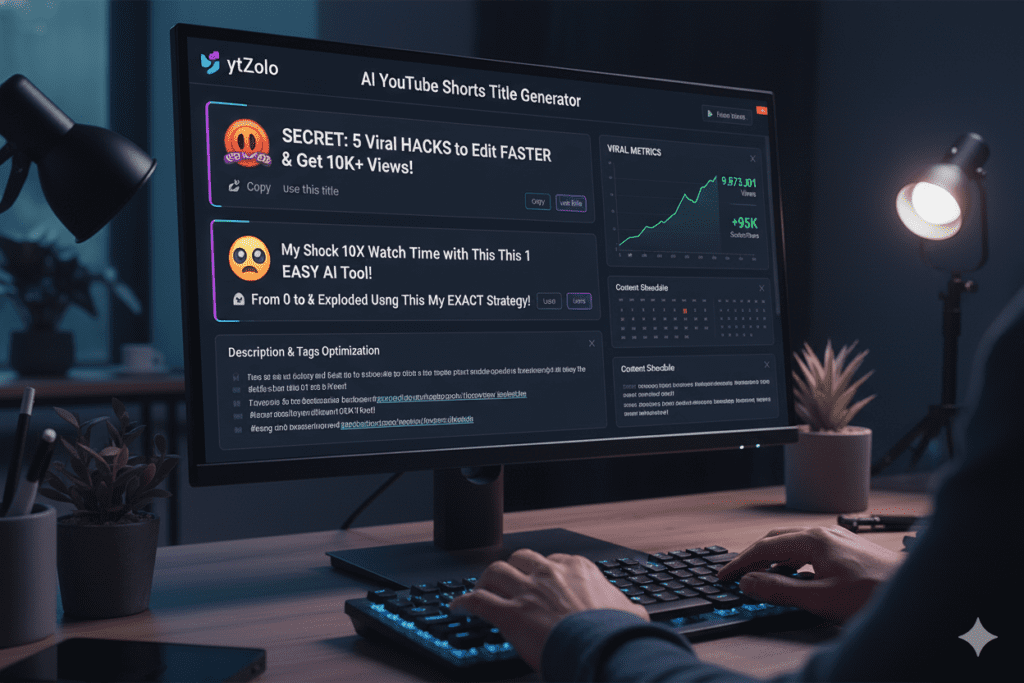
Most creators don't struggle with writing one title.
They struggle with writing hundreds.
Imagine publishing:
- 2 Shorts daily
- 60 Shorts monthly
- 700+ Shorts yearly
Eventually every title starts sounding the same.
Creators recycle structures.
Viewers notice.
Performance drops.
Fresh title angles become increasingly important as channels scale.
That's one reason title generation tools gained traction among creators.
They help break repetitive thinking patterns.
Why prompts matter more than tools
Prompt communities have grown rapidly because creators realized something important.
The quality of AI output often depends on the quality of the prompt itself. Communities built around prompt sharing and experimentation continue growing because users want practical workflows instead of generic outputs.
For example:
Bad prompt:
"Generate YouTube Shorts titles."
Good prompt:
"Generate 20 curiosity-driven YouTube Shorts titles for a productivity creator. Keep each title under 7 words. Avoid clickbait and focus on personal experiments."
The second prompt immediately produces better results.
The tool didn't change.
The instruction changed.
A practical prompt for Shorts titles
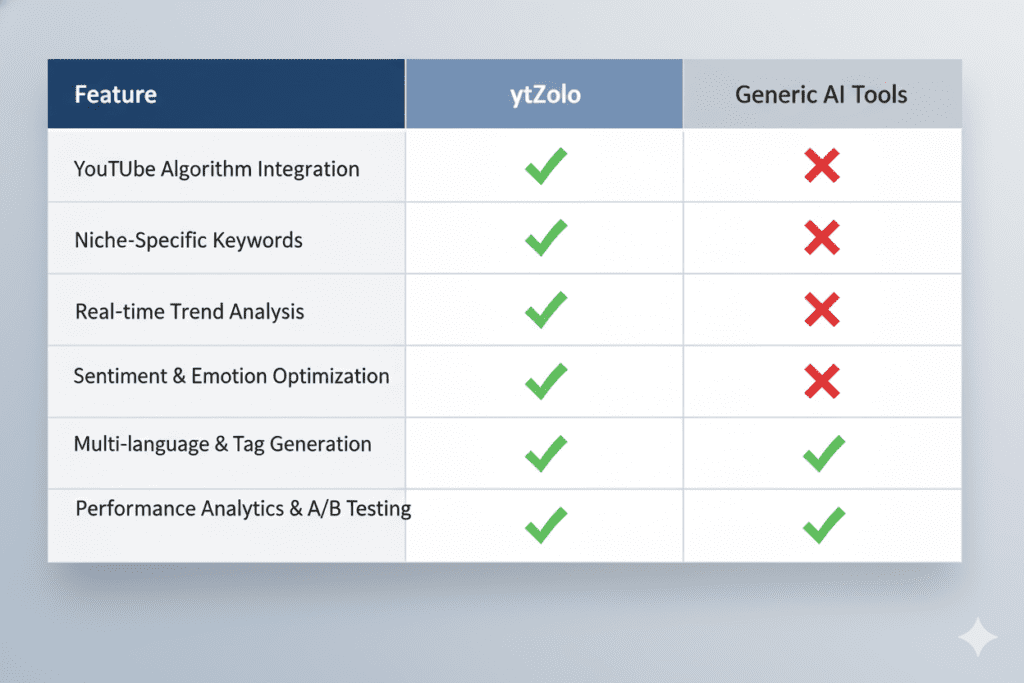
Here's a framework many creators use:
Act as a YouTube Shorts strategist.
Generate 30 title ideas for a video about [TOPIC].
Requirements:
- Under 8 words
- Mobile-friendly
- Curiosity-driven
- Avoid generic phrases
- Use personal experience angles
- Create 10 surprising titles
- Create 10 story-based titles
- Create 10 experiment-based titles
This usually generates far stronger options than generic prompts.
The connection between titles and retention
A weak title hurts more than clicks.
It can hurt retention too.
Why?
Because titles create expectations.
If the title promises one thing and the video delivers another, viewers leave immediately.
Successful creators think about alignment.
The title, thumbnail, and opening seconds all tell the same story.
That's where many channels struggle.
AI title generators are becoming part of larger workflows
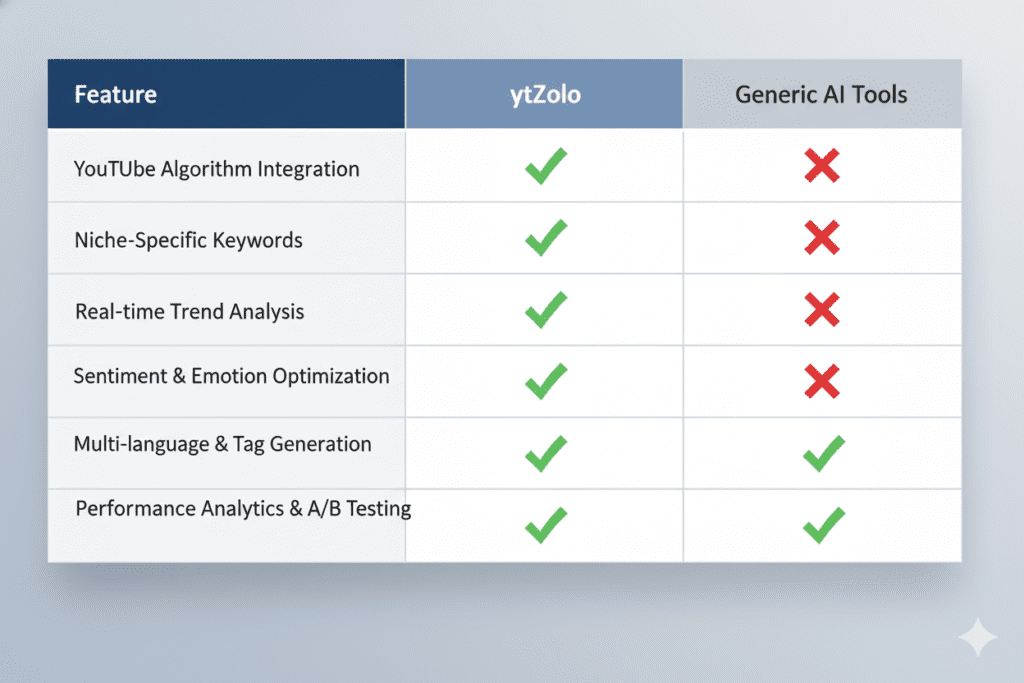
Creators aren't just generating titles anymore.
They're building complete content systems.
Idea generation.
Script writing.
Title creation.
Thumbnail concepts.
Content repurposing.
Everything connects.
This guide on AI-powered Shorts title generation workflows explains how creators are combining title generation, content planning, and short-form optimization into a single process rather than treating titles as an afterthought.
That's increasingly how successful creators operate.
Systems outperform isolated tactics.
What creators should test right now
Many channels never test title styles.
They find one format and repeat it forever.
A better approach is experimenting with:
- questions
- stories
- experiments
- mistakes
- surprises
- observations
Sometimes a small wording change produces a meaningful difference in performance.
You don't need 100 new titles.
You need a few better ones.
The future of AI title generation

Title generators are improving quickly.
But I think the biggest opportunity isn't automation.
It's exploration.
Researchers studying prompt recommendation systems found that prompt suggestions help users explore more directions and discover ideas they may not have considered on their own.
That's where title generators become useful.
They help creators see angles they might miss.
The final decision still belongs to the creator.
Because audience understanding, storytelling instincts, and niche knowledge remain human advantages.
Final thoughts
Most Shorts don't fail because of editing.
Most don't fail because of production quality either.
Many fail because nobody feels compelled to click or watch.
Titles influence that decision more than creators realize.
AI title generators won't magically create viral videos.
They can help generate more ideas, break creative ruts, and speed up brainstorming.
For creators publishing dozens of Shorts every month, that's often enough to make a meaningful difference.
The creators who consistently grow aren't usually the ones with the fanciest tools.
They're the ones who keep testing, learning, and finding better ways to earn attention.
For more info visit ytZolo.






Top comments (0)