
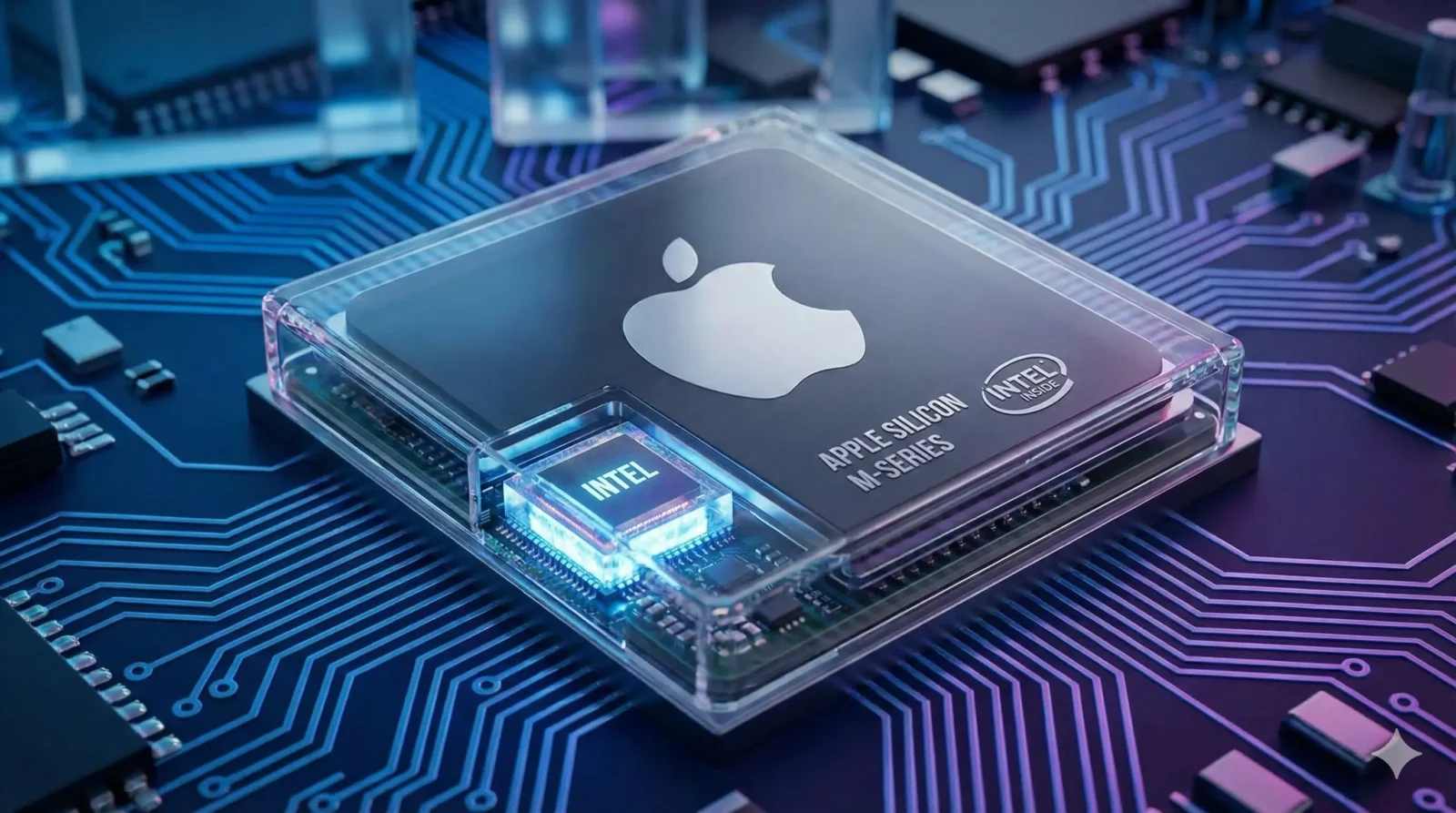

A Hacker News thread titled "Apple Silicon costs more than OpenRouter" surfaced last week and quickly reached 310 points with 265 comments. The discussion centers on total cost of ownership for running large language models locally versus calling hosted APIs.
Topic: Offline LLM energy use | Platform: Apple M-series | Comparison: OpenRouter API pricing | Discussion: 310 points, 265 comments
What the Discussion Claims
Users compared electricity rates, hardware depreciation, and inference throughput on Apple Silicon Macs against OpenRouter's per-token pricing. Several detailed calculations showed local runs on M2 and M3 Ultra machines landing above $0.002 per 1K tokens once power draw and idle consumption were included.
The thread focused on sustained workloads rather than one-off prompts. Participants noted that API calls avoid any hardware purchase or ongoing electricity bill.
Energy Use Numbers Shared
Commenters posted measured figures from tools like powermetrics and external watt meters. An M3 Max running a 70B quantized model drew between 120-180 W during active inference. At average U.S. residential rates of $0.16/kWh, that translated to roughly $0.0008-$0.0012 per 1K output tokens.
OpenRouter's current rates for equivalent models sit between $0.0003-$0.0006 per 1K tokens for many providers. The gap narrowed only when electricity was essentially free or when hardware was already owned and amortized over multiple years.
How to Run Your Own Cost Test
Install ollama or llama.cpp with Metal support on an Apple Silicon Mac. Run a fixed prompt set while logging power with the command:
sudo powermetrics --samplers cpu_power,gpu_power -i 1000 -a --hide-cpu-duty-cycle
Divide total watt-hours by tokens generated and multiply by your local kWh rate. Compare the result directly to OpenRouter's pricing page for the same model family.
Pros and Cons of Local Apple Silicon
- Lower latency for repeated queries once the model is loaded
- No data leaving the device
- Higher effective cost per token at typical electricity prices
- Limited context length compared with some cloud providers
- Hardware purchase required upfront
Direct Alternatives
OpenRouter aggregates multiple backends and often undercuts local energy costs. Other options include Together.ai, Fireworks, and Groq for speed-focused workloads. A quick comparison of representative routes shows:
| Route | Cost per 1K tokens | Latency | Energy at user site |
|---|---|---|---|
| Apple M3 Max local | $0.0009 | 45 ms | 150 W |
| OpenRouter mix | $0.00045 | 120 ms | 0 W |
| Groq Llama 70B | $0.00059 | 25 ms | 0 W |
Who Should Run Local Models
Developers handling sensitive data or needing sub-50 ms responses on-device benefit from Apple Silicon. Teams with very high query volume and cheap electricity may also break even. Most users processing under a few million tokens monthly will spend less by staying with OpenRouter or similar APIs.
Verdict on Offline Inference
The HN numbers indicate that convenience and privacy remain the main reasons to run LLMs on Apple Silicon rather than any energy or dollar savings. For the majority of workloads, hosted routes continue to deliver lower total cost.





Top comments (0)