

Creating Becomes Part of Everyday Life
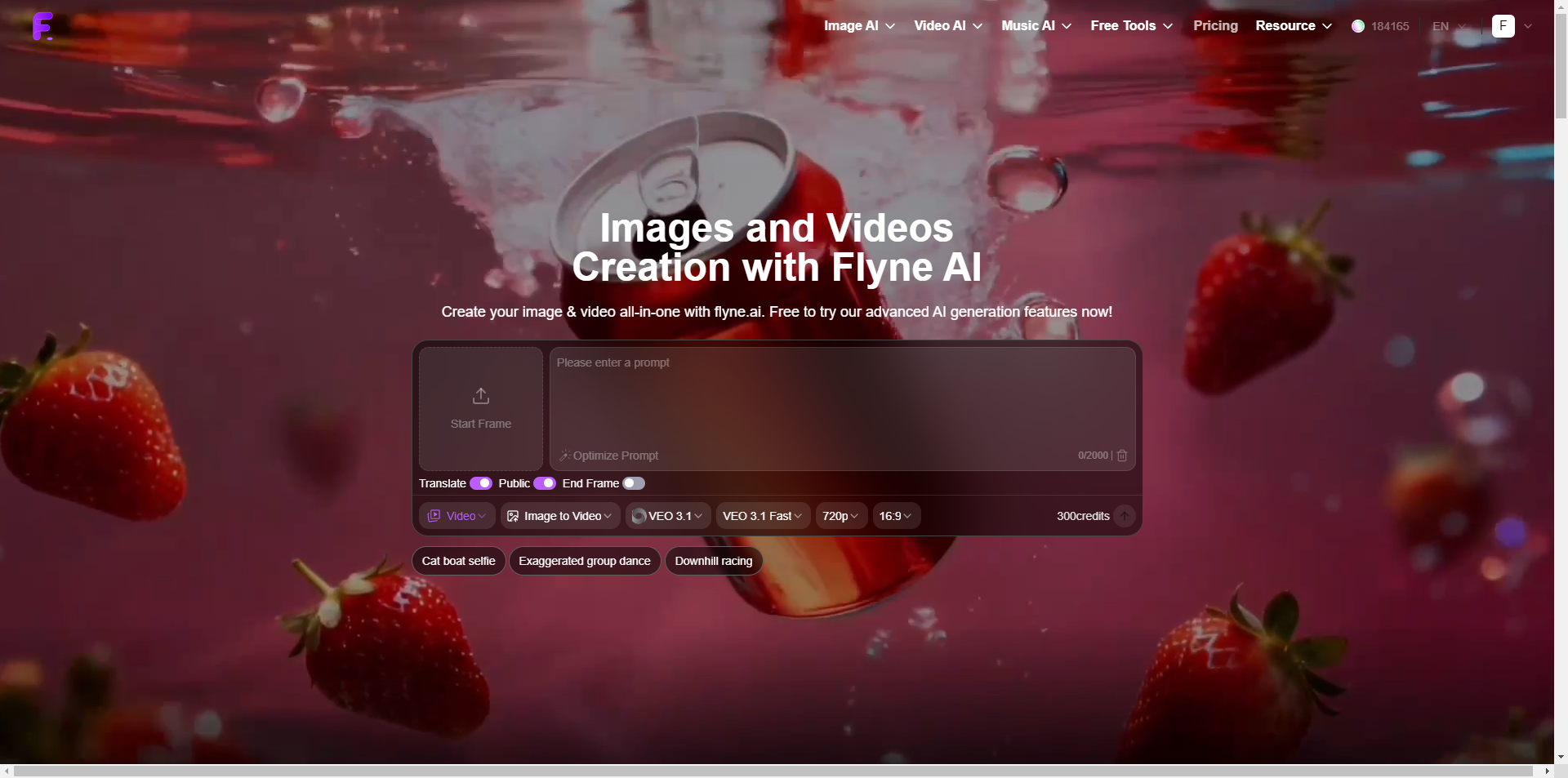
Flyne AI brings image and video generation into a single, unified space, so creating visuals no longer feels like a special occasion reserved for experts. Text prompts, existing photos, and raw footage can all be turned into new images and short videos from the same interface, which makes it easier to move from an idea in your head to something you can actually share.
This kind of “all-in-one” environment matters because most people do not live in dedicated studios or editing bays. They work in small teams, handle multiple roles, and need tools that fit naturally into messages, meetings, and side projects rather than disrupting them.

Visuals as a New Layer of Human Connection
When images and videos are easy to create, they start to change how people relate to each other. A message that used to be a block of text can now carry a visual mood, a short clip, or a playful avatar that says more than a long explanation ever could.
Flyne AI offers multiple ways to do this: generating images from text, transforming photos into videos, animating products, and enhancing existing footage so that communication becomes more than just words on a screen. Visuals turn into small but meaningful signals—of personality, care, and shared imagination—within friendships, teams, and communities.
A Creative Infrastructure, Not Just a Gadget
Under the surface, Flyne AI combines several high-quality models, each tuned for different needs such as realism, artistic style, or consistency. From cinematic, coherent scenes to playful, stylized characters, the system is built so that most choices still land within a usable quality range.
For the person using it, this means less time worrying about which technical path to choose and more time focusing on what they actually want to express. The platform starts to feel less like a one-off effect and more like a quiet infrastructure for everyday visuals—reliable enough to build habits on.
From Free Exploration to Professional Routine
The service typically spans a spectrum from free access to professional-grade plans. At one end, there are starter credits and daily bonuses that let anyone experiment with lower-cost generations and simple features. At the other, paid plans unlock high-quality image and video output, priority processing, longer history, commercial usage rights, and more stable performance at scale.
This gradient is important. It lets people move naturally from “trying this out for fun” to “depending on this for client work or brand assets” without changing tools. As creative needs deepen—more campaigns, more episodes, more deliverables—the platform grows with them instead of forcing a switch.

A Studio That Travels With You
Flyne AI is not limited to desktop environments. With mobile apps available, the creative space lives in your pocket. Ideas that appear during a commute, a walk, or a casual conversation can be captured immediately as prompts, images, or short clips.
This mobility reshapes when and where creativity happens. Inspiration is no longer something you have to “save for later” at your desk. It can be turned into something visual in the moment, often while the feeling or insight is still fresh and vivid.
The Power of Small Tools and Tiny Changes
Beyond the core generators, Flyne AI includes a range of utility tools: background removal, upscaling, automatic prompt extraction from images, descriptive analysis of pictures, stylization, and playful filters. On the surface, these look minor compared to full-blown video creation.
In practice, these are the functions people use again and again: cleaning up a profile picture, restoring an old photo, adjusting a product shot, or turning a snapshot into a stylized avatar. It is in these modest, repeated acts that creative tools quietly reshape how people present themselves and how they remember shared moments.
Living Inside a Landscape of Tags and Trends
Within the platform, prompts and tags play an important role. Popular tags might point to themes such as portraits, fantasy worlds, urban scenes, food, pets, comics, or abstract designs. Together, they map the visual interests and moods of a wide range of users.
Exploring these tags feels a bit like wandering through a living gallery curated by thousands of people at once. You see what others are drawn to, how they twist familiar ideas into new forms, and which aesthetics are rising or fading. This environment becomes a subtle teacher, shaping taste and inspiring experiments without any formal lesson.
Credits, Limits, and a Sense of Creative Value
Flyne AI often uses a credit-based system alongside subscriptions. Credits act as a kind of creative currency, with each generation costing a certain amount and purchased bundles lasting for a defined period.
On the surface, this is a billing mechanism. At a deeper level, it invites people to think more carefully about what they create and why. When resources are finite, there is a natural tendency to refine prompts, plan iterations, and prioritize important projects. That kind of intentionality tends to improve the quality of both the work and the learning that comes from making it.

History, Privacy, and Trust in the Process
Creative work rarely succeeds on the first try. Flyne AI’s emphasis on history and private generation supports this reality. Being able to revisit weeks or months of prompts, versions, and iterations turns the platform into a kind of visual journal.
For individuals, that history shows how their eye and style evolve over time. For teams, it becomes a record of decisions, experiments, and shared standards. Private generation allows sensitive experiments—brand concepts, personal stories, confidential visuals—to be explored without constant self-censorship, which is crucial for honest, deep work.
A Quiet Shift in How People Live With Technology
Tools like Flyne AI signal a shift in the role of technology in everyday life. Instead of being something people only consult when they need information or entertainment, it becomes a partner in expressing what they see, feel, and imagine.
Images and videos cease to be rare, polished artifacts produced by specialists. They become a native language that more people can speak, casually and frequently. That doesn’t replace traditional craft or professional artistry, but it does expand who gets to participate—and how often they can turn passing thoughts into something visible and shareable.
Toward a More Expressive Everyday
When a platform combines capable models, accessible interfaces, flexible plans, mobile access, and a rich ecosystem of small tools, it does more than simplify content creation. It helps people fold creativity into ordinary routines: messages to friends, updates to clients, reflections on personal milestones, or experiments late at night.
Flyne AI sits precisely in that space. It is not only about stunning visuals or viral clips. It is about giving more people the ability to see their ideas outside their own minds—and to do so often enough that expressing themselves visually feels as natural as speaking.





Top comments (0)