
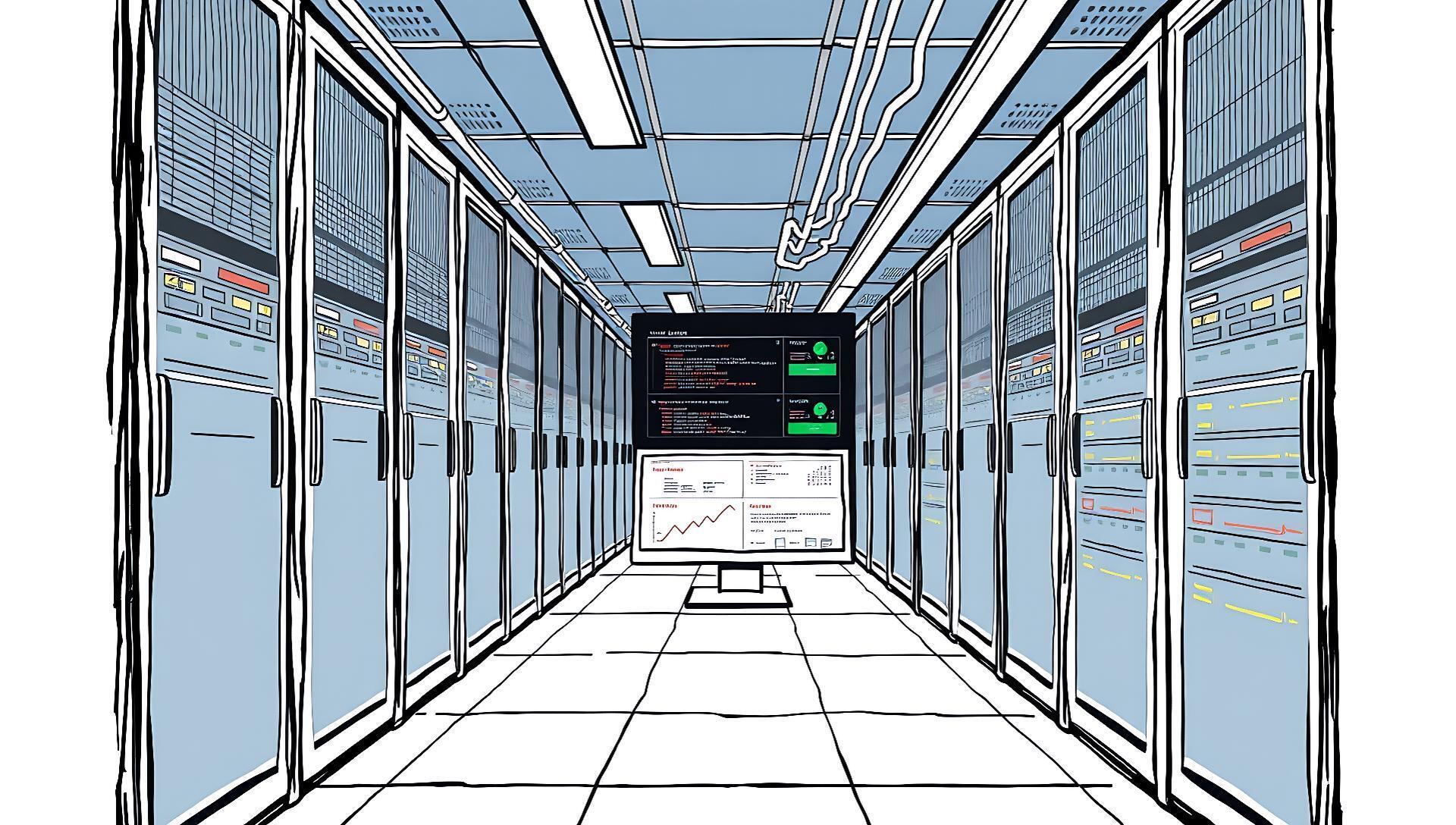

Anthropic confirmed elevated error rates across its primary consumer and developer platforms — claude.ai, Claude Code, and platform.claude.com — as detailed on its official status page and discussed in a Hacker News thread with 256 points. The incident, which began on April 23, 2024, disrupted service for an unspecified number of users attempting to generate responses or access the API.
Service: Claude API & Web Apps | Status: Investigating | Start Time: April 23, 2024, 10:41 AM PDT
Impact: Elevated Error Rates | Platforms: claude.ai, Claude Code, platform.claude.com
How the Incident Unfolded
The status page chronology shows the incident was first identified and a public investigation began at 10:41 AM PDT. Anthropic's engineering team confirmed elevated errors across multiple entry points to the Claude service. The company provided updates via the status page but did not specify a root cause in the initial reports, a common practice to avoid speculation during active mitigation.
The Hacker News discussion ballooned to 188 comments, serving as a real-time crowd-sourced diagnostic tool. Developers and users reported a spectrum of issues, from total timeouts to intermittent "internal server error" messages, suggesting a backend infrastructure problem rather than a regional outage.

What the Developer Community Reported
The HN thread acted as a de facto incident aggregator. Key user-reported symptoms included:
- HTTP 5xx errors (primarily 502 and 503) from the Claude API
- Complete failure of Claude Code within integrated development environments
- Intermittent availability of the web chat interface at claude.ai
- Timeouts exceeding 60 seconds for simple prompts
Bottom line: A widespread, platform-level failure affecting both synchronous chat and asynchronous API calls, indicating a problem with core serving infrastructure.
Building Resilience: Practical Fallback Strategies
For developers and teams building on LLM APIs, this incident underscores the necessity of a multi-provider strategy. Reliance on a single API endpoint creates a single point of failure for your application's AI features.
The most effective immediate mitigation is to implement a failover switch to an alternative LLM provider. This requires:
- Abstracting your LLM calls behind a unified interface or service layer.
- Setting up configuration for at least two providers (e.g., Anthropic and OpenAI).
- Implementing circuit breakers and retries with exponential backoff for transient errors.
- Routing requests to a secondary provider when the primary's error rate exceeds a threshold (e.g., 5% over 2 minutes).
Note: This is a simplified example. Production code requires more robust error handling and monitoring."Code snippet for a simple Python fallback"
import openai
from anthropic import Anthropic

clients = {
    "primary": Anthropic(api_key=ANTHROPIC_KEY),
    "fallback": openai.OpenAI(api_key=OPENAI_KEY)
}

def get_completion(prompt, model="claude-3-opus-20240229"):
    try:
        # Try primary provider
        response = clients["primary"].messages.create(...)
        return response.content[0].text
    except Exception as e:
        # Log error and switch to fallback
        logger.error(f"Primary provider failed: {e}")
        # Map to a comparable fallback model
        fallback_model = "gpt-4-turbo"
        response = clients["fallback"].chat.completions.create(...)
        return response.choices[0].message.content
Alternatives and API Comparison
When Claude is unavailable, developers need viable substitutes. The choice depends on the task: high-reasoning analysis, cost-sensitive batch processing, or open-source deployment.
| Feature | Claude 3 Opus (Anthropic) | GPT-4 Turbo (OpenAI) | Gemini 1.5 Pro (Google) | Mixtral 8x22B (Open Source) |
|---|---|---|---|---|
| Context Window | 200K tokens | 128K tokens | 1M tokens | 64K tokens |
| Pricing (Input) | ~$15 / 1M tokens | ~$10 / 1M tokens | ~$3.50 / 1M tokens | ~$0.65 / 1M tokens (self-hosted) |
| Key Strength | Complex reasoning, instruction following | Broad capabilities, extensive tooling | Long-context analysis, multimodal | Cost control, data privacy |
| Availability | API & Web | API & Web | API & Web | Self-host / Cloud |
For direct reasoning replacements, GPT-4 Turbo is the closest match in capability. For long-context tasks suddenly interrupted, Gemini 1.5 Pro's 1M token context is the logical failover. For cost-sensitive or private workloads, routing to a self-hosted model like Mixtral 8x22B via services like Together AI or Replicate provides continuity.
Who Should Re-evaluate Their Architecture
This incident is a concrete trigger for specific teams to audit their LLM integration.
- Startups with a "Claude-only" product feature should immediately prioritize multi-provider support.
- Enterprises using Claude for critical internal workflows need to formalize a business continuity plan for AI services.
- Developers in early prototyping can use this as a learning moment to build abstraction layers from the start.
Teams with already-abstracted AI backends, or those using LLMs for non-critical, asynchronous tasks (e.g., background content summarization) face lower immediate risk but should still review their error monitoring.
Monitoring and Alerting for LLM APIs
Proactive monitoring is cheaper than reactive firefighting. Key metrics to track for any LLM API dependency include:
- Request Success Rate: Percentage of non-5xx HTTP responses.
- Mean Response Time: Sudden increases can precede full outages.
- Token Usage Rate: Abrupt drops may indicate failing requests.
- Cost Per Request: Spikes can signal retry loops.
Services like Datadog and New Relic offer API monitoring, while open-source tools like Prometheus can be configured with custom exporters. The Claude status page itself provides a historical incident feed for retrospective analysis.
The Bottom Line on API Reliability
The Claude incident is not an anomaly but an expectation. All major LLM providers—OpenAI, Google, Anthropic—have experienced significant outages. Architecting for provider failure is now a core requirement for production AI applications.
The strategic takeaway is to treat LLM APIs like any other critical external service: with redundancy, observability, and a documented runbook. The cost of implementing a fallback is often less than the revenue or productivity lost during a multi-hour outage of a primary AI model.
Platform reliability will increasingly become a competitive differentiator, but for now, the burden of resilience lies with the developer. Building that resilience transforms a service interruption from a crisis into a managed, automated blip.






Top comments (0)