
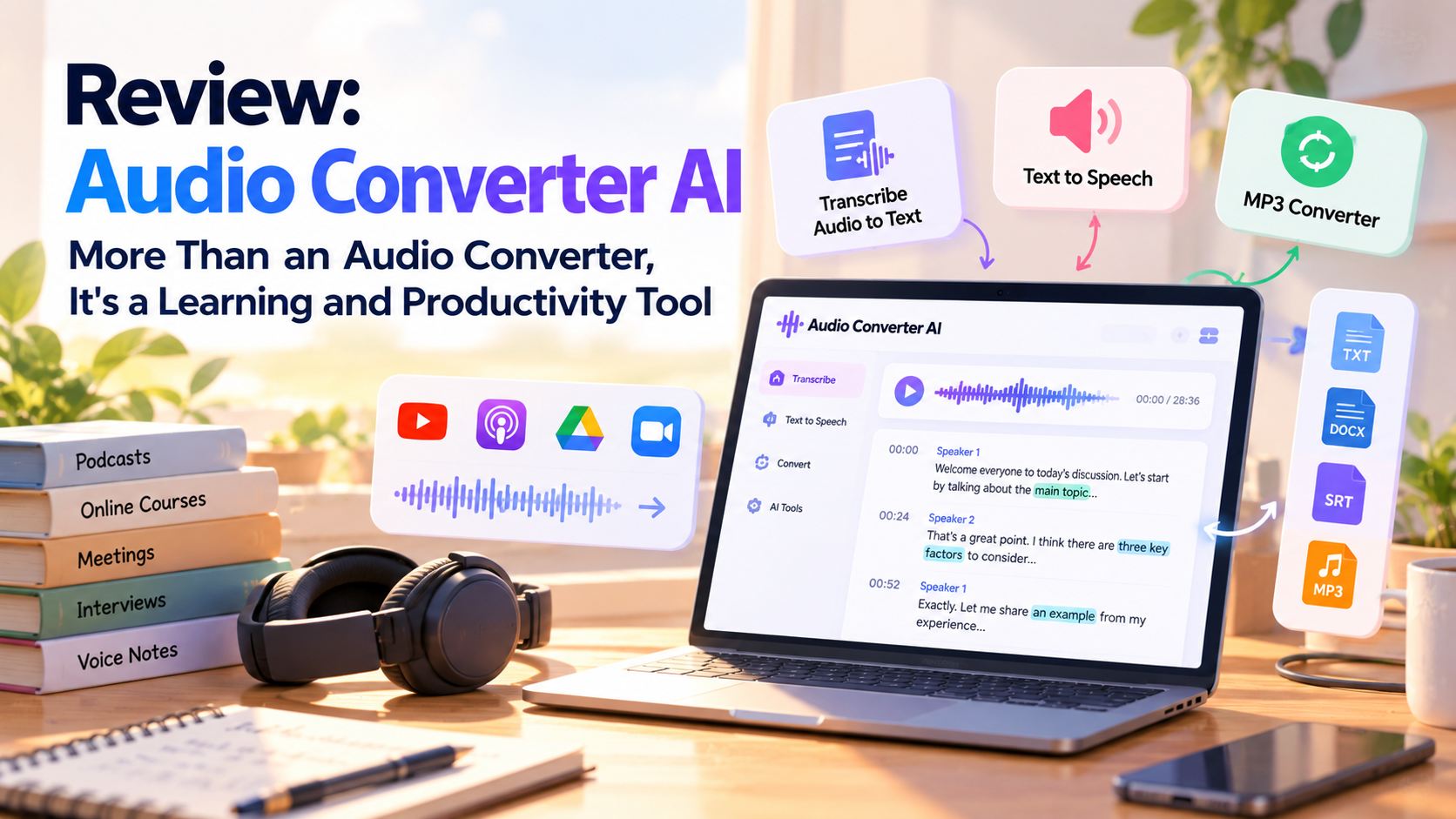

When people hear the name Audio Converter AI, they often assume it's simply another utility for converting file formats.
After spending some time with the platform, I realized that's only a small part of the story.
The latest generation of AI-powered audio tools isn't just helping us convert files anymore—it helps us understand, organize, and reuse information.
That shift is becoming increasingly important.
Today, we're surrounded by podcasts, meetings, lectures, interviews, YouTube videos, voice notes, and audiobooks. The challenge isn't finding information. It's turning spoken content into something we can actually search, learn from, and build upon.
This review looks at how Audio Converter AI approaches that problem and why its growing collection of AI-powered features makes it more than a traditional audio utility.
Why "Transcribe Audio to Text" Has Become an Essential Skill
A few years ago, transcription was mostly for journalists and researchers.
Today, almost everyone benefits from being able to transcribe audio to text.
Students record lectures.
Content creators repurpose podcasts.
Teams review meeting recordings.
Language learners study pronunciation.
Researchers analyze interviews.
The ability to convert spoken language into searchable text has quietly become one of the most useful productivity skills in the AI era.
That is exactly where Audio Converter AI focuses its value.
Rather than simply converting media formats, it helps users transform audio into knowledge.
First Impression: A Workflow Instead of Individual Tools
Many websites offer one isolated feature:
- MP3 converter
- Speech to text
- Text to speech
- Audio format conversion
Audio Converter AI combines these capabilities into a connected workflow.
Instead of asking:
"Which tool do I need?"
The platform encourages a different question:
"What am I trying to accomplish?"
That small difference creates a much smoother experience.
Feature Review
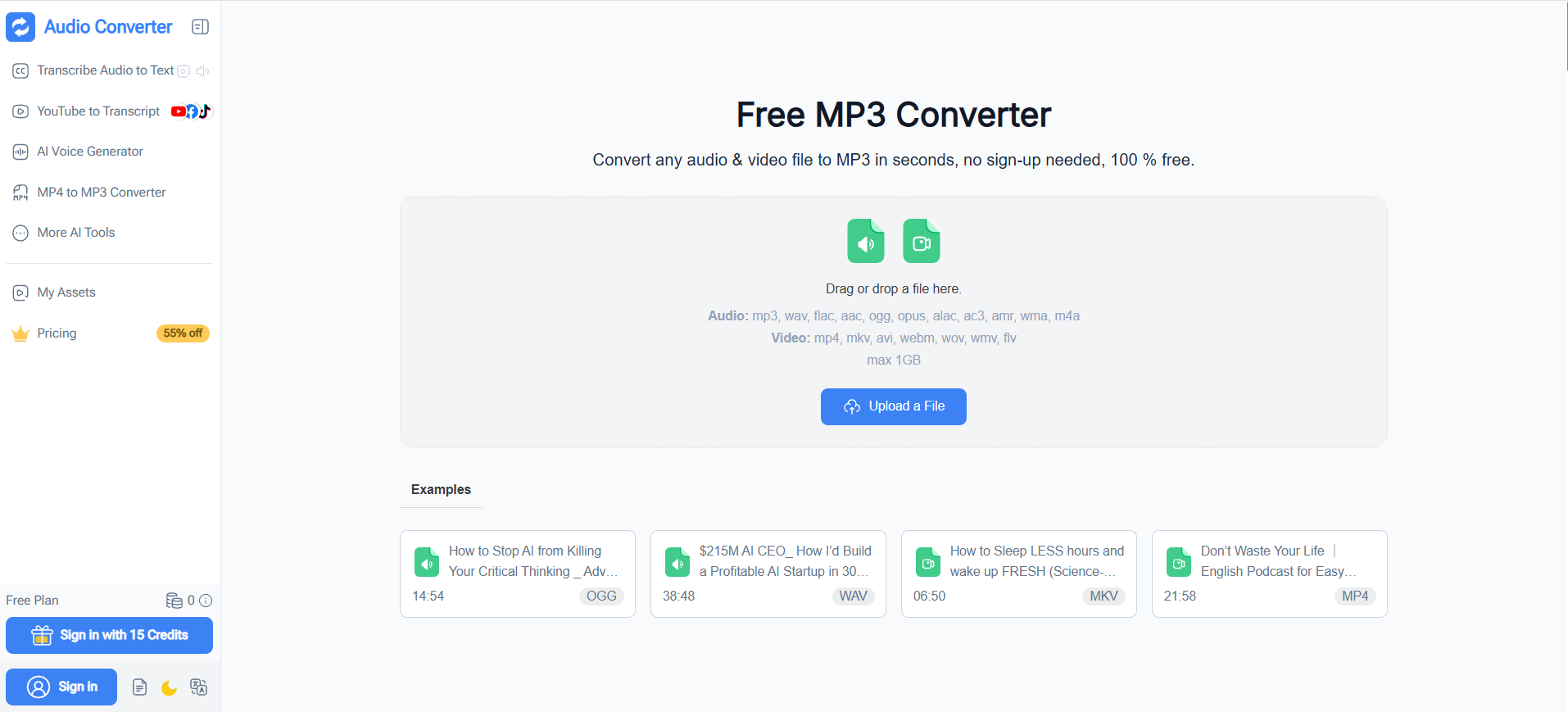
1. Transcribe Audio to Text
The core capability is, of course, the ability to transcribe audio to text.
Users can upload recordings and receive editable transcripts that are much easier to search and organize than raw audio.
This immediately creates new possibilities.
Instead of listening to a one-hour recording again, users can:
- Search keywords instantly
- Copy important quotes
- Highlight key ideas
- Build summaries
- Reuse content for writing
For anyone who frequently works with spoken content, an audio to text converter quickly becomes a productivity multiplier rather than a convenience feature.
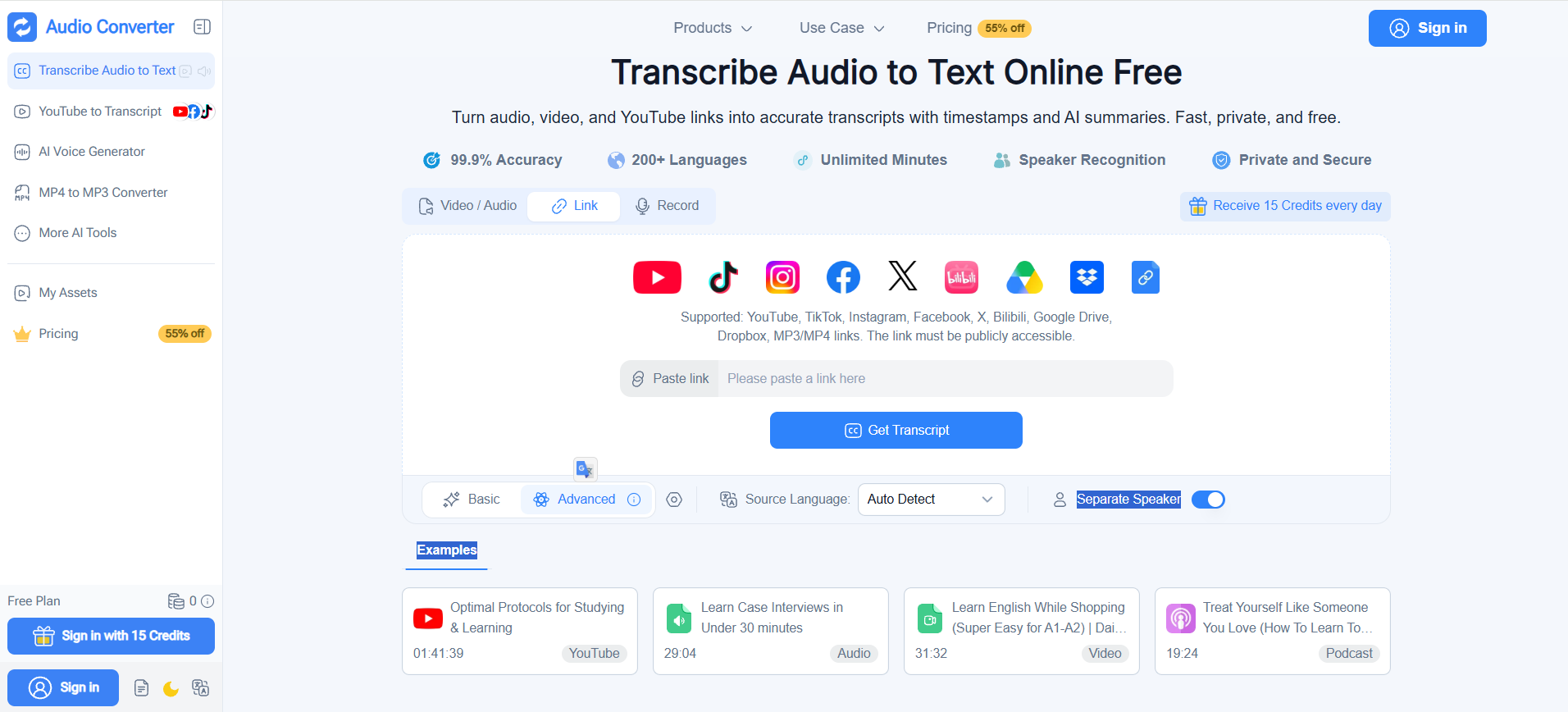
2. Text to Speech Makes Writing Audible
One feature I found surprisingly useful is Text to Speech.
Most people think about AI voices for narration.
I found another benefit.
Listening to your own writing often reveals awkward phrasing that your eyes miss.
Before publishing an article or presentation, hearing it spoken aloud helps identify:
- Long sentences
- Repetitive wording
- Unnatural rhythm
- Missing transitions
For writers, marketers, educators, and students, this creates a simple quality-control step.
Instead of only reading your work, you can listen to it.
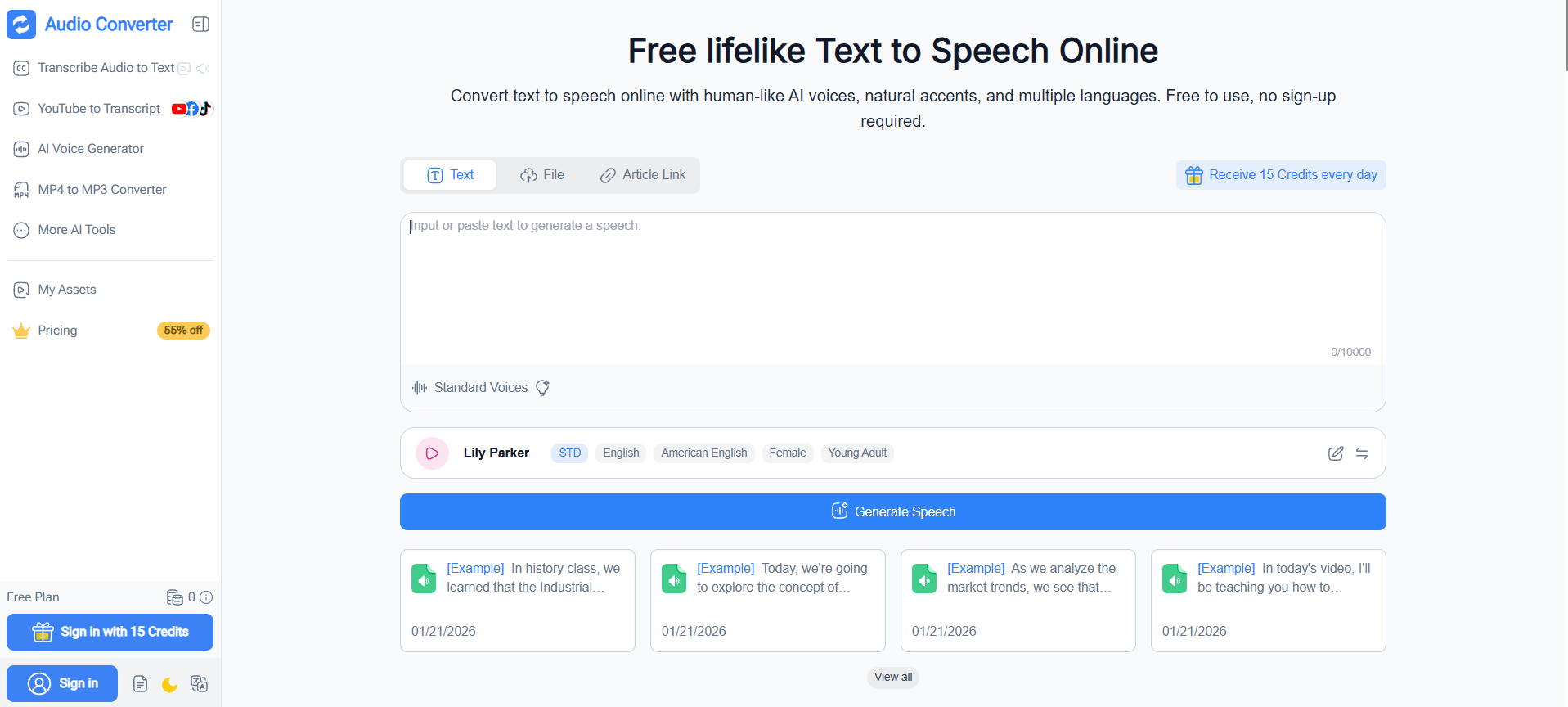
3. MP3 Converter Supports Flexible Workflows
Audio arrives in many formats.
Podcasts.
Voice recordings.
Downloaded videos.
Meeting exports.
Rather than treating conversion as a separate task, Audio Converter AI includes an integrated MP3 converter that keeps users inside the same workflow.
It sounds like a small feature.
In practice, reducing tool switching saves far more time than most people expect.
Where Audio Converter AI Really Helps
The individual features are useful.
The bigger advantage comes from combining them.
Here are several workflows where the platform stands out.
Learning More From Audio
Many people consume educational content passively.
They listen once and move on.
A better workflow looks like this:
Audio
↓
Transcribe audio to text
↓
Highlight important ideas
↓
Generate notes
↓
Review later
The transcript becomes a personal knowledge base instead of disposable content.
Content Creation
Creators rarely publish audio in only one format.
One podcast episode can become:
- Blog articles
- Social posts
- Email newsletters
- Video captions
- Knowledge documents
The transcript becomes the starting point for every format.
Instead of repeatedly listening to recordings, creators work directly from searchable text.
Language Learning
Language learners may benefit even more.
A practical workflow could be:
Listen to native audio
↓
Transcribe audio to text
↓
Compare unfamiliar vocabulary
↓
Use Text to Speech to practice pronunciation
↓
Review difficult expressions
Rather than relying on passive listening, learners interact with the language from multiple directions.
Research and Interviews
Researchers often collect hours of recorded interviews.
Searching recordings manually is slow.
Once conversations become searchable transcripts, themes and recurring ideas become much easier to identify.
What I Like Most
Rather than adding AI simply because it's fashionable, Audio Converter AI improves several everyday tasks people already perform.
The platform helps users:
- Spend less time replaying recordings
- Find information faster
- Organize spoken knowledge
- Improve writing with AI voices
- Reduce context switching between different tools
None of these features are revolutionary individually.
Together, however, they significantly improve daily workflows.
Where It Could Go Next
One thing became clear while testing the platform.
The future isn't better file conversion.
It's better information conversion.
I would love to see future versions expand toward:
AI Study Assistant
Automatically generating quizzes, flashcards, and study plans from transcripts.
Smarter Knowledge Extraction
Instead of generic summaries, AI could identify decisions, action items, definitions, and important concepts automatically.
Cross-Media Workflows
Imagine uploading a podcast and instantly generating:
- A transcript
- Blog draft
- LinkedIn post
- Email newsletter
- Voice narration
- Social captions
All from a single workflow.
AI Memory
One of the most exciting possibilities is building a searchable personal memory from years of audio recordings.
Instead of remembering where something was said, users could simply ask AI.
Final Thoughts
Most people searching for an audio to text converter simply want to convert audio into text.
Audio Converter AI does that well.
But after using it, I think that's actually the least interesting part.
Its real value comes from helping people transcribe audio to text, organize information, improve writing through text to speech, simplify media conversion, and turn spoken content into reusable knowledge.
As AI continues to reshape how we learn and create, the biggest productivity gains won't come from generating more content.
They'll come from understanding the content we already have.
That's where tools like Audio Converter AI are becoming increasingly valuable.






Top comments (0)