

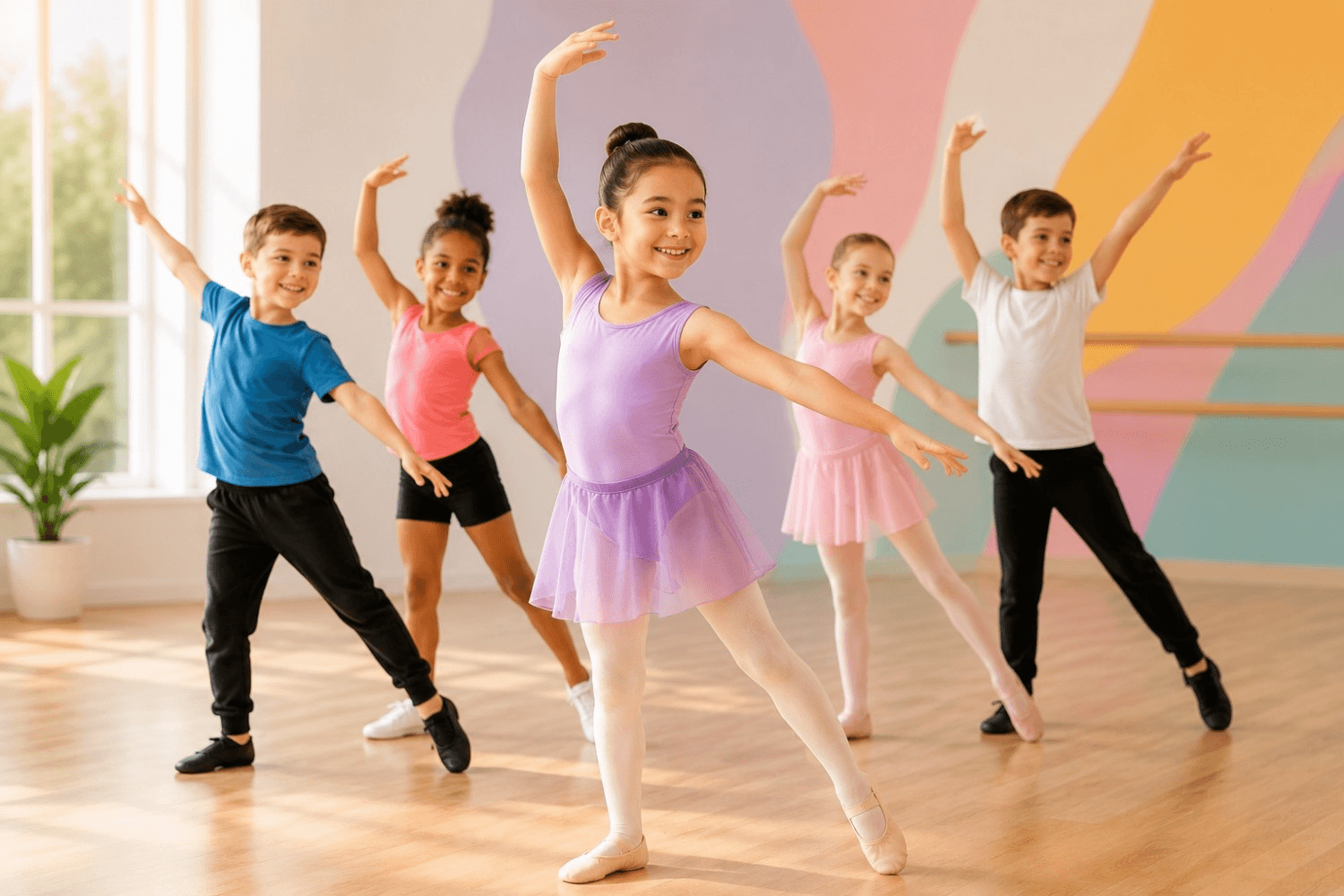
Dance classes offer children far more than movement skills. From stronger muscles and better posture to improved focus and emotional resilience, structured dance training supports whole-child development. Research consistently shows that children who participate in regular physical arts activities demonstrate better coordination, social confidence, and academic performance compared to those who do not.
If you've been wondering whether enrolling your child in a kids beginner dance class is worth it, the answer is a confident yes — and the reasons go much deeper than learning a routine.
Why Dance Is One of the Best Activities for Growing Children
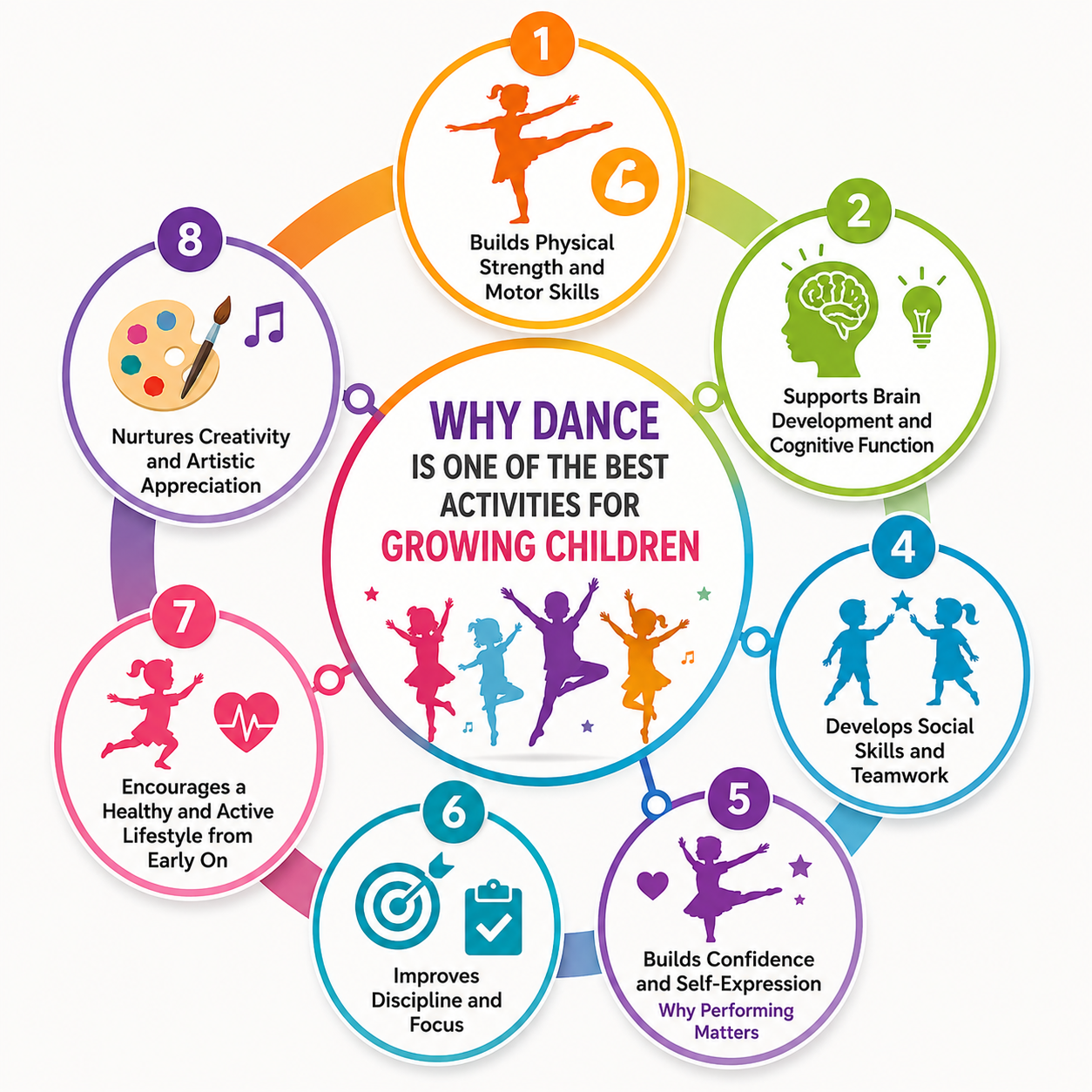
Unlike other skill-based sports, which focus on one skill alone, dance develops both physical and mental skills. It not only enhances physical literacy skills that make you move with confidence, but it also instills an emotional, creative, and social understanding. This is something that your child doesn’t often find elsewhere.
These are eight proven advantages your child will gain from taking up dance classes.
1. Builds Physical Strength and Motor Skills
Dance is an exercise for the whole body which not only helps in building up core strength and flexibility but also aids in fine motor and gross motor skills development.
In case of children, those who do dance have better balance and spatial awareness compared to those who don’t. For those who are just starting out, even simple actions such as jumping, spinning and stretching work on muscle groups which are yet to develop.
2. Supports Brain Development and Cognitive Function
Dancing is learned by means of remembering steps, sequences, and patterns that are helpful for brain development. In dancing, when a child memorizes dance movements, he/she does mental exercise together with physical one.
From studies conducted in neuroscience, it has been seen that combination of rhythm, motion, and music makes use of many parts of brain at once. This form of multi-sensory learning has been found effective in increasing focus among children.
3. Boosts Emotional Resilience and Mental Health
Dance provides an appropriate way for kids to get out all of their feelings that they are not able to articulate. It provides an opportunity for the processing of negative feelings in a constructive and structured manner.
Physical arts activities have been found to have a calming effect on anxious children. This is because it helps kids who have problems coping in school find a way of grounding themselves.
4. Develops Social Skills and Teamwork
Whether working individually or as a team, kids enrolled in Dance academy always practice communicating, collaborating, and respecting each other. Kids get to learn turn taking, following instructions, and helping their teammates.
This is not about soft skills – these are critical social skills that affect the way children handle themselves in schools, amongst friends, and ultimately in the workplace. Dancing in teams helps foster a true sense of belonging, especially for shy kids struggling with socialization.
5. Builds Confidence and Self-Expression
Why Performing Matters
There comes a point when a child is in front of an audience, be it just his or her classmates, performing the choreography that he or she has mastered, that some things change. A child begins to feel competent and worthy of respect in other areas of his or her life too.
Dance also helps instill in kids the concept that self-expression is acceptable and right. There is not one way of experiencing music; there are many ways.
Related Post:Kids Ballet Class Singapore: How Ballet Helps Children Grow with Confidence
6. Improves Discipline and Focus
Dance classes follow structured formats. Children are expected to arrive prepared, listen attentively, and practise consistently. This routine naturally cultivates discipline — a quality that directly benefits academic performance and personal development.
Unlike passive activities, dance demands active engagement. Children quickly learn that distraction leads to missed steps and that focus leads to visible improvement. That feedback loop is one of the most effective tools for teaching self-regulation.
7. Encourages a Healthy and Active Lifestyle from Early On
Increasing sedentary habits among children have become a major concern in Singapore. As per the Health Promotion Board, just one child in four from Singapore is able to meet the requirement of 60 minutes of daily physical activity. Dancing is a fun way to make up for this difference.
Children enjoy dancing. Dancing does not come across as something that needs to be done but as something that needs to be enjoyed. At the novice level of dance, this difference between fitness programme and enjoyment can be felt even more.
8. Nurtures Creativity and Artistic Appreciation
Through dance, children are introduced early on to music, rhythm, storytelling, and performing arts. All these art elements will help their imagination flourish and gain a better sense of how emotions and expressions are interwoven.
In today’s education system where a lot is dictated through curriculum, the importance of an outlet for creativity becomes more and more relevant. Through dance, children have the opportunity to explore freely, knowing that there are no mistakes to be made.
What to Look for in a Kids Beginner Dance Class
Not all dance programmes are created equal. When choosing a kids beginner dance class, look for the following:
- Age-appropriate curriculum — Structured progressively to match developmental stages
- Qualified and nurturing instructors — Teachers who understand child psychology, not just technique
- Small class sizes — Ensures individual attention and a safer learning environment
- A positive studio culture — Encouraging rather than overly competitive
- Variety of dance styles — Exposure to multiple genres broadens physical and creative skills
These factors make a meaningful difference in how much your child enjoys the experience and how long they stay engaged.
Is Your Child Ready to Start?
Most children can begin structured dance training as early as age three or four. At this stage, classes focus on movement exploration, rhythm awareness, and social interaction rather than technical perfection. The goal is joy first — skill follows naturally from there.
If your child shows curiosity about music, enjoys moving to a beat, or simply needs an outlet for their energy, that is all the readiness they need. Starting young gives them a longer runway to build both ability and confidence.
At Elevate Dance Academie, classes are thoughtfully designed to meet children at their level — whether they have never danced before or are ready to push their skills further. As a recognised dance academy in Singapore, their beginner programmes for children combine technical training with a genuinely supportive environment, giving your child the best possible start.
Frequently Asked Questions
What is the best age to start a kids beginner dance class?
Children may begin as young as 3 or 4 years old. The lessons at this age are focused more on rhythm, movement, and enjoyment than technique. It is important to begin training at a young age because it builds coordination and confidence in movement.
How does dance improve a child's mental health?
Through dance, children have an emotional escape that helps them cope with any stressful situations. There are various health benefits associated with dance, which include mood improvement, increased concentration, and self-confidence – factors that help boost a child’s mental health.
How many days a week should a child attend dance classes?
For novices, it is best if the child takes one or two lessons per week. This provides adequate time to recover while at the same time ensuring constant skill acquisition. When the child becomes more advanced and their dedication level improves, they can take more classes.
Will dance classes help my shy child become more confident?
Absolutely yes! This is because the act of dancing itself helps one build confidence from experience on stage, interacting with peers, and feeling accomplished in learning new moves. In fact, shy children can really benefit from dance lessons since the setting allows them to express themselves freely.
What dance styles are suitable for young beginners?
Ballet, Jazz, Creative Movement, and Hip-Hop are all common choices of dance styles to begin dancing lessons with for young kids. Each type of dance develops different physical and creative skills. The best thing to do is register a child in a mixed style beginners program.






Top comments (0)