
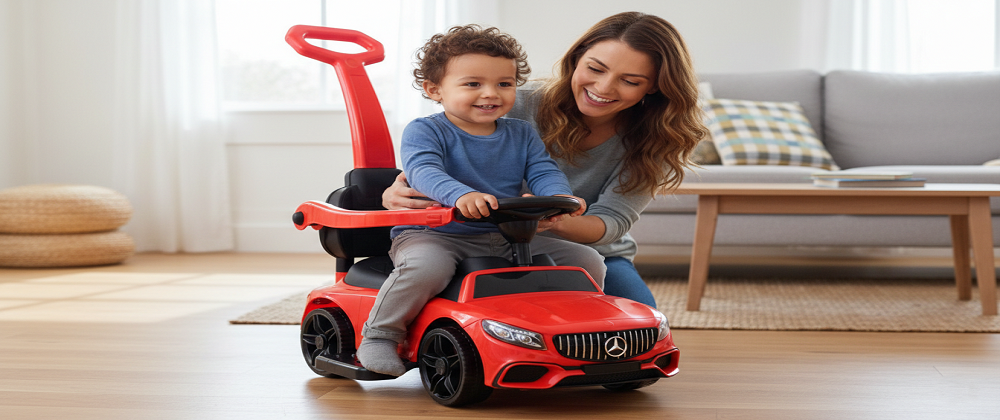

Watching a toddler take their first steps is an unforgettable experience for parents. Every stumble and wobble is a learning moment, and supporting this stage of development requires both care and tools that encourage safe movement. Push cars are more than toys; they provide structured opportunities for toddlers to practice essential motor skills while enjoying playtime.
Push cars allow children to strengthen their legs and core, improve coordination, and explore their environment with confidence. Parental guidance enhances safety and helps children gradually gain independence.
Why Push Cars Are More Than Just Toys
Toddlers are naturally curious, and their bodies are rapidly developing. Rather than traditional walkers or fixed ride-on toys, push cars get children moving while supporting both bodily and cognitive growth.
Physical Development Through Play
Push cars encourage toddlers to develop leg and core strength, improve balance, and practice hand-eye coordination. Children learn to push the car forward while steering, which strengthens muscles needed for standing, walking, and running.
Cognitive Benefits
Navigating a push car requires children to estimate distances, avoid obstacles, and make decisions about speed and direction. These skills foster spatial awareness, problem-solving, and confidence.
Parents play a critical role in guiding toddlers, establishing safe boundaries, and modeling proper posture. Over time, push car play lays a foundation for other activities such as cycling or climbing.
Developing Balance Through Push Car Play
Balance is one of the most important motor skills for toddlers. It affects everything from walking and running to standing and climbing. Push cars support balance development in several ways.
Engaging Core and Leg Muscles
Pushing the car requires toddlers to stabilize their torso using core muscles while simultaneously using their legs to propel forward. This coordination strengthens multiple muscle groups at once.
Steering and Coordination
Learning to steer involves coordinating hands and feet. Adjusting the wheel while maintaining balance enhances reflexes and motor control.
Quick Adaptation
Toddlers develop the ability to adjust their body quickly when changing directions or stopping, which further supports overall stability. Parental supervision ensures play happens safely in environments free from obstacles.
Building Strength Through Push Car Use
Push cars also contribute significantly to physical strength. Toddlers exert effort while moving, which encourages proper posture and muscle development.
Core Strength
Maintaining an upright position while pushing the car works the muscles of the torso, promoting balance and endurance.
Leg Muscles
Quadriceps, hamstrings, and calves are actively engaged as children propel themselves forward, building stamina and coordination.
Long-Term Benefits
Regular push car activity improves posture, balance, and confidence, giving toddlers a solid foundation for future physical activities.
Enhancing Hand-Eye Coordination
Steering a push car improves hand-eye coordination by teaching toddlers to plan movements and respond to environmental changes.
Navigating Obstacles
Children learn to judge distances and avoid objects while steering. This practice develops spatial awareness and timing.
Fine Motor Development
Adjusting the steering wheel and managing turns strengthens hand control, which contributes to future skills such as writing or sports.
Encouraging Independence in Toddlers
Push cars give toddlers a sense of control and freedom. Allowing children to steer and navigate helps build confidence and early decision-making skills.
Gradual Freedom
Parents can support independence by permitting children to explore safe indoor spaces, then moving to enclosed outdoor areas as confidence grows.
Decision-Making
Choosing directions and pace encourages toddlers to think about their actions and consequences, which fosters early cognitive development.
Safety Considerations for Push Cars
Even though push cars are generally safe, attention to design and environment is crucial.
Stability and Design
A low center of gravity prevents tipping, while smooth wheels ensure safe movement on different surfaces. Easy-to-grip handles help toddlers steer securely.
Material and Durability
Durable, non-toxic materials guarantee long-term safety for children during regular play.
Parental Supervision
Supervised play ensures toddlers remain safe while they build skills. Adults can gradually reduce intervention as children gain proficiency.
Choosing the Right Push Car
Selecting the best push car requires considering a child’s age, height, and play environment.
Size and Weight
The car should suit the child’s leg length and weight to prevent accidents and ensure comfort.
Play Area
Indoor-only cars may be ideal for small apartments, while outdoor models offer space for exploration.
Simplicity of Design
Simple designs encourage skill development, whereas overly complex features may distract toddlers from learning balance and coordination.
Real-Life Play Scenarios
Push cars can be used in varied environments. Indoors, toddlers navigate smooth surfaces while building balance. Outdoor spaces such as yards, parks, or flat playground areas allow longer rides and more challenging navigation. Playgroups introduce social interaction and sharing opportunities, further supporting cognitive and emotional development.
Long-Term Development Benefits
Consistent push car use improves balance, coordination, strength, and confidence. Toddlers develop independence while learning to navigate spaces safely. Over time, these foundational skills support activities like cycling, climbing, and other forms of active play. Parents who gradually increase the complexity of play environments help children continue developing skills effectively.
Conclusion
Push cars are far more than just toys for kids. They help toddlers build strength, improve balance, enhance hand-eye coordination, and foster independence. Parental guidance maximizes these benefits, ensuring safe and effective play. Choosing the right push car and supporting gradual skill growth allows toddlers to gain confidence, coordination, and physical competence that will benefit them for years to come.
FAQs
1. At what age is a push car suitable for children?
Push cars are ideal for toddlers aged one to three years. At this stage, children can push and steer with supervision, developing balance and coordination.
2. Can push cars be used both indoors and outdoors?
Yes. Push cars are designed for indoor play on smooth surfaces and outdoor use on flat, safe areas. Parents should ensure supervision in both environments.
3. Do push cars improve a child’s cognitive skills?
Absolutely. Toddlers learn spatial awareness, decision-making, and problem-solving while navigating spaces, enhancing cognitive development alongside physical skills.
4. How can parents make push car play safer?
Parents should supervise play, ensure stable surfaces, guide steering, and gradually allow independence as children become more skilled.
5. Are push cars better than traditional walkers?
Yes. Push cars actively develop leg strength, core muscles, balance, and hand-eye coordination, whereas traditional walkers offer limited engagement.



Top comments (0)