


A regulatory shift in Europe, flagged in a recent Hacker News discussion, is creating immediate data and analysis challenges that intersect directly with AI development. On November 22, 2026, reporting confirmed that European institutions are moving to weaken the REACH regulation (Registration, Evaluation, Authorisation and Restriction of Chemicals), despite a growing scientific consensus linking synthetic chemicals to diabetes, obesity, and other lifestyle diseases.
The Hacker News thread garnered 161 points and 142 comments, reflecting deep concern from the tech community. For AI builders, this isn't just a policy debate—it's a signal of emerging demand for tools that can navigate a more complex, less stringent regulatory environment.
How AI Intersects with the Regulatory Gap
The core conflict is between mounting epidemiological evidence and industry pressure for regulatory relief. REACH, once the world's strictest chemical framework, required companies to prove substances safe before use. The proposed changes shift the burden of proof, limiting restrictions.
This creates two concrete problems AI can address: tracking complex supply chains and modeling long-term health impacts. Legacy compliance software relies on manual data entry and static databases. Machine learning models can parse global shipment records, safety data sheets, and scientific literature to predict where non-compliant or hazardous substances might appear.
Bottom line: Weaker rules increase uncertainty, creating a market for AI systems that provide clarity through data aggregation and predictive risk modeling.
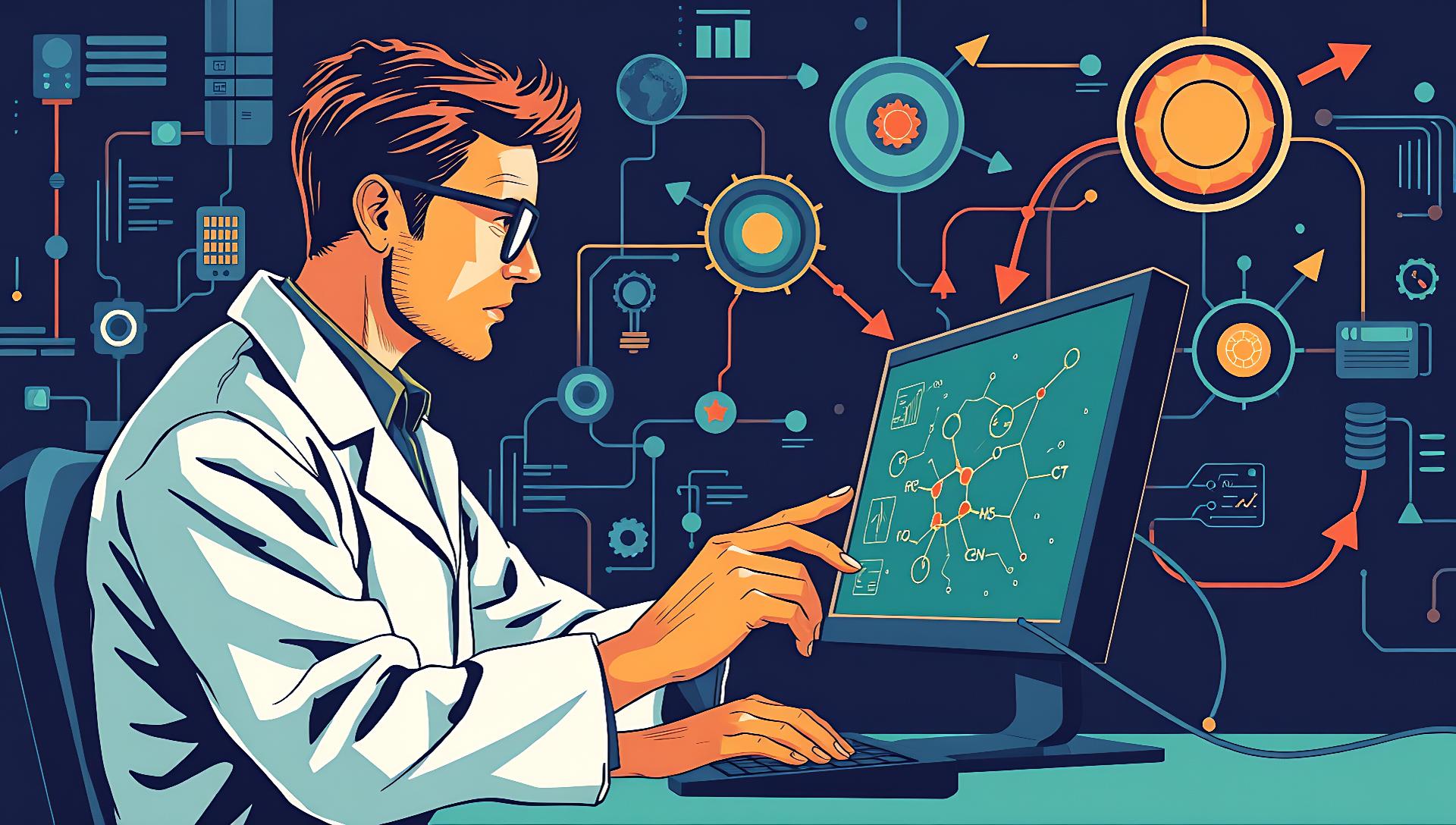
AI Tools for Chemical Analysis and Compliance
For developers and data scientists, this shift validates several applied AI niches. The demand is for models that connect disparate data sources.
| Tool / Model Category | Primary Function | Example Projects / Frameworks |
|---|---|---|
| Molecular Property Prediction | Predict toxicity, persistence, bioaccumulation from structure | ChemBERTa, DeepChem |
| Document Intelligence for SDS | Extract data from safety data sheets and regulatory filings | Azure Form Recognizer, Google Document AI, custom SpaCy pipelines |
| Epidemiological Data Fusion | Correlate chemical exposure data with public health datasets | Causal ML techniques applied to biobanks (UK Biobank, All of Us) |
| Supply Chain Graph Networks | Map chemical flows across manufacturers and products | Knowledge graphs built with Neo4j or TigerGraph, using NLP on procurement data |
Early-stage startups like Zenity and ChemChain are already building AI-powered regulatory platforms, but open-source models provide the foundation. For instance, fine-tuning a model like ChemBERTa on a corpus of REACH dossiers can create a classifier for identifying data gaps in new substance applications.
"How to Access Key Datasets"
Building these tools requires specific data. Public starting points include:
Who Should Build or Use These AI Tools
This niche is not for every AI practitioner. The data is specialized, the domain knowledge barrier is high, and clients are often large, slow-moving corporations or government agencies.
Develop this expertise if: You have a background in computational chemistry, bioinformatics, or public health data. Your interests lie in building robust, auditable models for regulated industries. You are comfortable with graph neural networks, transformer models for scientific text, and complex data engineering.
Look elsewhere if: You need rapid iteration cycles or consumer-scale user growth. The sales cycles are long, and model outputs often require expert interpretation for legal or medical contexts.
The immediate commercial opportunity lies in B2B SaaS for manufacturers and importers who must now navigate a patchwork of national rules if EU-wide standards fall. Another path is tools for NGOs and investigative journalists to perform independent supply chain analysis, a need highlighted in the HN comments.
Alternatives and Competitive Landscape
The alternative to building new AI tools is relying on traditional consulting and manual labor, which is becoming economically non-viable given the data volume. The competitive landscape includes both tech and service providers.
| Approach | Pros | Cons | Best For |
|---|---|---|---|
| Custom AI Models (e.g., fine-tuned SciBERT) | Tailored to specific use case, can become IP. | High development cost, requires scarce talent. | Large chemical firms, specialized AI vendors. |
| Generic Document AI APIs (AWS Textract, GCP Document AI) | Fast to implement, good for structured forms. | Poor at domain-specific scientific reasoning. | Digitizing existing SDS libraries. |
| Manual Consulting & Audits (Big Four, niche consultancies) | Trusted, provides human assurance. | Slow, expensive, doesn't scale. | One-off compliance checks, legal disputes. |
| Open-Source Science Models (DeepChem, MoleculeNet) | Free, transparent, community-driven. | Require significant MLops to productize. | Academic research, proof-of-concepts. |
Practical Next Steps for Practitioners
For an AI developer or researcher interested in this space, the path in is through public data and open-source models.
- Clone and run a baseline model. Start with the DeepChem library tutorial on toxicity prediction using the Tox21 dataset. This establishes a benchmark.
- Attempt a data fusion project. Download a dataset from the EPA CompTox Dashboard and try to link it with a public health dataset (like CDC NHANES) using Python pandas or Polars. The challenge is in entity resolution.
- Fine-tune a language model. Use Hugging Face to fine-tune a pre-trained model like SciBERT on a corpus of REACH restriction texts. The goal is to build a classifier that identifies the regulatory status of a described substance.
- Engage with the community. The Hacker News discussion is a starting point. Follow researchers at the intersection of AI and computational sustainability, such as those publishing in the Machine Learning for Health (ML4H) community.
The weakening of EU chemical regulations is a policy failure, but it inadvertently defines a new problem space for applied AI. The systems that win will be those that replace eroded institutional certainty with data-driven clarity.





Top comments (0)