

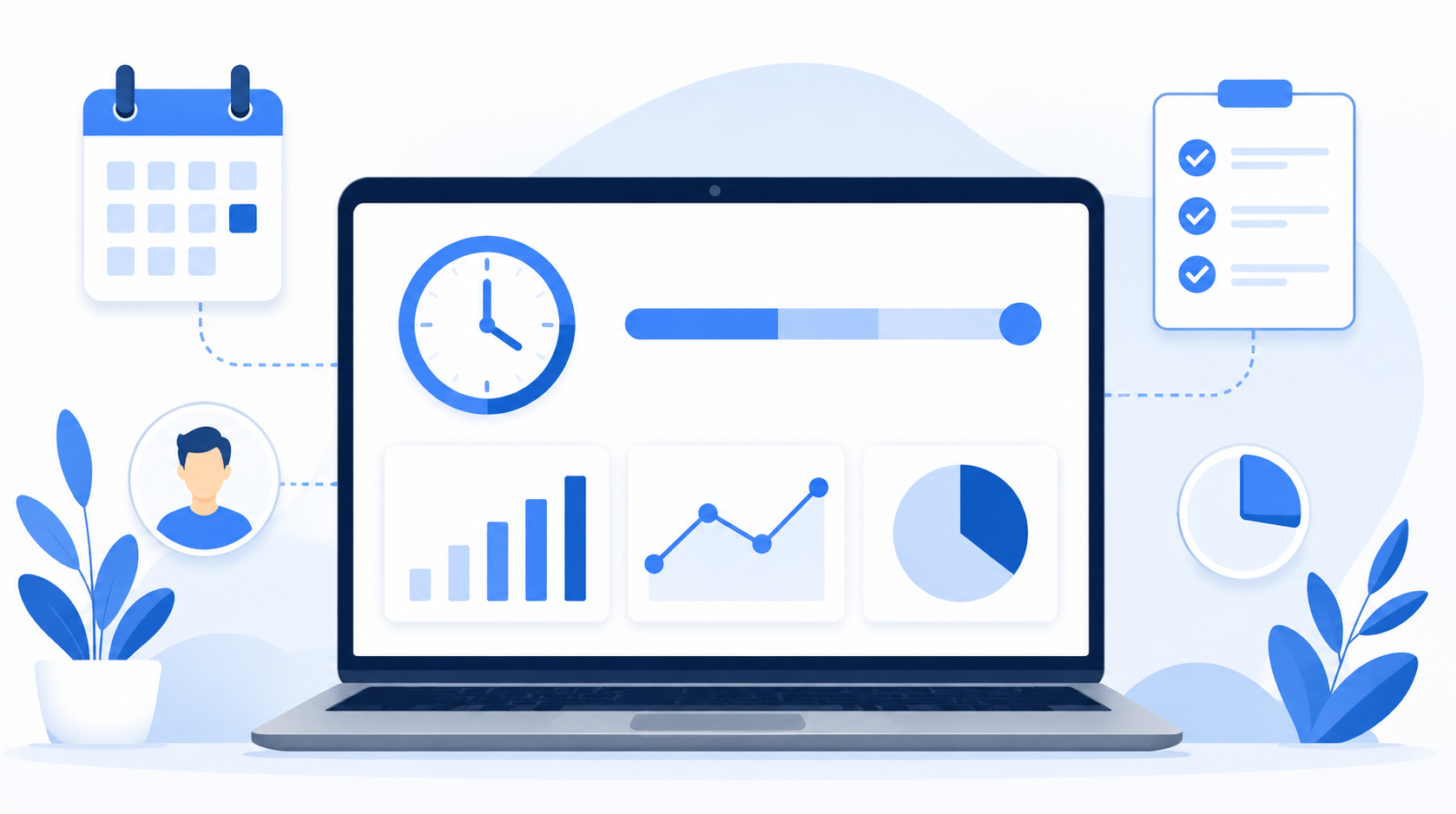
 Employee monitoring has always been a slightly uncomfortable topic.
For employers, it can answer important questions: Are projects moving forward? Where are teams losing time? Are workloads balanced? Are remote employees getting the support they need?
For employees, however, monitoring can sometimes feel very different. A tracker running in the background, screenshots being captured, or activity being turned into a productivity score can easily create the feeling that someone is constantly watching.
That is where AI-powered employee monitoring software is changing the conversation.
Instead of simply collecting activity data and putting it into another dashboard, modern AI-powered tools can analyze work patterns, provide context, identify trends, and help employees and managers make better decisions.
But there is an important distinction: AI monitoring should not mean more surveillance. It should mean better understanding.
So, what exactly is AI-powered employee monitoring, how does it work, and what should businesses look for when choosing a solution in 2026?
Let's break it down.
What Is AI-Powered Employee Monitoring?
AI-powered employee monitoring is software that uses artificial intelligence to analyze workplace activity and turn raw data into useful insights.
Traditional employee monitoring might tell a manager:
How many hours someone worked
Which applications they used
Which websites they visited
Their activity levels
When they were active or inactive
What screenshots were captured
AI adds another layer to this information.
Instead of simply showing the data, AI can help explain what the data means.
For example, imagine an employee spends three hours using a browser.
A traditional monitoring system may simply record that browser activity.
An AI-powered system can potentially provide more context by recognizing that the employee was researching competitors, reading documentation, or working on a customer project.
That difference matters.
Because knowing what happened is useful. Understanding why it happened is much more valuable.
How Does AI Employee Monitoring Work?
Most AI-powered monitoring platforms combine several types of workplace data.
- Time Tracking
The basic layer is time.
The software records how much time employees spend working and can organize it into daily, weekly, or project-level views.
This helps teams understand where working hours are going without relying entirely on manual timesheets.
- Application and Website Activity
AI can analyze the applications and websites employees use during work.
For example, someone working in marketing might regularly use:
Google Analytics
Search Console
SEO platforms
Content management systems
Email
Research tools
Rather than treating every application equally, AI can help put that activity into a work context.
- Screenshots and Visual Context
Some employee monitoring platforms use screenshots to provide additional visibility into work activity.
The important part is how this feature is implemented.
Screenshots should have clear controls around visibility, access, retention, and privacy. Employees should understand what is being collected rather than discovering it after the fact.
For example, Hyring Insight gives employees visibility into their collected data and provides configurable controls for screenshot capture, blur, and retention.
- Activity Patterns
AI can look beyond individual events and identify patterns.
Instead of asking:
"Was this employee active for eight hours?"
A manager can start asking better questions:
Is the team spending too much time in meetings?
Are interruptions affecting focus?
Is someone's workload increasing?
Are certain processes slowing the team down?
Are there unusual changes in activity?
This moves employee monitoring away from simply counting activity and toward understanding work.
- AI-Powered Insights
This is where AI becomes particularly useful.
A good system can bring together time, activity, application usage, and other signals to provide a clearer picture of the workday.
For example, Hyring Insight uses AI to understand screenshots and URL activity and provide context around the type of work being performed. Its business intelligence layer can also let managers ask questions about workforce activity instead of manually digging through multiple reports.
Final Thoughts
AI-powered employee monitoring isn't inherently good or bad.
It depends on how it's designed and how companies use it.
Used poorly, AI can make employees feel watched, pressured, and reduced to productivity scores.
Used thoughtfully, it can help employees understand their work habits, help managers identify problems earlier, and give organizations a clearer picture of how work actually happens.
The best approach for 2026 isn't simply "monitor more."
It's "understand better."
That means collecting the right information, explaining what it means, protecting employee privacy, and keeping humans involved in important decisions.
Tools like Hyring Insight are moving in that direction by combining time tracking and activity monitoring with AI context, employee-facing nudges, privacy controls, recognition, and workforce analytics.
Ultimately, the most useful employee monitoring technology shouldn't make people feel like they're being watched.
It should help them work better.



Top comments (0)