

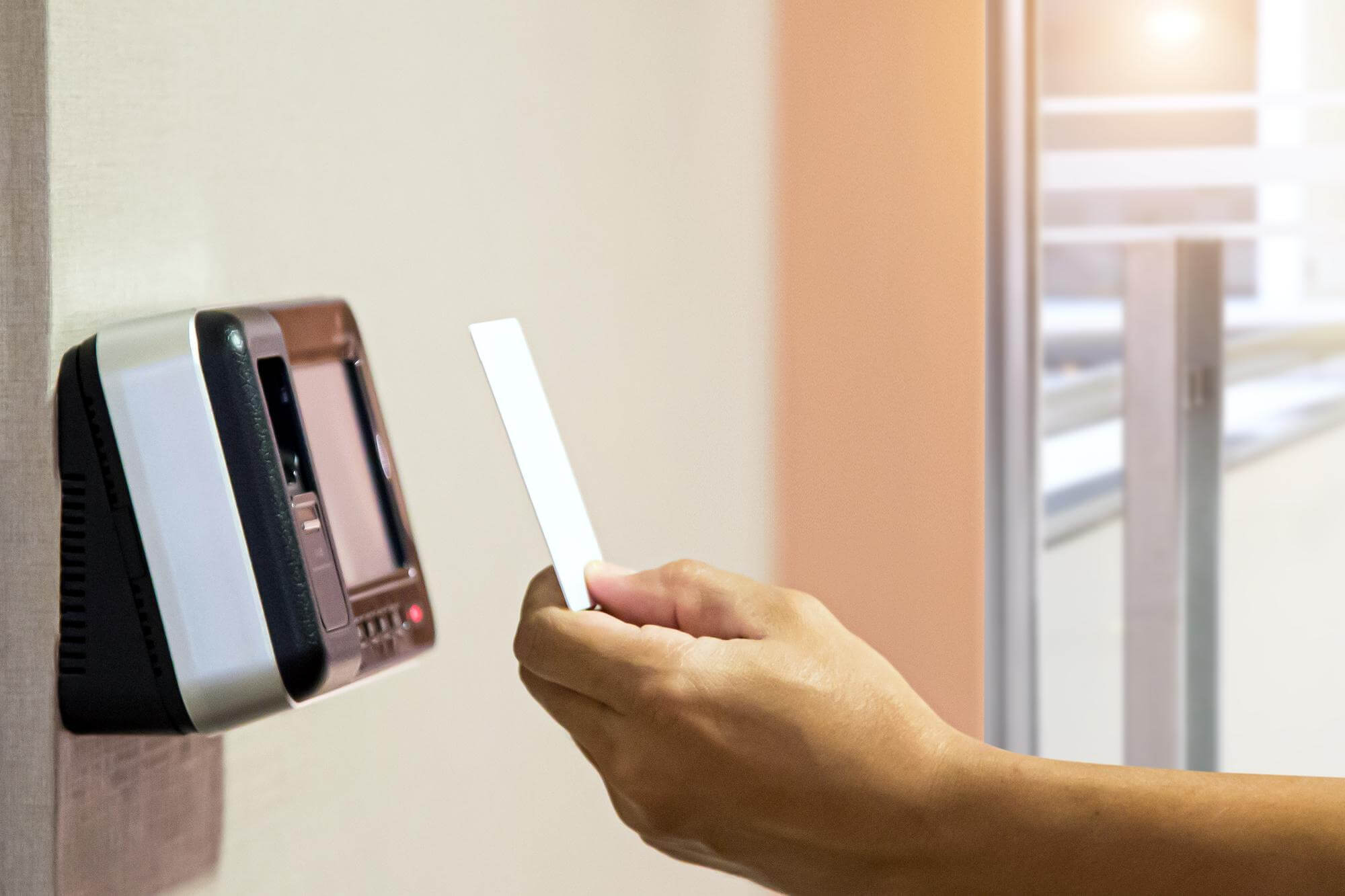
A card access system controls who enters a building by using programmed cards, electronic readers, a central controller, and electric locks. When a cardholder presents their card to a reader, the system verifies credentials in milliseconds and either grants or denies entry. It replaces traditional keys with a scalable, auditable solution suited to multi-door commercial environments.
For property managers and building owners in Singapore, understanding how a card access system Singapore operates helps you make smarter decisions about building security, staff management, and compliance. This guide breaks down every component in plain terms no jargon, no fluff.
The Four Core Components of a Card Access System
Every card access system regardless of brand or complexity is built on four interdependent components. Each one plays a specific role, and understanding them together gives you a clear picture of how the system functions end-to-end.
1. The Access Card (Credential)
The access card is what the user carries. Most commercial buildings in Singapore use one of two card technologies:
Proximity (Prox) cards: Work within a few centimetres of the reader. Common and cost-effective.
Smart cards (MIFARE/DESFire): Store encrypted data. Harder to clone and more secure.
Each card holds a unique credential ID. That ID is what the system checks not the physical card itself. This is why a lost card can be deactivated instantly without changing any locks.
2. The Card Reader Door Lock
The card reader door lock is the hardware mounted at the door. It reads the credential from the card and sends the data upstream to the controller. Reader types vary by environment:
Standard proximity readers: Suitable for internal doors and low-risk zones.
PIN + card readers: Two-factor verification for server rooms or executive floors.
Biometric + card readers: Highest security tier, commonly used in data centres and finance floors.
For outdoor or exposed installations in Singapore's humid climate, look for readers with an IP65 or higher weatherproof rating.
3. The Access Controller
The controller is the brain of the system. It receives the credential data from the reader, cross-references it against a database of authorised users, checks time-zone rules (e.g., this card only works Monday to Friday, 8am–7pm), and sends a signal to unlock or hold the door.
Controllers can be:
Standalone: Manages a single door. Suitable for smaller premises.
Networked: Connects multiple doors across one or several buildings. Managed from a central software interface.
Cloud-based: Access rules and logs managed remotely via a web dashboard. Increasingly common in new commercial buildings.
4. The Electric Lock
Once the controller approves the credential, it sends a signal to release the electric lock. There are two main types used in commercial access control:
Electromagnetic locks (maglocks): Hold the door shut using magnetic force (typically 280kg or 600lb holding strength). They fail-safe — the door unlocks during a power cut, which is required under Singapore's fire safety regulations.
Electric strikes: Replace the door frame strike plate. They can be configured as fail-safe or fail-secure depending on the door's function.
Choosing the right lock type matters for both security and compliance with the Singapore Civil Defence Force (SCDF) fire egress requirements.
How Does the Card Access System Process Work Step by Step?
Here is the sequence of events that happens in under a second every time someone swipes or taps their card:
Card presented: The user holds their card near the reader.
Signal transmitted: The reader captures the credential ID via radio frequency (RFID) and sends it to the controller.
Verification: The controller checks the ID against its database — is this card valid? Is the user permitted at this door, at this time?
Decision made: Access granted or denied. A green LED and a click from the lock indicate entry is allowed.
Event logged: The system records the timestamp, door ID, and user ID. This audit trail is retrievable at any time.
This entire process takes between 100 and 300 milliseconds fast enough that most users never notice the verification happening at all.
Why Card Access System Singapore Installations Make Business Sense
Singapore's commercial real estate sector is dense and multi-tenanted. A networked commercial access control system addresses several practical challenges that keys and security guards alone cannot solve efficiently.
Centralised Control Across Multiple Doors
A building manager overseeing a 10-storey office block cannot physically monitor every entry point. A networked access control system Singapore solution lets you set permissions, revoke cards, and review entry logs from a single interface whether you are on-site or off.
Instant Credential Management
When a staff member resigns, their card access is deactivated within seconds. No rekeying. No lock replacements. For high-turnover environments like co-working spaces and logistics hubs, this alone justifies the investment.
Audit Trail for Compliance
Under the Personal Data Protection Act (PDPA) and sector-specific regulations such as MAS Technology Risk Management guidelines, organisations handling sensitive data must be able to demonstrate who accessed restricted areas and when. Card access logs provide exactly that evidence.
Comparing Card Access Technologies: Which One Fits Your Building?
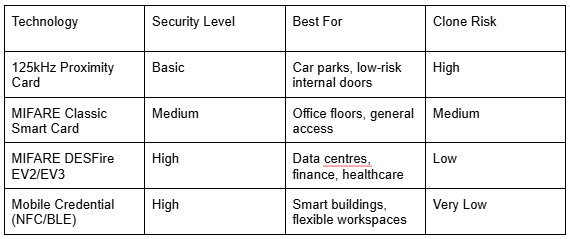
For most mid-tier commercial buildings in Singapore, MIFARE-based smart cards offer a strong balance of security, cost, and compatibility with existing systems.
Common Questions Property Managers Ask Before Installation
How many doors can one controller handle?
Entry-level controllers typically manage two to four doors. Enterprise-grade networked controllers can handle hundreds of doors across multiple buildings, all linked to one management platform.
What happens during a power failure?
Most commercial installations include an uninterruptible power supply (UPS) to keep the system running during brief outages. Maglocks default to unlocked when power is cut, satisfying SCDF fire egress requirements. Electric strikes can be configured either way depending on the door's classification.
Can the system integrate with CCTV or HR software?
Yes. Modern networked access control platforms support integration with IP CCTV systems (so a camera triggers when a door is accessed), visitor management software, and HR platforms for automatic onboarding and offboarding of staff credentials.
If you are evaluating or upgrading your building's entry points, Kirin CCTV offers a range of door access solutions designed for Singapore's commercial environment. Visit the Kirin CCTV homepage to explore the full product and service range.
Frequently Asked Questions
What is a card access system in a commercial building?
A card access system is an electronic security solution that uses programmed cards, RFID readers, a central controller, and electric locks to manage who enters specific doors. It replaces physical keys with digital credentials that can be issued, modified, or revoked instantly from a central management platform.
How secure is a card access system compared to traditional keys?
Card access systems are significantly more secure than traditional keys. Lost cards are deactivated in seconds, credentials cannot be physically duplicated like metal keys, and every entry event is logged with a timestamp — providing an audit trail that keys simply cannot offer.
What is the difference between a proximity card and a smart card?
A proximity card transmits a fixed ID using 125kHz radio frequency and carries a higher cloning risk. A smart card uses encrypted, mutualauthentication protocols (like MIFARE DESFire) making it significantly harder to duplicate — the preferred choice for high-security commercial environments in Singapore.
Can a card access system work across multiple floors or buildings?
Yes. A networked access control system links multiple doors, floors, and even separate buildings through a single management interface. Administrators can set different permission levels per user per door, review logs in real time, and push updates across the entire network instantly.
Is a card access system compliant with Singapore fire safety regulations?
Yes, when correctly configured. Singapore Civil Defence Force (SCDF) regulations require that doors on fire egress routes unlock automatically during an emergency. Electromagnetic locks are wired to fail-safe — releasing when power is cut to meet this requirement without manual intervention.
How long does it take to install a card access system in a commercial building?
A single-door standalone system can be installed in a few hours. A multi-door networked system across a commercial building typically takes one to three days depending on wiring complexity, door count, and integration requirements with existing CCTV or building management systems.






Top comments (0)