

If you spend hours refining detailed video prompts, you are familiar with the common frustrations of modern generative video. You craft thorough instructions for character appearances, lighting schemes, camera movement, scene transitions and mood. Yet you often receive fragmented standalone clips. Characters shift facial features and outfits between simple cuts, lighting drifts randomly, fast‑moving actions dissolve into blurry smears, and multi‑scene narratives completely fall apart.
Most mainstream AI‑video systems are built around generating isolated single shots. Multi‑shot storytelling is treated as an afterthought. This forces prompt creators to generate separate clips, manually align visual properties, retouch artifacts, and regenerate dozens of iterations just to assemble one usable short sequence. Countless hours get eaten up by post‑fix work that should never exist, pulling focus away from actual creative direction.
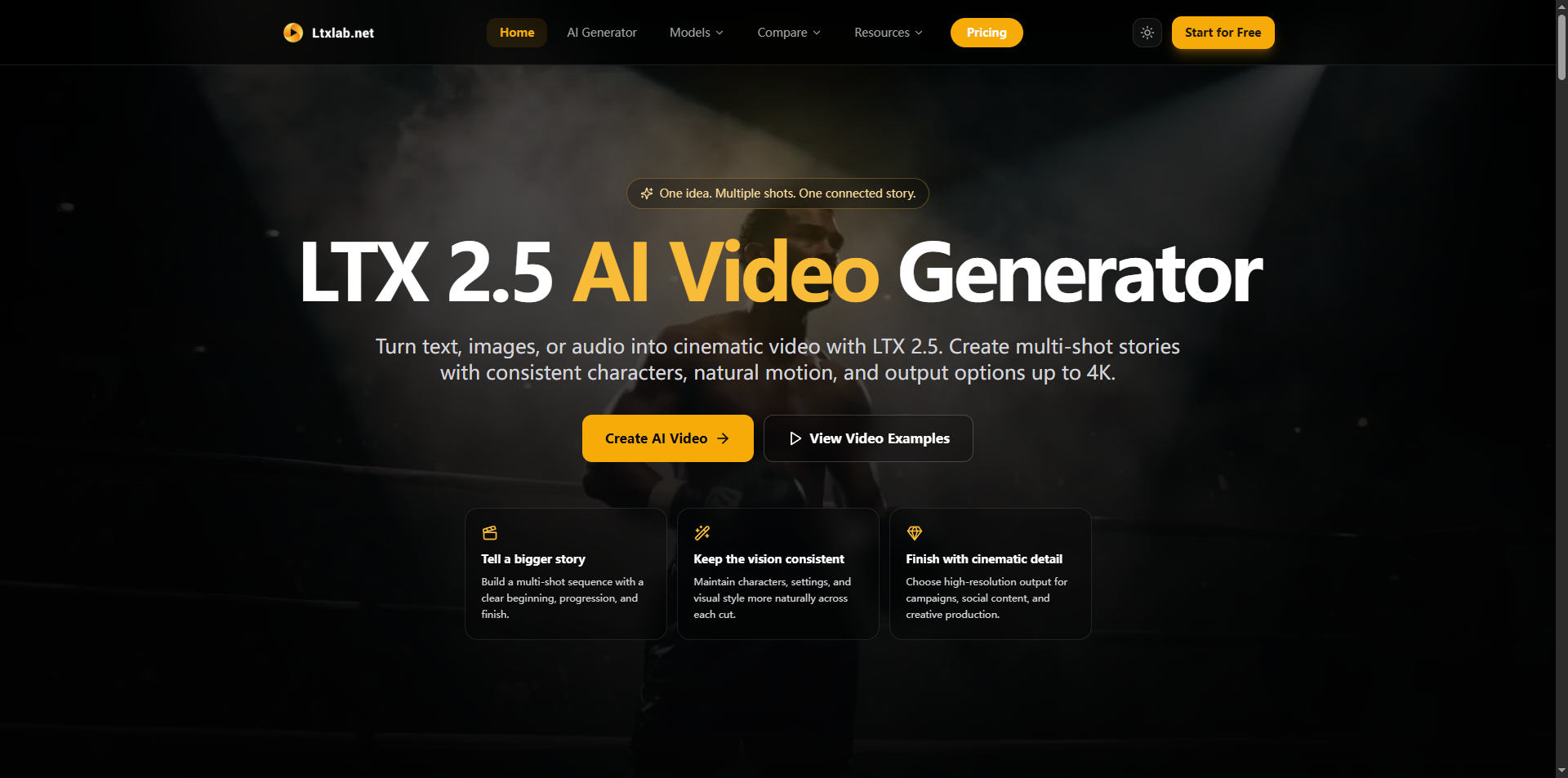
This core pain point is exactly what LTX 2.5 was built to solve. Unlike competing models that require you to stitch scenes together manually, LTX 2.5 can produce complete connected multi‑shot sequences within one single generation pass. Instead of handling every shot as an independent job, the model preserves consistent character features, environmental details, lighting tone and overall artistic style across shot transitions.
For prompt engineers and visual storytellers, this delivers tangible workflow improvements. You spend far less time rewriting prompts to fight character drift. You cut down heavy manual post‑production correction work. Your energy can go toward developing narrative beats, designing shot lists and refining creative vision rather than endlessly repairing visual inconsistencies.
Motion rendering represents another major upgrade. Many AI video tools struggle heavily during dynamic camera pans, character gestures and high‑action moments, producing frame smearing and distorted textures. LTX 2.5 leverages a redesigned video decoder to deliver smoother, more stable motion performance. Fine facial details, fabric textures and complex background elements retain their sharp definition even during active scenes. Your carefully written prompt descriptions for movement, tracking shots and busy environments translate much more faithfully into final footage, with fewer distracting visual artifacts right out of generation.
Prompt adherence stands out as one of its most valuable differentiators for PromptZone’s audience of prompt builders. Many generative video models ignore large chunks of layered prompt input. You may write precise directions for framing, subtle atmospheric mood, multi‑character interactions and nuanced color grading only to see most instructions discarded in output.
LTX 2.5 interprets complex natural‑language prompts with much higher reliability. You can specify shot order, emotional tone, depth‑of‑field settings, color grading direction and character gestures. Generated results stick far closer to your original creative brief. This drastically shrinks the tedious trial‑and‑error loop where you regenerate clip after clip just to get basic prompt requirements respected.
The tool also brings flexible input pathways that fit varied creator workflows. You can start purely with text prompts, animate static reference images, generate visuals synced to existing audio tracks, or lock first‑and‑last‑frame references to guide scene evolution. Adjustable sequence durations let you match clip runtime to your narrative pacing instead of being trapped by rigid fixed‑length clip boundaries. It supports high‑resolution cinematic outputs which drop directly into standard post‑processing pipelines. This makes it well‑suited for advertising concept mock‑ups, storyboard previsualization, music‑video visuals, social‑media campaign assets and animated concept‑art demos.
Who gets the biggest practical value from these capabilities? Prompt engineers can build reusable prompt libraries for complete multi‑shot narrative scenes. Advertising creatives visualize full campaign concepts before physical shooting begins. Film pre‑viz teams turn short script excerpts into connected shot sequences. Social‑content teams rapidly iterate multiple creative variants for short‑form platforms. Digital artists transform static concept art into moving visual storytelling material.
Many generative‑video platforms produce visually stunning standalone snippets, yet collapse immediately when tasked with telling a continuous story. LTX 2.5 shifts the priority toward narrative integrity, giving prompt‑focused creators far greater creative control. It addresses two historic bottlenecks for prompt‑driven AI‑video creation: poor cross‑shot visual continuity and weak compliance with complex prompt instructions.
As generative‑video workflows keep maturing, creators will no longer accept outputs that demand endless manual repair work. Tools that respect detailed prompts and preserve consistency across scene cuts will define the next phase of AI‑video creation. If you are tired of fighting inconsistent generated footage and want to translate written prompt ideas directly into cohesive, polished moving stories, exploring what LTX 2.5 can deliver is well worth your experimentation time.





Top comments (0)