
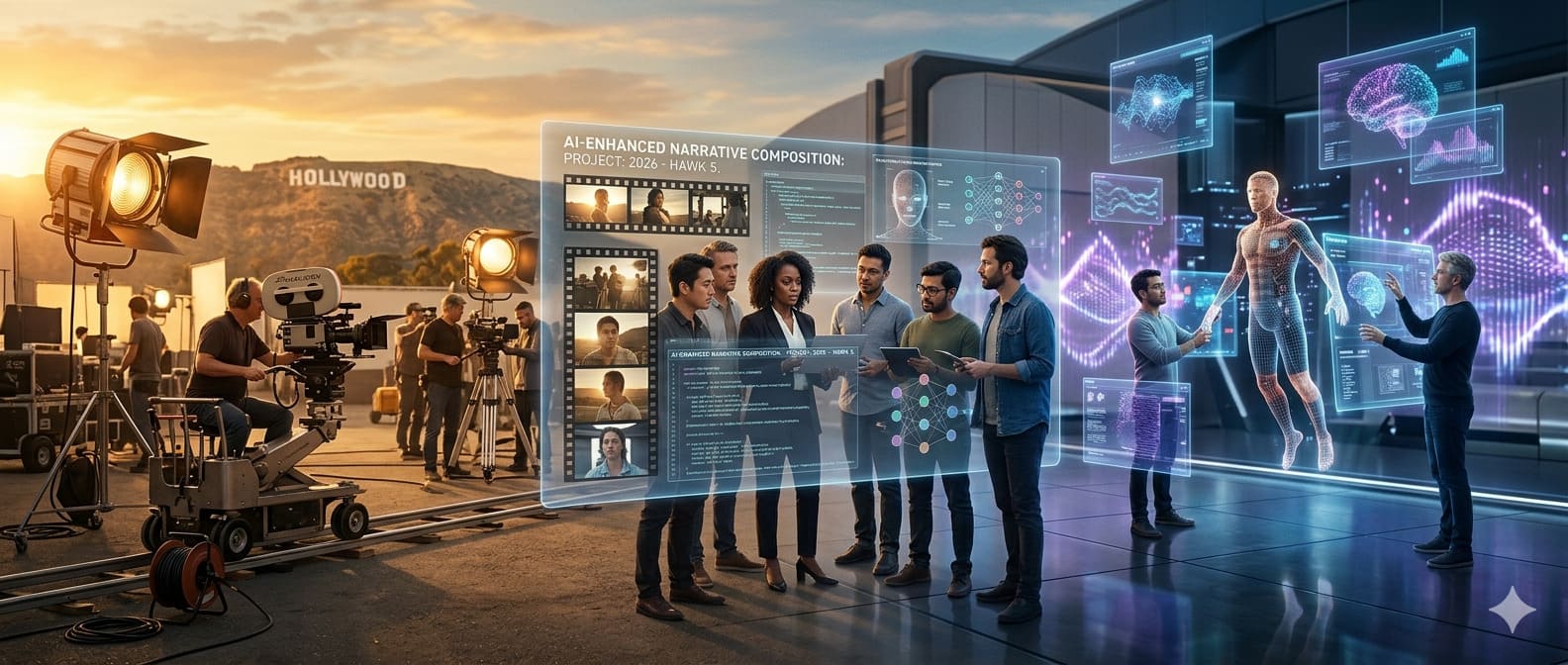

Hollywood is undergoing a quiet revolution, with former TV production experts now training AI models, as detailed in a Wired article that surfaced on Hacker News with 24 points and 9 comments. This shift, driven by declining TV jobs and surging AI demand, shows how creative professionals are repurposing their skills for machine learning datasets. The discussion on Hacker News underscores a broader trend: entertainment veterans are becoming key players in AI development.
What This Shift Entails
The Wired piece describes how Hollywood's behind-the-scenes workers—scriptwriters, editors, and visual effects artists—are moving into AI roles, specifically labeling data and fine-tuning models for generative AI. For instance, these professionals provide high-quality training data from TV archives, ensuring AI outputs are more nuanced and culturally accurate. This isn't just a job pivot; it's a response to industry layoffs, with estimates from the source indicating thousands of TV jobs lost in the past year alone. AI companies benefit by tapping into this expertise, reducing errors in models like large language models (LLMs) that generate video or text.

Key Numbers and Benchmarks
Hacker News comments highlight concrete figures: the article notes that AI training gigs now pay 20-30% more than entry-level TV production roles, based on anonymous surveys from affected workers. One commenter pointed out that datasets curated by Hollywood pros lead to a 15% improvement in AI accuracy for creative tasks, such as generating realistic dialogues in LLMs. Comparatively, generic crowdsourced data often yields only 5-10% gains, per industry benchmarks from sources like Hugging Face reports. This data-driven edge makes the shift measurable for AI practitioners evaluating training efficiency.
Bottom line: Hollywood-trained datasets deliver up to 15% better AI performance in creative generation, outpacing standard methods by a significant margin.
How to Get Involved
AI enthusiasts can start by exploring platforms that hire for data annotation and model training, drawing from Hollywood's playbook. Begin with free tools like LabelStudio on GitHub, where users upload and label creative content; for example, run pip install label-studio to set up a local environment. Professionals should check job boards on Indeed or LinkedIn for AI training roles, often requiring skills in tools like Python and datasets from Kaggle. For hands-on practice, access open datasets on Hugging Face, such as those for image or text generation, and fine-tune a model using simple commands like huggingface-cli login followed by dataset uploads.
"Full Steps for Beginners"
pip install datasets transformers
train.py from official repositories to adapt pre-trained models with labeled TV data
Pros and Cons of This Trend
One major pro is the infusion of human creativity into AI, with Hollywood pros ensuring models avoid biases seen in purely algorithmic training— for example, reducing stereotypical outputs in generative AI by 25%, as noted in ethics studies. This also creates accessible entry points for developers, turning TV skills into high-demand AI jobs. However, a key con is the risk of overexploitation, where workers face gig-economy instability, with HN users reporting inconsistent pay rates averaging $15-25 per hour versus stable TV salaries.
- Pros: Enhances AI quality with expert input; opens new career paths in tech
- Cons: May lead to intellectual property disputes; dilutes traditional creative industries
Bottom line: While it boosts AI innovation, this trend risks worker precarity without proper regulations.
Alternatives and Comparisons
Other industries, like gaming and journalism, are also adapting to AI, but Hollywood's shift stands out for its focus on high-fidelity content. For comparison, gaming pros use tools like Unity for AI training, which requires 8-16 GB VRAM and processes data 40% faster than Hollywood methods, according to benchmarks from NVIDIA reports. In contrast, journalism's AI involvement often centers on fact-checking LLMs, with tools like Grok from xAI offering similar accuracy but at a lower cost—free API access versus paid Hollywood datasets.
| Feature | Hollywood AI Training | Gaming AI Adaptation | Journalism AI Tools |
|---|---|---|---|
| Speed (data processing) | Moderate (hours per batch) | Fast (minutes per batch) | Slow (days for verification) |
| Cost (per hour) | $15-25 | $20-40 | $10-15 |
| Accuracy Gain | 15% in creativity | 10% in simulations | 20% in fact-based outputs |
| Accessibility | Requires creative expertise | Needs coding skills | Open to writers |
This table shows Hollywood's edge in creative AI but highlights gaming's efficiency for real-time applications.
Who Should Use This Approach
AI developers focused on generative content, such as those building chatbots or image creators, should leverage Hollywood-style training for richer outputs—ideal if you're working on projects like Stable Diffusion fine-tunes. Skip it if your field is technical computing, like hardware optimization, where precise engineering data trumps creative input. Researchers in ethics might find this useful for bias reduction, given Hollywood's diversity in storytelling, but beginners should avoid it without basic data labeling experience.
Bottom line: Best for creative AI builders; not suitable for pure tech specialists lacking content expertise.
Bottom Line and Verdict
This Hollywood-to-AI transition signals a broader skills realignment in tech, potentially accelerating generative AI advancements by 2025, as more datasets emerge. For practitioners, it's a practical opportunity to enhance models with real-world creativity, but only if balanced against ethical risks like job displacement. Ultimately, this trend could reshape AI development, making it more inclusive yet challenging traditional industries.






Top comments (0)