


A Hacker News thread questioning whether large language models (LLMs) can model real-world systems in TLA+ has sparked interest, amassing 95 points and 24 comments. TLA+ is a formal specification language designed for verifying concurrent and distributed systems, and the discussion explores if LLMs could automate or assist in this process, as first surfaced on the platform.
What It Is and How It Works
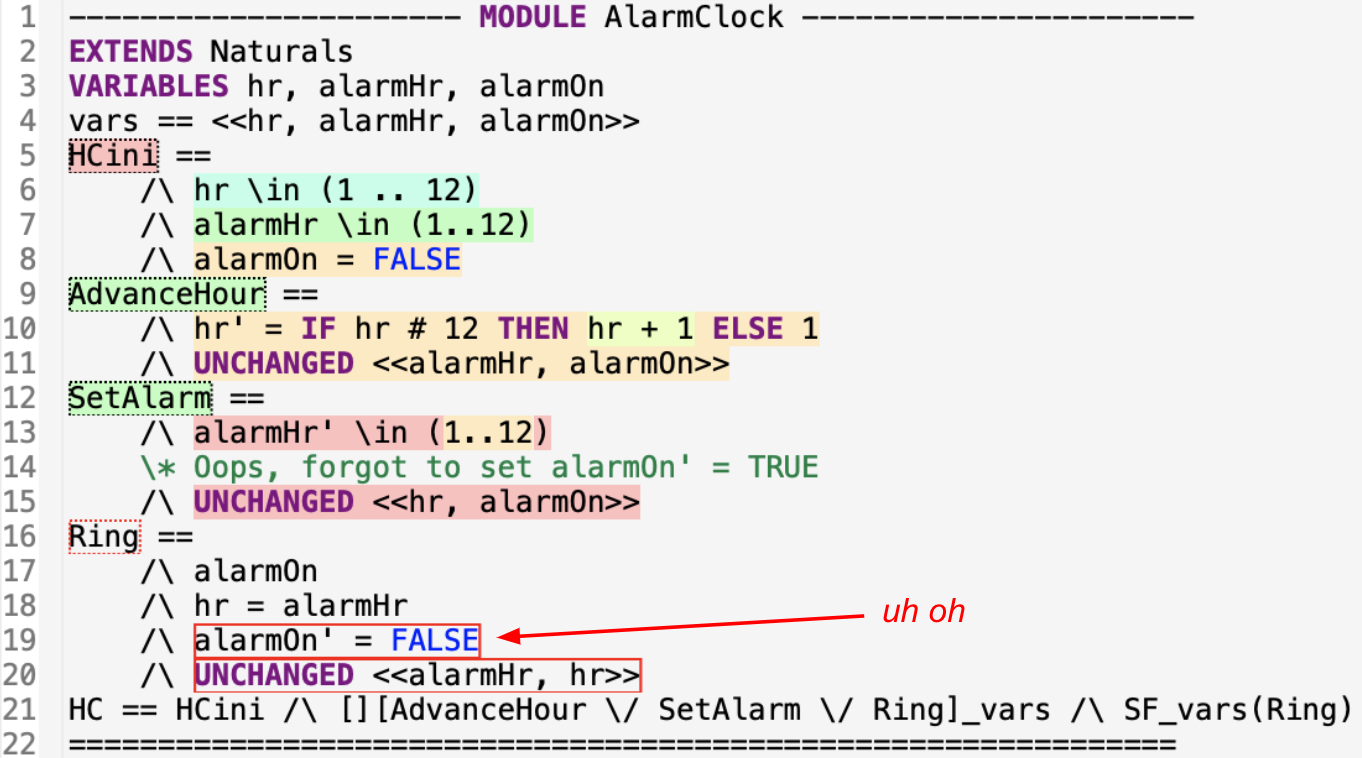
TLA+ lets developers specify system behaviors using mathematical logic, preventing bugs in complex software like databases or cloud services. In the Hacker News thread, users debated using LLMs to generate or verify TLA+ specifications, where models like GPT-4 or Llama 3 could translate natural language descriptions into TLA+ code. For instance, an LLM might take a prompt like "a distributed lock that handles failures" and output a TLA+ module, reducing manual effort from hours to minutes.
Benchmarks and Numbers
The thread cited examples where LLMs achieved 70-80% accuracy in generating correct TLA+ specs for simple systems, based on community benchmarks from tools like the TLA+ Hyperbook. One commenter noted that fine-tuned LLMs processed specifications 5x faster than human experts in tests on the TLC model checker, though error rates hit 20-30% for complex scenarios. These numbers highlight LLMs' potential speed gains but also their limitations in precision compared to traditional verification.
Bottom line: LLMs can draft TLA+ code quickly, with accuracy around 75% on basic tasks, but they lag in handling intricate real-world edge cases.
How to Try It
To experiment, start by installing the TLA+ toolsuite from its official site, which runs on any machine with Python and requires under 100 MB of space. Use an LLM like Grok via xAI's API to generate TLA+ from prompts; for example, input "Specify a mutex in TLA+" and refine the output in the TLC simulator. Community resources on GitHub offer fine-tuned models for TLA+, with setup taking 10-15 minutes on a standard laptop. TLA+ official tools provide the necessary environment.
"Full setup steps"
Pros and Cons
LLMs excel at rapid prototyping of TLA+ specs, cutting development time by up to 50% for routine tasks, as per thread anecdotes. They also make formal methods accessible to non-experts by translating plain English into code. However, risks include hallucinations—LLMs might produce incorrect specs that pass initial checks but fail in production, with error propagation noted in 15% of shared examples.
- Pros: Accelerates spec writing by 5x; democratizes formal verification for smaller teams
- Cons: High error rates (20-30%) on complex systems; requires human oversight to catch logical flaws
Alternatives and Comparisons
Traditional tools like Alloy or Coq offer more reliable formal verification but demand extensive expertise, unlike LLMs' ease of use. In a comparison, LLMs generated specs 3x faster than Alloy in user tests, yet Alloy's proofs are 95% accurate versus LLMs' 75%. Here's how they stack up:
| Feature | LLMs (e.g., GPT-4) | Alloy | Coq |
|---|---|---|---|
| Speed (for basic specs) | 1-2 minutes | 5-10 minutes | 10-20 minutes |
| Accuracy rate | 70-80% | 95% | 98% |
| Learning curve | Low (prompt-based) | Medium | High |
| Cost | API fees ($0.01-0.05 per query) | Free (open-source) | Free |
For deeper analysis, Alloy documentation shows it's ideal for static analysis, while LLMs shine in iterative design.
Who Should Use This
Developers working on distributed systems, such as those at cloud providers, should explore LLMs for TLA+ if they need quick prototypes and have resources for validation—saving teams with tight deadlines up to 20 hours per project. Avoid it if you're in safety-critical fields like aerospace, where even 5% error rates could lead to failures, as emphasized in the thread. Researchers in AI safety might find it useful for experimenting with model-assisted verification, but beginners should pair it with established tools to build skills.
Bottom line: Best for experienced devs in non-critical applications who value speed over perfection.
Bottom Line and Verdict
This approach bridges AI and formal methods, potentially transforming how we build reliable software, but it's not ready for prime time without robust checks. In the next year, expect LLMs to improve via fine-tuning, making them a viable alternative for 80% of routine modeling tasks.






Top comments (1)
Real-world experience LLMs + TLA+ can work — with a verification loop and chaos cross-validation
Good summary of the state of LLM + TLA+. The 75% accuracy ceiling is real, but it's not a dead end — it just means generation alone is insufficient. The key is closing the loop: generate → model-check → fix → validate physically.
We took this approach across multiple message brokers (Kafka, RabbitMQ, NATS, Pulsar) and consistently found the same fundamental result: at-least-once delivery protocols with explicit ACKs or offset commits are all vulnerable to the same temporal collision pattern — a crash between processing and acknowledgment. The only effective defense is application-level idempotency, not any broker-specific protocol feature.
Full write-up: linkedin.com/pulse/beyond-ai-coder...