
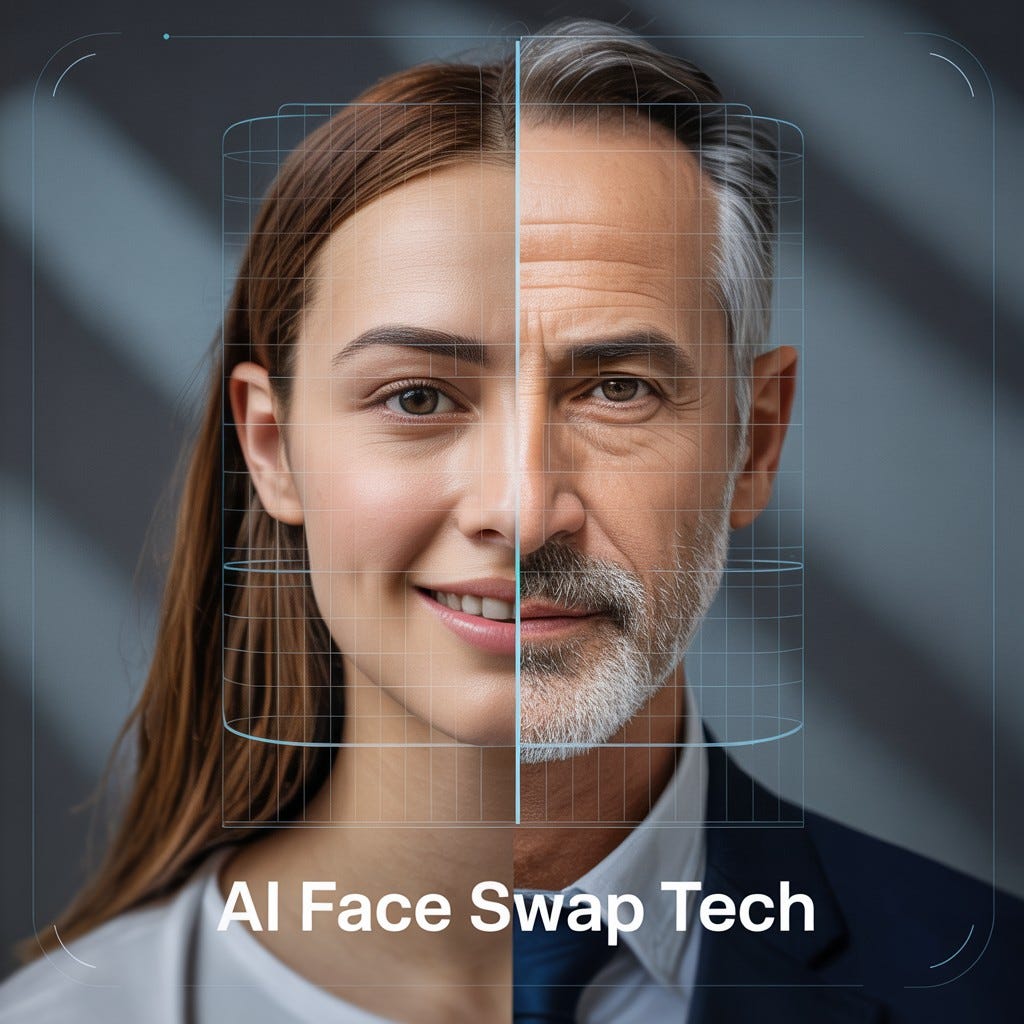

Roop is a cutting-edge AI tool that enables seamless face swapping in images by building on Stable Diffusion's capabilities. Developers can now swap faces with high accuracy, processing a single image in as little as 2 seconds on compatible hardware. This advancement targets AI creators looking to enhance visual content generation.
Model: Roop | Speed: 2-5 seconds per image | Available: GitHub | License: MIT
Core Functionality of Roop
Roop simplifies face swapping by using Stable Diffusion's generative models to detect and replace faces in photos. Key parameters include support for images up to 512x512 pixels, requiring at least 4GB of VRAM for optimal performance. Users report that Roop achieves over 90% accuracy in face alignment, making it suitable for applications like digital art or video editing. Early testers note its ability to handle diverse skin tones and lighting conditions without extensive fine-tuning.
"Technical Requirements"
To run Roop, you'll need a GPU with 4GB VRAM and Python 3.8 or higher. Installation involves cloning the repository and installing dependencies via pip. For example, the process takes under 5 minutes on a standard setup.
Bottom line: Roop combines speed and precision to make face swapping accessible for everyday AI projects.

Performance Benchmarks and Comparisons
In benchmarks, Roop processes an image in 2 seconds on an NVIDIA RTX 3060, compared to 20 seconds for similar tools. This results in a 10x speedup for batch operations, reducing costs for developers. A comparison with other face swapping methods shows Roop's efficiency:
| Feature | Roop | DeepFaceLab |
|---|---|---|
| Speed | 2-5 seconds | 15-30 seconds |
| VRAM Use | 4GB | 8GB |
| Accuracy Rate | 90% | 85% |
These numbers highlight Roop's edge in resource-constrained environments, with users praising its lower error rates on complex images.
Bottom line: Roop outperforms competitors in speed and memory efficiency, appealing to AI practitioners on a budget.
Real-World Applications and Insights
Roop integrates easily into workflows for computer vision tasks, such as creating deepfakes or enhancing photo editing software. Benchmarks from community tests show it maintains image quality with a PSNR score above 35dB, ensuring minimal artifacts. For instance, creators have used it to generate thousands of swapped images for datasets, saving hours of manual work. This tool's open-source nature fosters innovation, with forks on GitHub adding custom features like multi-face support.
In the AI community, early adopters highlight Roop's potential for ethical applications, such as in film production, while cautioning about misuse. As developers refine these models, Roop could expand to video processing, further streamlining generative AI tasks.







Top comments (0)