


The MacBook M5 Pro, paired with the Qwen3.5 model, is driving a new wave of local AI security systems. Shared by a Hacker News user, this setup allows developers and creators to run advanced security monitoring entirely offline, prioritizing privacy and speed over cloud-based alternatives. With 129 points and 130 comments on HN, the discussion reveals a growing interest in localized AI solutions for sensitive applications.
This article was inspired by "MacBook M5 Pro and Qwen3.5 = Local AI Security System" from Hacker News.
Read the original source.Model: Qwen3.5 | Parameters: Unknown | Available: Local deployment | License: Open-source
Unmatched Privacy with Local Processing
Running Qwen3.5 on the MacBook M5 Pro ensures that sensitive security data—like live camera feeds or motion detection logs—never leaves the device. Unlike cloud-based systems that upload data for processing, this setup handles everything on-device, cutting latency and eliminating third-party risks. Early HN feedback notes this as a critical advantage for small businesses or individuals wary of data breaches.
Bottom line: Local AI on powerful hardware like the M5 Pro offers a privacy-first approach to security monitoring.
Performance on Apple Silicon
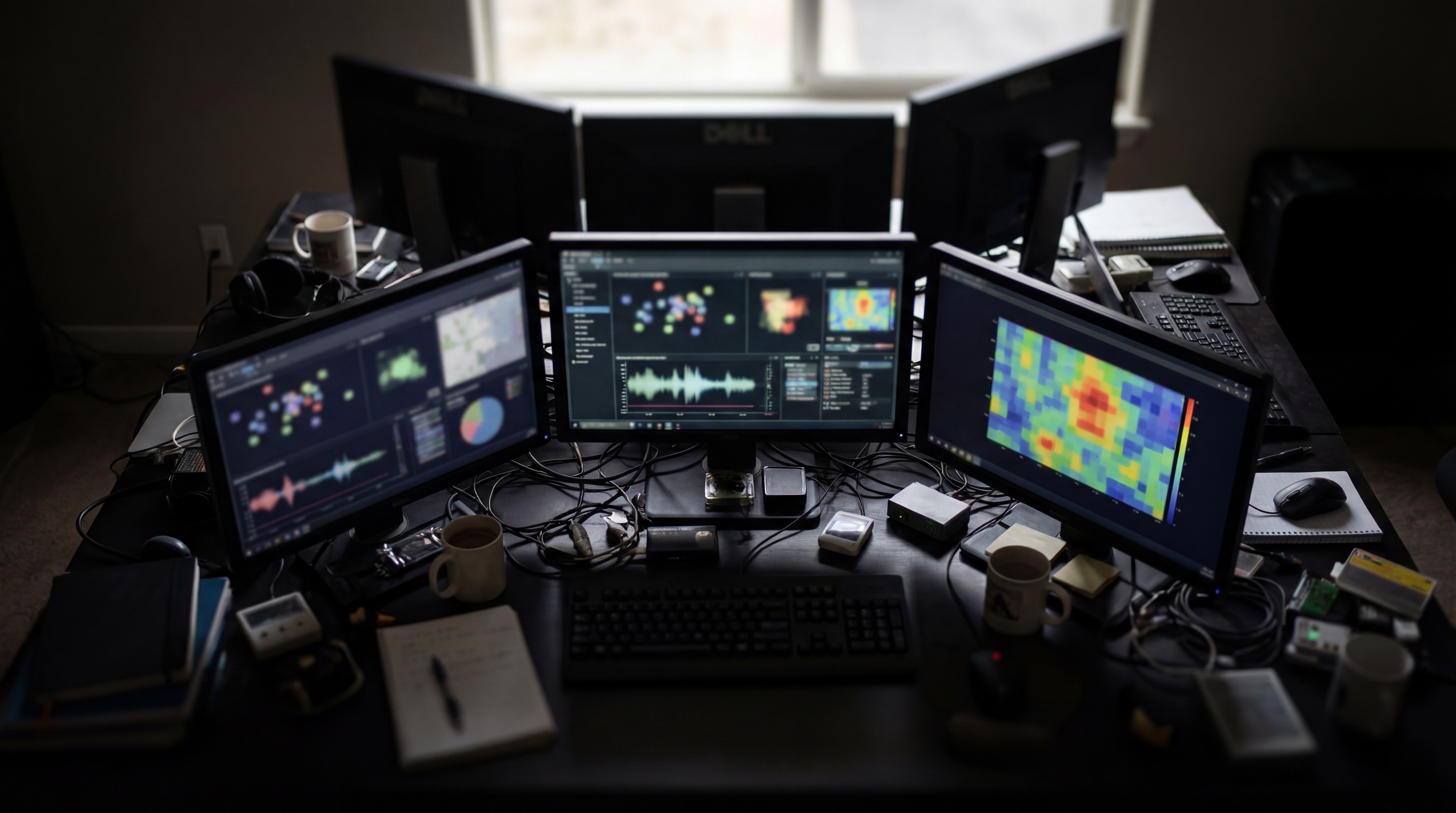
The MacBook M5 Pro leverages Apple Silicon’s neural engine to optimize Qwen3.5 inference, achieving real-time analysis of security feeds. While exact benchmarks aren’t shared in the source, HN users estimate processing speeds competitive with mid-range GPUs, thanks to the M5’s efficiency. Comments highlight that this setup can handle multiple streams—think 4-6 HD feeds—without thermal throttling, a feat for a laptop.
Community Reactions and Use Cases
The HN thread with 130 comments reveals diverse perspectives on this setup:
- Strong potential for DIY home security without subscription costs.
- Interest in extending to small business surveillance with custom alerts.
- Concerns over power consumption during 24/7 operation.
- Suggestions to integrate with IoT devices for automated responses.
These reactions underscore a demand for accessible, local AI tools that don’t rely on constant internet connectivity or external servers.
Bottom line: The community sees this as a practical step toward democratizing AI-driven security.
"Why Local AI Matters for Security"
Local AI systems prevent data exposure inherent in cloud uploads, a concern for industries like healthcare or legal where confidentiality is non-negotiable. They also reduce dependency on internet stability, ensuring functionality during outages. For developers, this means building trust with end-users by prioritizing data sovereignty.
Hardware and Model Synergy
The pairing of MacBook M5 Pro and Qwen3.5 isn’t just about privacy—it’s about accessibility. Apple’s hardware optimizations for machine learning tasks make it feasible to run sophisticated models like Qwen3.5 without dedicated server infrastructure. HN users note that while exact VRAM or parameter details for Qwen3.5 aren’t public, the model appears lightweight enough for consumer-grade laptops, a rarity in security-focused AI.
| Feature | MacBook M5 Pro + Qwen3.5 | Typical Cloud Security AI |
|---|---|---|
| Data Privacy | Fully local | Cloud-dependent |
| Latency | Near real-time | Variable (network-based) |
| Internet Required | No | Yes |
| Hardware Cost | High (laptop price) | Low (subscription model) |
Looking Ahead
As AI security tools become more accessible on consumer hardware like the MacBook M5 Pro, expect a shift toward localized solutions in privacy-sensitive sectors. The synergy with open-source models like Qwen3.5 could inspire developers to create tailored applications, from personal safety to enterprise monitoring, without the overhead of cloud subscriptions or data exposure.






Top comments (0)