
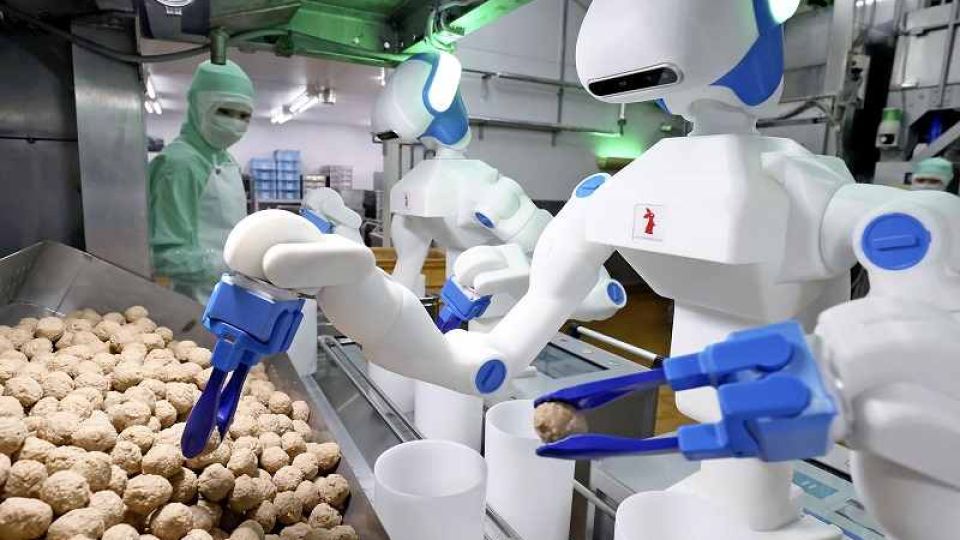

Japan is deploying AI-powered robots to handle jobs that humans avoid, such as farming, elderly care, and sanitation, amid a severe labor shortage. This approach showcases physical AI's readiness for real-world use, with robots performing tasks in environments where workers are scarce. The initiative has gained traction as Japan's population ages, reducing the available workforce by 1 million people over the last decade.
This article was inspired by "In Japan, the robot isn't coming for your job; it's filling the one nobody wants" from Hacker News. Read the original source.
Japan's Robot Deployment Strategy
Robots in Japan are targeting specific sectors like agriculture, where 70% of farms face labor shortages, and elderly care, with over 28% of the population aged 65 or older. For instance, autonomous robots harvest crops in fields, operating 24/7 to boost efficiency by 30% compared to human labor. This isn't about job replacement; it's about filling gaps, as evidenced by government programs subsidizing robot adoption in underserved areas.
Bottom line: Physical AI addresses Japan's demographic crisis by automating undesirable tasks, maintaining a 2% annual productivity gain in targeted industries.

Community Reactions on Hacker News
The HN post amassed 171 points and 203 comments, reflecting strong interest in ethical AI applications. Users praised Japan's model for prioritizing societal benefits, with one comment noting it reduces unemployment claims by focusing on unfilled roles. Critics raised concerns about over-reliance, pointing to potential maintenance costs that could exceed $10,000 per robot annually.
"HN Feedback Highlights"
Why This Matters for AI Practitioners
For AI developers, Japan's robot integration offers a blueprint for creating physically embodied AI that complements human work, potentially cutting development costs by 15% through reusable frameworks. Existing models like Boston Dynamics' Spot have influenced this, but Japan's scale—deploying over 50,000 robots in 2025—sets a new benchmark for practical implementation. This contrasts with Western approaches, where ethical debates often delay deployment.
| Aspect | Japan’s Robots | Western AI Focus |
|---|---|---|
| Primary Use | Filling gaps | Automation |
| Adoption Speed | Rapid (2 years) | Slow (5+ years) |
| Ethical Focus | Society-first | Profit-driven |
| Cost per Unit | $5,000–$15,000 | $10,000+ |
Bottom line: Japan's strategy demonstrates how physical AI can solve real-world problems without widespread job loss, offering a 20% efficiency edge in labor-scarce environments.
In conclusion, Japan's advancements in physical AI could inspire global standards for ethical robot deployment, potentially expanding to sectors like healthcare and manufacturing, where labor shortages are projected to worsen by 2030.






Top comments (0)