


Blind preference arenas are the fastest way to see which image model people like, and the easiest to over-read. By the end of this you will know what an arena score is actually computed from, which qualities the format structurally cannot measure, and how to run a small personal benchmark that answers the question a leaderboard never can: is this model better for the work you actually do.
Codenames on the leaderboard
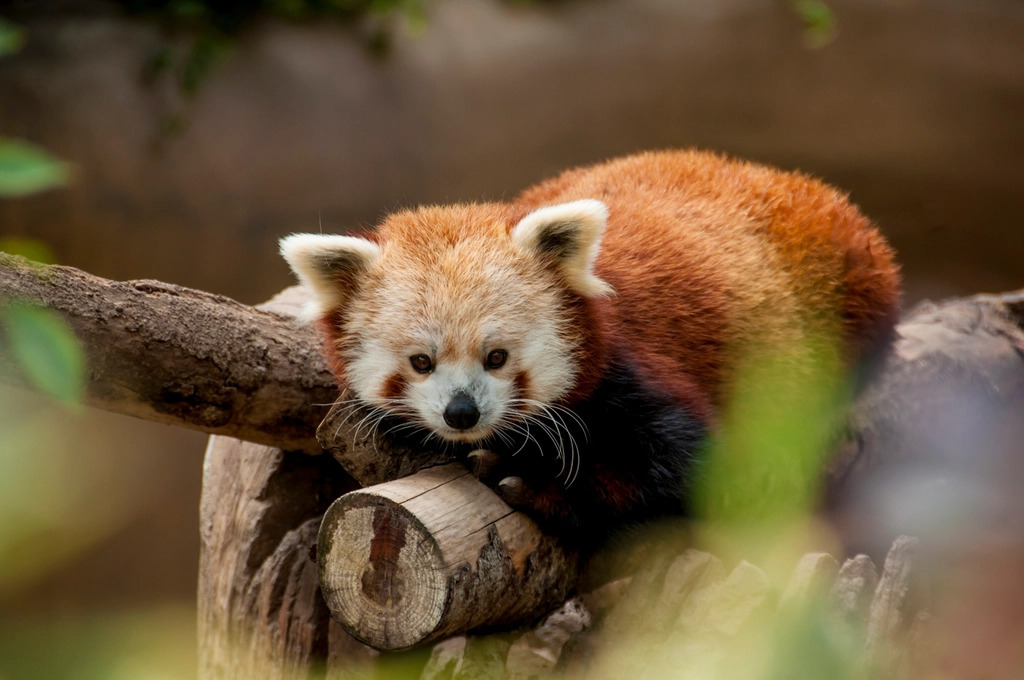
A pattern repeats in image generation. A model appears on a public arena under a codename with no vendor attached, climbs the ranking, and gets unmasked days later. Red Panda is the cleanest example: it turned up on the AI image arena in October 2024, sat at the top of the ranking while everyone speculated, and was revealed at the end of that month as Recraft V3, from Recraft, a London startup that had not been part of the usual Stability / Black Forest Labs / Midjourney conversation.
The codename is not mischief for its own sake. It buys the vendor two things. First, votes untainted by brand, so nobody prefers an output because the label under it is familiar. Second, a quiet exit: a codename that lands mid-table can be pulled without a press cycle. In practice, an unattributed entry near the top of an arena is a launch already in progress.
What the score is computed from
The mechanism is simpler than the leaderboard's authority suggests. A visitor types a prompt, receives two images from two undisclosed models, and picks one. That pairwise vote feeds a rating system in the Elo / Bradley-Terry family: beating a higher-rated opponent moves you more than beating a lower-rated one, and ratings converge as votes accumulate.
Three consequences fall straight out of that design, and they hold for every arena regardless of who runs it.
- The score is a preference average, not a quality measure. It answers which image a median voter clicked, aggregated over many votes. Nothing in the loop checks whether either image matched the prompt.
- The prompt distribution belongs to the voters, not to you. Arena prompts skew short and showy: single subject, portrait, creature, landscape. A model tuned for that skew ranks well on it.
- One click compresses everything. Composition, lighting, anatomy, typography and prompt adherence collapse into a single binary choice. A model that produces beautiful images while ignoring half the instruction still wins votes.
Recraft V3's most-discussed strength at reveal was legible text inside images, something most diffusion models of that period handled badly. That strength only shows up in an arena when voters happen to ask for text, which is exactly the point: the ranking reflects what people typed, not what the model can do.
Where the rank stops being useful
| The leaderboard tells you | It does not tell you |
|---|---|
| Median voter preference on arena-style prompts | Whether it holds a long, constrained prompt |
| Rough parity between frontier models | Cost per image at your volume |
| That a model is worth an hour of your attention | Licence terms for commercial output |
| Relative movement over time | Whether you can fine-tune or train a LoRA on it |
| Nothing about your hardware | Latency, VRAM, whether it runs locally at all |
| Nothing about iteration | Inpainting, editing, holding one subject across images |
The bottom rows are usually what decides a production choice. An open-weights model you can run locally and train a LoRA against will beat a higher-ranked API model outright on any job that needs the same character or product to reappear across twenty images.

Build a five-prompt benchmark instead
A leaderboard is a starting filter. The decision comes from a test you control, and an hour is enough to run one.
- Take five prompts from work you have already shipped. Real briefs, not showpieces. If half your output is product shots on plain backgrounds, that is what the test should contain.
- Fix everything you can fix. Same aspect ratio, same resolution, same number of images per prompt, seeds locked where the model exposes them. If you change two variables you learn nothing.
- Score adherence separately from looks. Two columns: did it do what I asked, and would I ship this. Models diverge hard on that split, and the arena only ever measures the second one.
- Add one prompt designed to break it. Legible text on a sign, a specific object count, a stated spatial relation such as one item behind another. This is where models that look identical on portraits separate.
- Re-run the winner on a different day. Hosted models get updated silently. A result you cannot reproduce a week later is not a result you should build a workflow on.
Keep the sheet. The next time a codename tops a ranking, you re-run the same five prompts and get an answer in twenty minutes instead of a week of forum reading.

Anatomy of a prompt that survives model changes
One short prompt, worth reading for its structure rather than its subject:
a pumpkin carving with the 3D face of a spooky Jack Skellington head, menacing glowing light
Four components, and only four: a physical object, a material or medium, a named entity the model already knows, and an explicit lighting instruction. It suits natural-language models such as the FLUX family, where a plain descriptive sentence outperforms a comma-salad of quality tags. It carries across model generations because none of its parts depend on a trigger word, a weighting syntax or a checkpoint-specific style token.
The fragile part is the named entity. If a model has weak coverage of a character, that clause silently becomes a generic skull and the rest of the prompt still renders fine, which is one of the harder failures to notice at a glance. Where a look matters more than a name, a subject LoRA from Civitai gives you the same effect with far less dependence on what happened to be in the base training data.
Practical takeaways
- An arena rank means a model earned an hour of your testing time. It does not mean it is the right model for your pipeline.
- Preference scores ignore prompt adherence, cost, licence, latency and controllability, which together decide most production choices.
- Codenamed entries near the top of a ranking are pre-launch marketing, and the reveal usually follows within days.
- Keep a fixed five-prompt benchmark drawn from real work, and re-run it per candidate model rather than re-litigating the leaderboard.
- Write prompts out of durable parts, object, material, lighting, and they keep working when the model underneath changes.






Top comments (0)