

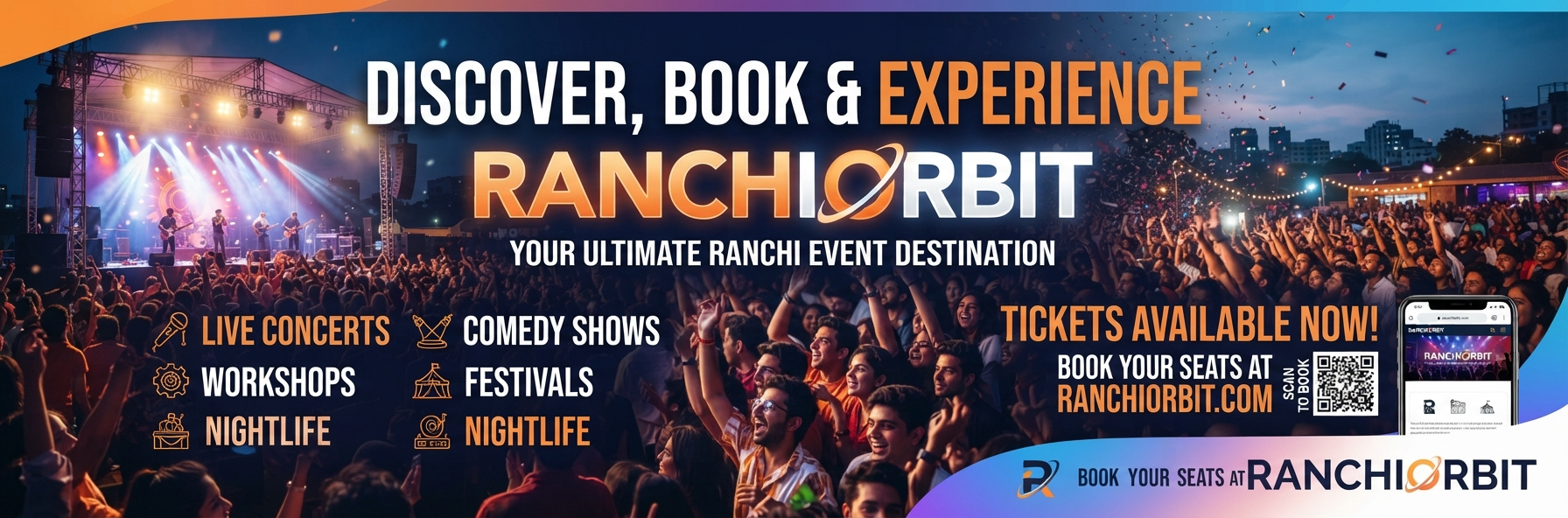
A well-crafted prompt can generate a 1,500-word blog post in ten seconds, render a photorealistic poster in thirty, and debug a Python script before your coffee cools. Yet, when creators and community builders step away from their screens to organize physical gatherings, many revert to blank spreadsheets, guesswork, and scattered social media posts.
Whether you are a developer hosting a weekend hackathon, a creative collective planning an open-mic night, or an independent educator launching a hands-on bootcamp, the mechanics of bringing people into a physical room follow a clear operational sequence. In fast-growing Tier-2 cities across India—where digital adoption is surging alongside an appetite for offline community experiences—the organizers who succeed are those who pair structured AI workflows with localized distribution.
Consider the rapid evolution of events in Ranchi. Over the past few years, Jharkhand’s capital has moved well beyond traditional banquet gatherings and sporadic cultural fairs. Today, its calendar features intimate acoustic sessions, startup meetups, curated weekend markets, and packed stand up comedy shows in Ranchi. For organizers operating in such emerging ecosystems, large language models (LLMs) act as an operational co-pilot—helping translate rough ideas into structured event blueprints, targeted copy, and high-converting ticketing pages.
Here is a practical, stage-by-stage guide on how to engineer prompts that take a local event from an initial concept to a full house, using emerging regional hubs like Ranchi as a real-world operational lens.
Stage 1: Concept Validation and Audience Mapping
Most local events fail before a single ticket is listed because the organizer builds for an imaginary demographic. A prompt engineer approaches event ideation the same way they approach system design: by defining constraints, user personas, and edge cases upfront.
Instead of asking an AI tool to "give me ideas for a weekend workshop," feed it specific geographic, cultural, and behavioral parameters. If you are planning workshops and training events in Ranchi, for instance, your audience might split between engineering students from nearby technical institutes looking for practical AI skills and mid-career professionals seeking weekend upskilling.
The Persona & Angle Prompt Framework
Use a multi-variable prompt to force the model to pressure-test your concept against local realities:
Prompt Template:
"Act as a community strategist and local event producer in [City, e.g., Ranchi, Jharkhand]. I want to host a [type of event, e.g., 3-hour hands-on generative AI workshop] on a Saturday afternoon. Analyze three distinct audience segments in this city who would attend, their primary motivations, price sensitivity, and potential objections to attending. For each segment, suggest a specific event hook and session format that solves a real problem rather than offering generic networking."
Refining the Output
When reviewing the AI’s response, look for friction points. In cities where weekend leisure options compete heavily with family commitments and academic schedules, timing and perceived utility dictate attendance. Use follow-up prompts to narrow your format:
- Ask for format variations: Have the model compare a 90-minute evening mixer against a half-day Sunday intensive.
- Identify local cultural intersections: Prompt the AI to align your theme with seasonal rhythms—such as avoiding major exam windows or leaning into festive autumn weekends when diaspora crowds return home.
Stage 2: Venue Matching and Logistics Blueprinting
Once the concept is validated, physical constraints take over. Selecting among event venues in Ranchi—or any growing regional hub—requires matching acoustic, spatial, and accessibility needs to your format. A sprawling banquet lawn works for a seasonal cultural festival, whereas an indoor lounge or co-working space suits an interactive product demo or comedy night.
While an LLM cannot check real-time booking availability, it excels at generating structured evaluation matrices and vendor checklists so you do not overlook critical operational details.
The Venue Audit & Run-of-Show Prompt
Prompt Template:
"Create a comprehensive venue evaluation checklist and a minute-by-minute run-of-show for a [capacity, e.g., 120-person] [event type, e.g., live indie music and spoken word evening]. Include specific technical requirements for audio/visual setups, seating layouts, entry/registration bottlenecks, and contingency plans for power fluctuations or delayed soundchecks. Format the run-of-show as a table with columns for Time, Activity, Owner, and Equipment Needed."
In practice, local venues vary significantly in what they provide in-house versus what must be rented externally. Spaces like Ranchi Gymkhana Club, The Circle, or Swarna Bhumi Ranchi cater to different scales and atmospheres—from formal institutional gatherings to open-air exhibitions. Taking an AI-generated technical rider into venue negotiations ensures you ask the right questions about decibel limits, parking flow, backup generators, and stage lighting before signing a deposit.
Stage 3: High-Converting Copywriting for Ticketing Pages
A common mistake among first-time organizers is writing event descriptions that read like internal memos. Attendees do not buy a list of agenda items; they buy an outcome, an atmosphere, or a memorable shared experience.
When preparing to sell event tickets online in Ranchi, your event listing page must accomplish three things within seconds: establish relevance, clarify logistics, and reduce purchase hesitation.
Prompting for Scannable, Conversion-Focused Listings
Rather than generating a single wall of text, break your copywriting prompt into modular components:
Prompt Template:
"Write the event listing copy for [Event Name], a [brief description] taking place at [Venue Name] in [City] on [Date/Time]. Structure the output into four parts:
- Three headline variations (one curiosity-driven, one benefit-driven, one urgency-driven).
- A 100-word opening hook that paints a vivid picture of what the attendee will experience in the room.
- Five bullet points detailing concrete takeaways or highlights (avoid clichés like 'unforgettable evening' or 'great networking').
- A concise FAQ section addressing parking, ticket transfers, age suitability, and entry rules."
Bridging Discovery and Distribution
Great copy only works if it sits on a platform built for local discovery. Once your copy and creative assets are ready, publishing on a dedicated regional platform like RanchiOrbit allows organizers to list event details, showcase venue information, and streamline event ticket booking in Ranchi without forcing attendees through clunky external forms. Because hyperlocal platforms aggregate audiences actively browsing for weekend plans, workshops, and live performances, your AI-polished listing immediately reaches people with existing local intent rather than cold global traffic.
Stage 4: Multi-Channel Promotion Without Sounding Robotic
Audience fatigue around generic AI-generated social posts is real. Overused emojis, hollow enthusiasm ("Get ready to unleash your potential!"), and repetitive phrasing immediately signal low effort. To promote events in Ranchi or any tight-knit urban community, your promotional prompts must enforce tone constraints and platform-native formatting.
Building a 14-Day Promotional Sprint
Instead of asking for "10 social media posts," map your prompts to psychological triggers across a two-week timeline:
- Days 14–10 (Problem & Curiosity): Focus on the story behind the event—why the speakers, artists, or hosts are coming together right now.
- Days 9–5 (Social Proof & Specificity): Highlight specific session breakdowns, artist snippets, or behind-the-scenes venue prep.
- Days 4–1 (Scarcity & Friction Removal): Address last-minute questions, share directions/landmarks, and highlight limited seat tiers.
Prompt Template:
"Act as a culture editor writing for an urban Indian audience aged 20–35. Write 4 promotional pieces for [Event Name] in [City]:
- An Instagram Reel script (under 30 seconds) starting with a relatable local observation about weekend boredom.
- A WhatsApp broadcast message (under 80 words) formatted for community groups, focusing on clarity, date, venue landmark, and booking link placement.
- A LinkedIn post from the founder's perspective explaining the practical skill gap this workshop addresses.
- A short community forum post designed to spark discussion rather than read like an ad. Constraint: Do not use words like 'unleash,' 'elevate,' 'game-changer,' or 'dive in.' Keep sentences punchy and conversational."
Leveraging Local Community Channels
In cities like Ranchi, word-of-mouth through college clubs, professional WhatsApp circles, and local interest groups often outperforms paid ads. Pairing conversational WhatsApp copy with an accessible listing on RanchiOrbit makes it effortless for early registrants to share a single, credible link with friends—turning individual ticket buyers into organic promoters.
Stage 5: Visual Asset Direction and Brand Consistency
Not every organizer has a full-time graphic designer on call. While image generation models have improved dramatically at rendering typography and layout compositions, getting clean event posters still requires structured art direction.



Top comments (0)